Sign up | Login with →

Comments by David Thorpe Subscribe

On Weightman Warns Nuclear Industry To Do More Research

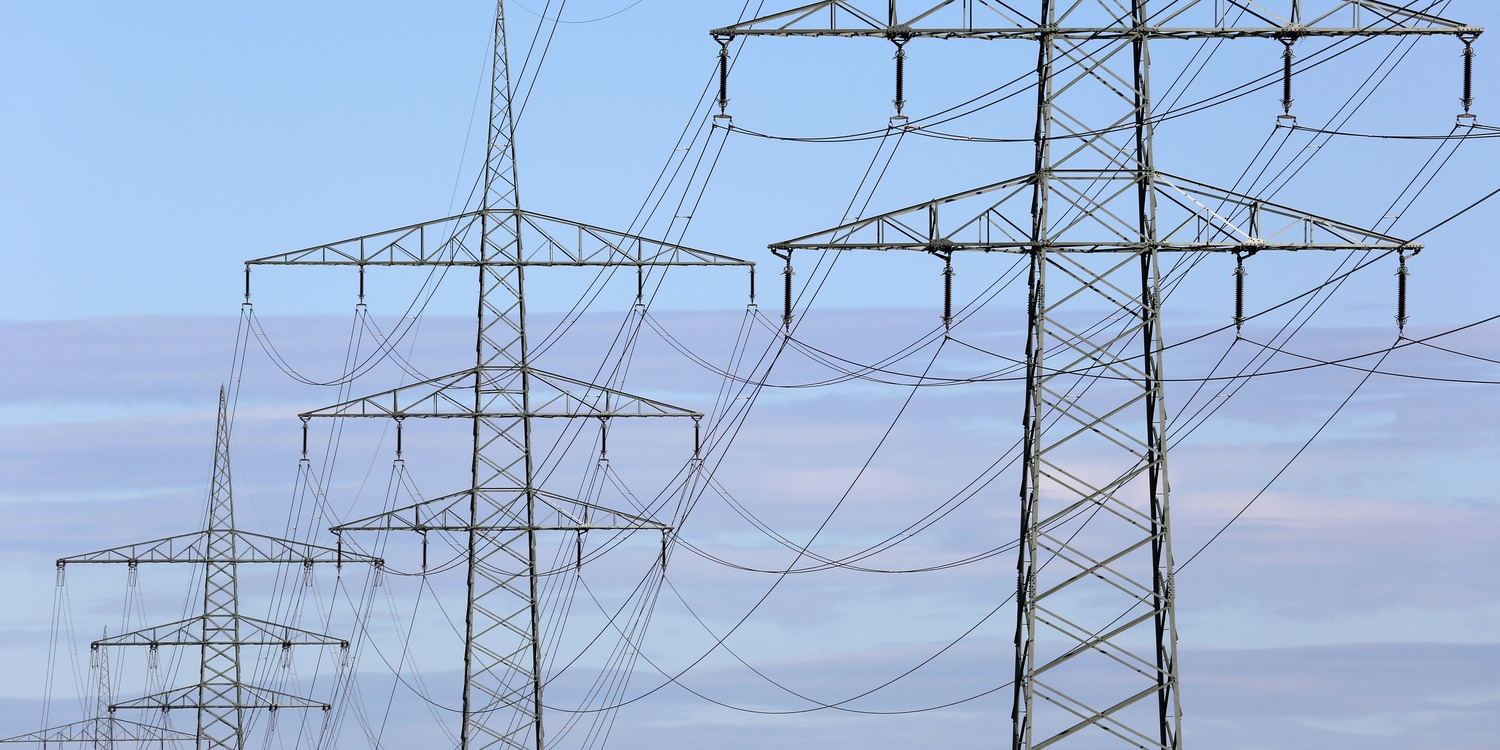
The 38 recommendations made by Weightman may be minor compared to the situation in Fukushima which prompted his survey and which is the justification for the picture used (and which references the Sellafield - then Windscale - disaster of the '50s in which contaminated milk had to be thrown away).

But they are not minor in an absolute sense. If they were, why would the UK's Energy Secretary Chris Huhne yesterday have called the UK nuclear policy "a runner to be the most expensive failure of post-war British policy-making"?

http://www.decc.gov.uk/en/content/cms/news/ch_sp_royal/ch_sp_royal.aspx

It is this legacy which Weightman and others are having to deal with.

The cost of dealing with this existing situation - mostly waste management - is huge - almost half of DECC's budget, and about £1000 per UK individual.

It is good that this is happening. The safety record of UK nuclear reactors is reasonable.

But it means that there are further delays and costs associated with new build. Not srprising that companies are pulling out. My prediction is that, if we're lucky, only one new build will happen. It will go over budget, ovr schedule, do nothing to help us meet 2020 carbon reduction targets.

Too little, too late, too expensive, too risky, too compromising for future generations.

Nothing irrational about that.

October 14, 2011    View Comment    

On Weightman Warns Nuclear Industry To Do More Research

Charles

There is a catalogue of concerns which Weightman lists which indicate that much more work is to be done before any new build nuclear can gain planning permission, and which existing plants must also address.

This is regardless of what Greenpeace says.

The headlines which the report garnered in the mainstream press belie the small print.

Weightman told his political masters what they wanted to hear in the headlines but then alerted them that there is plenty of work to be done - which the organisation he heads up, the ONR, will be given more public and private money to do.

Any other way of telling the message would not have got this result for him. Job done!

David

October 12, 2011    View Comment    

On Political Will Prevents the Dawning of the Long-Predicted Solar Age

Re grid parity for PV : General Electric’s Chief Engineer has predicted grid parity in sunny parts of the US, including California, by around 2015. In Germany, it has been predicted to happen even sooner. Strictly speaking, grid parity does not involve subsidies – it depends on (i) installed cost per Wp, (ii) level of solar radiation and (iii) price for electricity the customer is paying the utility.
Keep it simple. Once grid parity is achieved then subsidies are withdrawn.


September 2, 2011    View Comment    

On Political Will Prevents the Dawning of the Long-Predicted Solar Age

WT, You are shooting at chimeras. I never suggested that PVs alone should power the whole world. Maybe you should read my book before producing such irrelevant misinformation.

Solar is approaching grid parity in pany parts of the world. PV is not the only solar tech. My money is particularly on concentrating solar collectors (thermal power) using Fresnel lenses. There is even a power station in Australia which powers boilers from both coal and solar.

The Desertec project, which envisages large areas of CSP near the coastlines of north African countries connected to a supergrid linking al of Europe, north Africa and the Middle East is a very interesting proposal that has the backing of the EU. CSP by the way is being used successfully in tandem with molten salt storage.

August 29, 2011    View Comment    

On World's First Complete Electric Vehicle Charging Network Launched

Hey Willem, thanks for being so sharp. Here's what happened.

Every morning in two hours or so I  have to research and write a 1000 word news piece as editor of Energy and Environmental Management magazine. Some of this gets syndicated through to this site, and this story was one of them. That particular day my editor sent me Ecotricity's press release and asked me to cover it. Normally when I do something like that, I add a few other bits and pieces that I unearth. That day, I did talk to someone at Ecotricity on tjhe phone, and added their comment, rephrased their words in the press release, etc.

But in addition it was my first day on holiday. As a freelancer, I even have to work on holiday. I am camping at a festival in South Wales. I had a nightmare of a morning trying to find a way to get online and meet my deadline, driving miles to several villages and several cafes and bars buying coffees only to discover their wifi didn't work. So I could do no further research online. I could only use the info I had been sent. When i finally had finished it, a pub had opened which someone told me had wifi. I found it, bought a drink, logged in and was able to finally send the piece off. Phew!

Yes, that piece is not my best work. But it is true and a great story people nedto know about.

I've since been here a week and have successfully figured out how to use my Android phone to make a wi-fi hotspot through which I can log on with my MacBook, both charged by the solar panels on site, and research, write and submit my stories as normal, to the best of the ability in the time available for which I am paid, every weekday morning, and what's more in the middle of a field surrounded by great music!

August 2, 2011    View Comment    

On Consumers Pay For Nuclear's £1bn Windfall

Whatever is included in the price, it should be consistent, directly comparable, and transparent.

July 25, 2011    View Comment    

On Consumers Pay For Nuclear's £1bn Windfall

That's a reasonable attitude but don't forget almost alf of the department for Energy and Climate Change's budget is tied up with legacy nuclear waste.

It looks like you may be right about nuclear sealing its own death-warrant. The reality does not match the hype.

The Finnish Olkiluoto 3 plant has been lagued  by delays, coc-ups and cost overruns. And now EDF's European Pressurised Water nuclear reactor (EPR) plant in Flamanville, Normandy, France, is four years behind schedule and currently estimated to cost twice as much as the original price tag. It's also suffered two fatal accidents.

The projected cost of its electricity is now estimated to be equivalent to offshore wind, but not including interest on capital loans and decommissioning costs.

July 25, 2011    View Comment    

On Is Anaerobic Digestion The Ideal Sustainable Technology?

Willem asked for independent info. the following is the first few paragraphs of pp 173-185 in an evauation published on June 10 2011 in such a report - Review of the generation costs and deployment potential of renewable electricity technologies in the UK - covering ALL renewable technologies, by ARUP, for the UK Government, which is available here: http://www.decc.gov.uk/en/content/cms/meeting_energy/renewable_ener/rene....

Electricity generation using anaerobic digestion (AD) technology has been considered for food waste and farm manures. The installed capacity for the treatment of food waste and farm manures in 2010 is about 28MWe.

The available energy from AD is 5,661GWh per year, which is equivalent to 708MWe of installed generation capacity at 2030.

For the low scenario the installed capacity would reach 60.5% of the maximum resource available by 2030.

For the medium scenario, the maximum generation capacity is predicted to be reached by 2030.

For the high scenario the maximum generation capacity is predicted to be reached by 2020.

Anaerobic digestion (AD) is the biological conversion of biodegradable organic material by micro-organisms in the absence of oxygen, which results in a reduction in the quantity of organic material and the production of biogas, consisting of approximately 55-70% methane, 30-45% Carbon Dioxide and approximately 1% nitrogen, with trace elements of hydrogen sulphide. The process also produces a nutrient-rich liquid and solid bio-fertiliser (i.e. digestate). The process is widely employed by the water industry within the UK for the stabilisation of sewage sludge.

In addition to the water industry, there is a growing interest in the digestion of alternative feedstock including food waste, farmyard waste materials and crops grown specifically for AD. However, AD plant development in the UK has been slow compared to some other EU member states (e.g. Austria, Denmark, Germany and Sweden).

There is a number of AD technologies available and their technical complexity and associated capital and operational costs depend on the feedstock to be treated. Typically, food waste AD plants are technically more complex requiring, for example, a greater degree of pre- or post-processing of the feedstock to remove certain contaminants such as plastic packaging, metals, glass etc, and pasteurisation units to meet the strict Animal By-Products Regulations etc. The AD process operates under mesophilic (25-45°C) or thermophilic (50-60°C) conditions.

Furthermore, the process may operate as either a dry digestion process, with material at a dry solids content of greater than 15%, or a wet process, operating below 15% dry solids, more suited to materials such as animal slurry.


Biogas is typically collected and used to heat the digester, to optimise the digestion process, and at larger plants where it is economical, biogas is collected and used for in combined heat and power (CHP) plants. Current advances are also being made in the injecting of biomethane (processed biogas) into the national gas grid and the use of biomethane as biofuel for transport.

Digestion of food waste and of manures may be carried out separately or in a combined treatment process. As stated above, the former can require significant pre-treatment processing, to remove contaminants such as packaging, and may therefore entail a greater capital and operating cost depending on the food waste being processed.

While there are both cost and legislative differences in the treatment of farm and food waste, digestion of these two waste streams is sometimes carried out together.

A small number of the existing anaerobic digestion plants in the UK, both on-farm and off-farm, both on-farm and off-farm, treat a mixture of food waste and manures, and depending on their environmental permits may vary the feedstock to some degree, based on the availability and the increase in income associated with treating food waste from both a gate fee and increased biogas potential.

In addition, to the benefits provided by energy production, the digestion of food waste provides the benefit of a sustainable waste treatment process for the diversion of biodegradable material away from landfill, in line with UK regional waste strategies.

The digestion of farmyard manures improves the fertilising properties and reduces the environmental effects of spreading undigested manure and slurry (Environment Agency, 2010)

June 28, 2011    View Comment    

On Is Anaerobic Digestion The Ideal Sustainable Technology?

I entirely agree. In the UK the problem has ben that the civil servants deciding energy policy didn't rate energy efficiency - they like big plants - until recently. At the EU level, however, there is still reluctance to make efficiency targets anything but voluntary.

June 27, 2011    View Comment    

On Is Anaerobic Digestion The Ideal Sustainable Technology?

There are planety of low cost and no cost things that can be done to save energy. Many more expensive options still have returns on invetment far better than putting money in the bank (which you can't trust anyway!). And you can be sure the price of energy will continue to rise guaranteeing an even faster return.

June 27, 2011    View Comment    

On Is Anaerobic Digestion The Ideal Sustainable Technology?

Dear Rick


The technology has come a long way since then. There's more about it here: http://www.biogas-info.co.uk/

June 27, 2011    View Comment