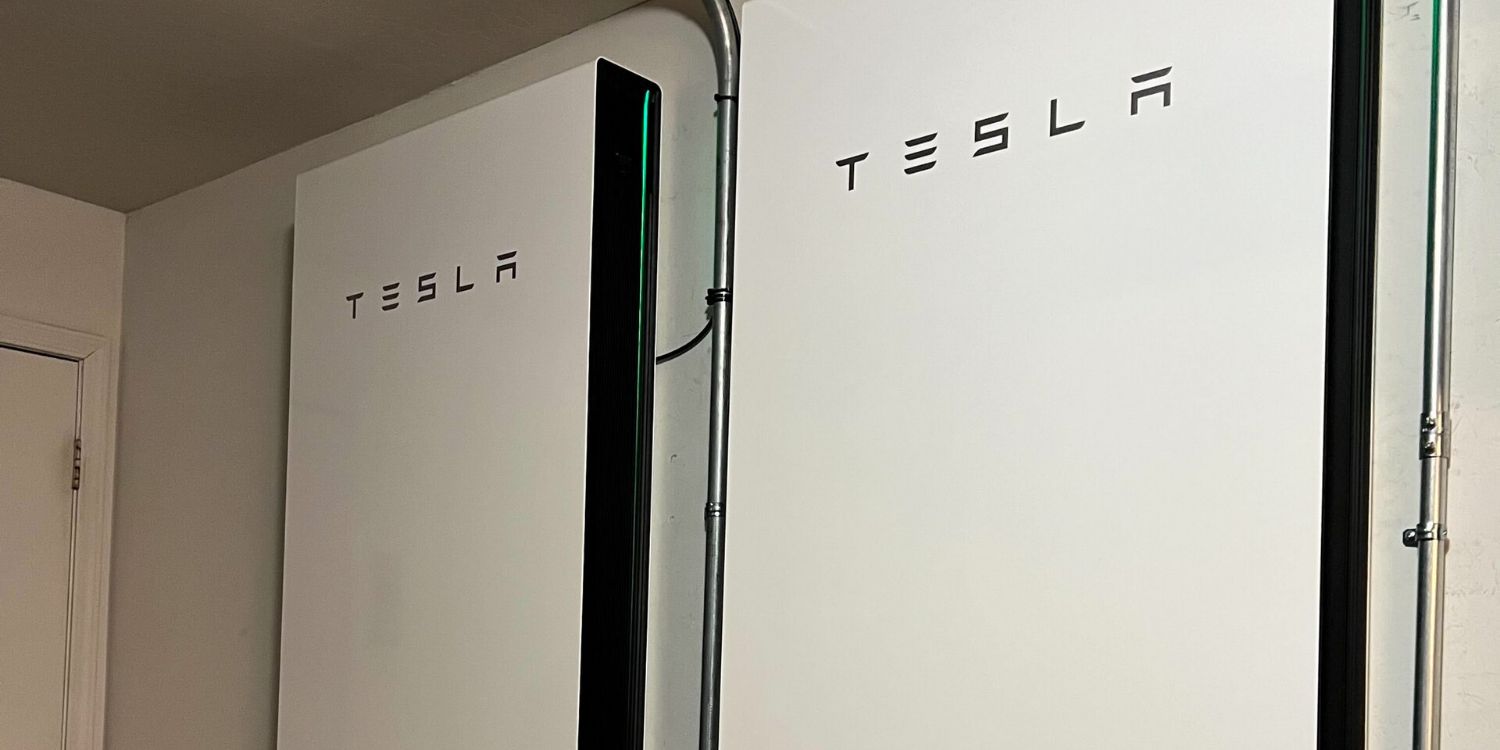
A home battery backup is a battery wired into your house that keeps the power on when the grid goes down, and the average installed system on EnergySage’s marketplace cost $15,650 before incentives in the first half of 2026. Our pick for most homes is the Tesla Powerwall 3, which typically installs for $13,473, about 13% below the average battery there. For backup on the circuits you pick, EcoFlow’s Delta Pro 3 kit with a smart subpanel costs $4,189. Homeowners who buy a battery in 2026 get no federal tax credit, though a few state and utility programs still pay toward one.
- Tesla Powerwall 3 for most homes that want the whole house backed up
- FranklinWH aPower 2 for keeping central AC and a water heater running in an outage
- Enphase IQ Battery 5P and 10C for homes that already have Enphase microinverters
- Generac PWRcell 2 for homes already on Generac equipment
- EcoFlow Delta Pro Ultra for starting small and scaling up to whole-home backup
- EcoFlow Delta Pro 3 with Smart Home Panel 2 for backing up the circuits you pick without a full installed battery system
EcoFlow prices on this page are the maker’s US store price in September 2026. These brands discount often, so the price moves. The four installed batteries are priced by installer quote.
What a home battery backup costs in 2026
The average home battery system on EnergySage’s marketplace cost $15,650 before incentives in the first half of 2026. Where you live changes how much a home battery costs, with a typical system averaging anywhere from $10,274 in Arkansas to $18,414 in Wyoming. Equipment makes up 50% to 60% of the total, so 40% to 50% of the bill goes to everything other than the hardware.
Quotes are easiest to compare by cost per kWh. Across the top 10 brands EnergySage tracks, that figure runs from $342 to $3,505 per kWh. In EnergySage’s 2026 ranking, the Powerwall 3 averages $998 per kWh and the FranklinWH aPower 2 averages $1,177. The two EcoFlow picks are sold as hardware, at $4,189 for the Delta Pro 3 kit and $4,199 for the Delta Pro Ultra base unit, EcoFlow’s US store prices in September 2026.
Homeowners who buy a battery in 2026 get no federal tax credit. The 30% Residential Clean Energy Credit, Section 25D, isn’t available for property placed in service after December 31, 2025. Leasing works differently. A company that owns a battery and leases it to you, or sells you its output, can still claim the business credit under Section 48E, because the new 48E deadlines for solar and wind don’t apply to storage and the law didn’t ban leased systems. The credit belongs to the company, so ask any lease provider whether it shows up in your price.
California’s Self-Generation Incentive Program pays per watt-hour of storage. As of September 2026, the general-market rate for home batteries steps down through funding tranches from $0.50 to $0.20 per Wh as money is claimed. The Equity budget pays $1.10 per Wh, and the Equity Resiliency budget pays $1.00 per Wh to customers in high fire-threat areas or those hit by Public Safety Power Shutoffs.
Massachusetts and Hawaii pay by the kilowatt instead. National Grid’s ConnectedSolutions program in Massachusetts pays $275 per kW of your battery’s average performance from June 1 to September 30, which comes to about $1,200 a year for a typical battery. The rate is locked for your first five summers. In Hawaii, the Battery Bonus program closed to new participants on July 1, 2024. Hawaiian Electric’s current program, Bring Your Own Device Plus, pays $400 per kW you commit, with no cap, and low- and moderate-income customers get another $400 per kW. BYOD Plus adds a monthly export credit, though NEM and NEM Plus customers don’t get it.
How much battery your home needs
The average US home used 10,791 kWh of electricity a year, or about 899 kWh a month. Divided by 365, that’s about 29.6 kWh a day, or roughly 1.23 kWh an hour. A single Powerwall 3 holds 13.5 kWh, a bit under half of an average day. Two FranklinWH aPower 2 units at 15 kWh each cover a full average day with a little to spare.
Counting major events, the average US customer had 1.4 interruptions totaling 5.6 hours in 2022, according to EIA. At 1.23 kWh an hour, 5.6 hours of average use comes to about 6.9 kWh, which one Powerwall 3 covers about twice over. EIA’s 2023 figure of about 2 hours across 1.3 interruptions leaves major events out, so it measures something different and can’t be set against the 2022 number.
A critical-loads setup backs up only the circuits you choose, which shrinks the power you need. A refrigerator runs at about 700 W and a half-horsepower furnace blower at about 800 W, per SizeMyHome’s appliance chart, so the pair needs 1,500 W, well inside the Delta Pro 3’s 4,000 W. A 2-ton central AC is the load that pushes you toward whole-home backup. It runs at about 3,800 W and needs about 5,800 W to start, so it nearly fills a 4,000 W plug-in system by itself, while the Powerwall 3’s 11.5 kW continuous rating covers even its starting draw.
Whole-home batteries versus plug-in battery backup
The difference is how much of your house runs at once. A whole home battery backup carries the full house at the same time, up to its power rating, which is 11.5 kW continuous for the Powerwall 3 and 10 kW for the aPower 2. Generac rates the PWRcell 2 for whole-home backup up to 200 amps, and Enphase batteries need an IQ Meter Collar to back up a full home.
A plug-in setup pairs a portable battery with a smart subpanel. EcoFlow’s Smart Home Panel 2 takes over 12 circuits and switches them to battery in 20 milliseconds, and the battery’s output caps how many of those circuits can run together. The panel still gets wired to your home’s main electrical panel, and EcoFlow’s store offers to connect you with a local electrician for that job. The Delta Pro Ultra gives you a path to whole-home backup without buying a full installed system on day one.
Home battery backup without solar works with either type. Every pick on this list charges from the grid, so panels are optional. If you have solar or plan to add it, the Powerwall 3 is the one with a built-in solar inverter, which lets a new array feed it DC power directly, and it can also run AC-coupled beside an existing inverter. The other installed picks connect on the AC side. The basics of how these batteries store and release power are in the battery energy storage explainer.
If all you want is a fridge and a phone charger through a short outage, a portable power station on its own may cover it.
The best home battery backup systems
The best battery backup for home use depends on how much of the house you want running in an outage and how much installation you’re willing to pay for.
| Battery | Usable capacity | Continuous power | Whole-home capable | Warranty | Price |
|---|---|---|---|---|---|
| Tesla Powerwall 3 | 13.5 kWh | 11.5 kW | Yes | 10 years | Installer quote, $998/kWh typical |
| FranklinWH aPower 2 | 15 kWh | 10 kW | Yes | 15 years or 60 MWh | Installer quote, $1,177/kWh typical |
| Enphase IQ Battery 5P / 10C | 5 kWh / 10 kWh | 3.84 kW / 7.08 kW | Yes, with IQ Meter Collar | 15 years or 6,000 cycles | Installer quote |
| Generac PWRcell 2 | 9 to 36 kWh | 5.2 to 11.5 kW | Yes, up to 200A | 10 years or 7.56 MWh | Installer quote |
| EcoFlow Delta Pro Ultra | 6.144 kWh, expands to 90 kWh | 7.2 kW | Yes | 5 years | $4,199, Sept. 2026 |
| EcoFlow Delta Pro 3 + Smart Home Panel 2 | 4.096 kWh, expands to 36 kWh | 4 kW | No, 12 circuits | Not listed on the kit page | $4,189 |
Source: maker spec pages and datasheets from Tesla, FranklinWH, Enphase (5P, 10C), Generac and EcoFlow (Delta Pro Ultra, Delta Pro 3 kit). Every Powerwall 3 figure except the warranty, plus the aPower 2’s per-kWh price, is from EnergySage. EcoFlow prices are the maker’s US store price in September 2026.
If you’re shopping for Powerwall alternatives, the FranklinWH aPower 2 holds more per unit, 15 kWh against Tesla’s 13.5, and Enphase matches FranklinWH’s 15-year warranty term in smaller modules.
Tesla Powerwall 3
Our pick for most homes that want the whole house backed up.
The Tesla Powerwall 3 earns the top slot on price and power. EnergySage’s marketplace data puts its typical installed cost at $13,473, or $998 per kWh, about 13% below the average battery sold there, and it runs 11.5 kW continuously from 13.5 kWh of storage. It charges from the grid if you don’t have solar, and its built-in solar inverter can take DC power straight from a new array.
The Powerwall 3 isn’t part of the CPSC recall announced November 13, 2025, which covers about 10,500 older Powerwall 2 units sold from November 2020 to December 2022 over a fire hazard.
The drawback is that Tesla publishes no US list price, so you won’t know your cost until you get quotes, and EnergySage’s state averages for a typical battery system range from $10,274 to $18,414.
- Usable capacity: 13.5 kWh
- Continuous power: 11.5 kW
- Warranty: 10 years
- Price: installer quote, $13,473 typical installed
FranklinWH aPower 2
Best if your central AC and water heater have to keep running when the grid is down.
FranklinWH built the aPower 2 to carry heavy loads like AC and water heaters through an outage, and EnergySage names it the battery with the highest peak power in its 2026 ranking. Each unit holds 15 kWh and runs 10 kW continuously, with bursts to 15 kW for 10 seconds and 25 kW for one second. You can link up to 15 units on one aGate for 225 kWh, the highest ceiling on this list, and the warranty runs 15 years or 60 MWh of throughput.
FranklinWH doesn’t publish a price, and EnergySage’s data puts the aPower 2 at $1,177 per kWh, about 18% more than the Powerwall 3’s $998.
- Usable capacity: 15 kWh
- Continuous power: 10 kW
- Max stack: 225 kWh
- Warranty: 15 years or 60 MWh
- Price: installer quote, about $1,177 per kWh in EnergySage’s data
Enphase IQ Battery 5P and 10C
For homes that already make power with Enphase microinverters.
Both Enphase batteries here carry their own microinverters and connect on the AC side. The IQ Battery 5P holds 5 kWh and delivers 3.84 kW continuously, which lets you build up capacity in 5 kWh steps. The IQ Battery 10C holds 10 kWh at 7.08 kW in one box. Both carry a 15-year or 6,000-cycle warranty with at least 60% of capacity left at the end, tied with FranklinWH for the longest term here. Full-home backup takes an added IQ Meter Collar.
Enphase publishes no limit on how many batteries you can stack and no prices, so the size and cost of a big system depend on how an installer designs it.
- Usable capacity: 5 kWh or 10 kWh
- Continuous power: 3.84 kW or 7.08 kW
- Warranty: 15 years or 6,000 cycles
- Price: installer quote
Generac PWRcell 2
A fit for homes that already run a Generac standby generator or PWRmanager.
Rated for whole-home backup up to 200 amps, the Generac PWRcell 2 comes from the same lineup as Generac’s standby generators and PWRmanager. Each cabinet holds 9 kWh in the base M3 setup, and two cabinets reach 36 kWh. Continuous output runs from 5.2 kW on the M3 up to 11.5 kW. Generac rates a PWRcell 2 combined with AC-coupled solar at up to 26.5 kW of backup power.
The PWRcell 2 tops out at 36 kWh, the lowest published limit among the installed batteries here and far under FranklinWH’s 225 kWh, which makes it a poor fit for multi-day backup in a large home.
- Usable capacity: 9 to 36 kWh
- Continuous power: 5.2 to 11.5 kW
- Warranty: 10 years or 7.56 MWh
- Price: installer quote
EcoFlow Delta Pro Ultra
Suited to buyers who want to start with one unit and build toward whole-home backup later.
Of the whole-home-capable batteries here, only the EcoFlow Delta Pro Ultra has a price on the maker’s own store. The base unit costs $4,199 on EcoFlow’s US store in September 2026, and it holds 6.144 kWh. Adding battery packs takes it to 90 kWh with 15 of them. One inverter puts out 7.2 kW continuous and 10.8 kW peak, and more inverters stretch the range to 21.6 kW.
It charges from the grid or a generator and pairs with EcoFlow’s Smart Home Panel 2. EcoFlow calls it the only portable power station certified to both UL1973 and UL9540.
Its 5-year warranty is the shortest among the whole-home-capable picks, against 10 years for the Powerwall 3 and 15 for the aPower 2.
- Usable capacity: 6.144 kWh, up to 90 kWh
- Continuous power: 7.2 kW per inverter
- Warranty: 5 years
- Price: $4,199, EcoFlow’s US store price in September 2026
EcoFlow Delta Pro 3 with Smart Home Panel 2
The pick for backing up the circuits you care about most, with no whole-home install.
This EcoFlow Delta Pro 3 with Smart Home Panel 2 kit pairs a portable battery with a subpanel that takes over 12 circuits you pick and switches them to battery in 20 milliseconds when the grid drops. The battery holds 4.096 kWh to start and grows to 36 kWh with three units and six extra batteries. It charges from the wall without solar. The kit costs $4,189, plus an electrician to wire the panel to your main panel, which EcoFlow’s store can arrange.
At 4,000 W continuous, it can’t run a central AC alongside much else, since a 2-ton unit alone runs at about 3,800 W.
- Usable capacity: 4.096 kWh, up to 36 kWh
- Continuous power: 4,000 W
- Price: $4,189 for the kit
Battery backup versus a generator
A generator costs less to install. Angi puts typical installed costs at $1,512 to $8,803, with a national average around $5,157, and its whole-house tier of 22 to 48 kW at $5,000 to $18,000. EnergySage’s battery average is $15,650. The two figures come from different sources, so the comparison is rough, but the average battery system costs about three times the average generator install.
The generator keeps costing money after that. Angi estimates a 15 to 20 kW unit costs $90 to $220 a day to run, with annual fuel at $2,000 to $21,000 for natural gas or propane and $3,000 to $20,000 for diesel. A battery burns no fuel and refills from the grid or your solar once power is back.
A generator wins on runtime, since it keeps going for as long as it has fuel. A 13.5 kWh Powerwall 3 lasts about 11 hours at the average home’s 1.23 kWh an hour, longer if you cut back to critical loads or stack more batteries.
What would change the answer
At 30%, the federal credit that ended with 2025 would be worth about $4,700 on the $15,650 average system. That’s money a 2026 buyer now pays out of pocket. If you lease, the company that owns the battery can still claim Section 48E, and it’s up to the lease terms whether any of that reaches you.
State and utility programs can close part of the gap. In Massachusetts, the typical $1,200 a year from ConnectedSolutions adds up to about $6,000 over the five summers with a locked rate. In Hawaii, committing 5 kW from a 15 kWh battery to BYOD Plus earns $2,000 at $400 per kW, and Hawaiian Electric’s own example puts that setup’s export credit at about $52 a month.
Base Power is a Texas-only option that installs and keeps ownership of a 39.2 kWh battery at your home for a $695 install fee plus $19 a month, and you buy your electricity from Base at its own rate. It makes its money sending that battery’s power to the grid during peak demand.
