A geothermal heat pump costs $15,000 to $40,000 or more to install in 2025, and Carrier’s buying guide lists the same range. The system doesn’t tap into volcanic heat or anything from deep underground. It works because the ground 10 feet down holds a steady temperature, between 50°F and 60°F, according to the Energy Information Administration. A loop of buried pipe carries fluid down into that stable zone and back up, and a heat pump inside the house pulls warmth out of it in winter and dumps heat back into it in summer.
The ground loop, not a volcano
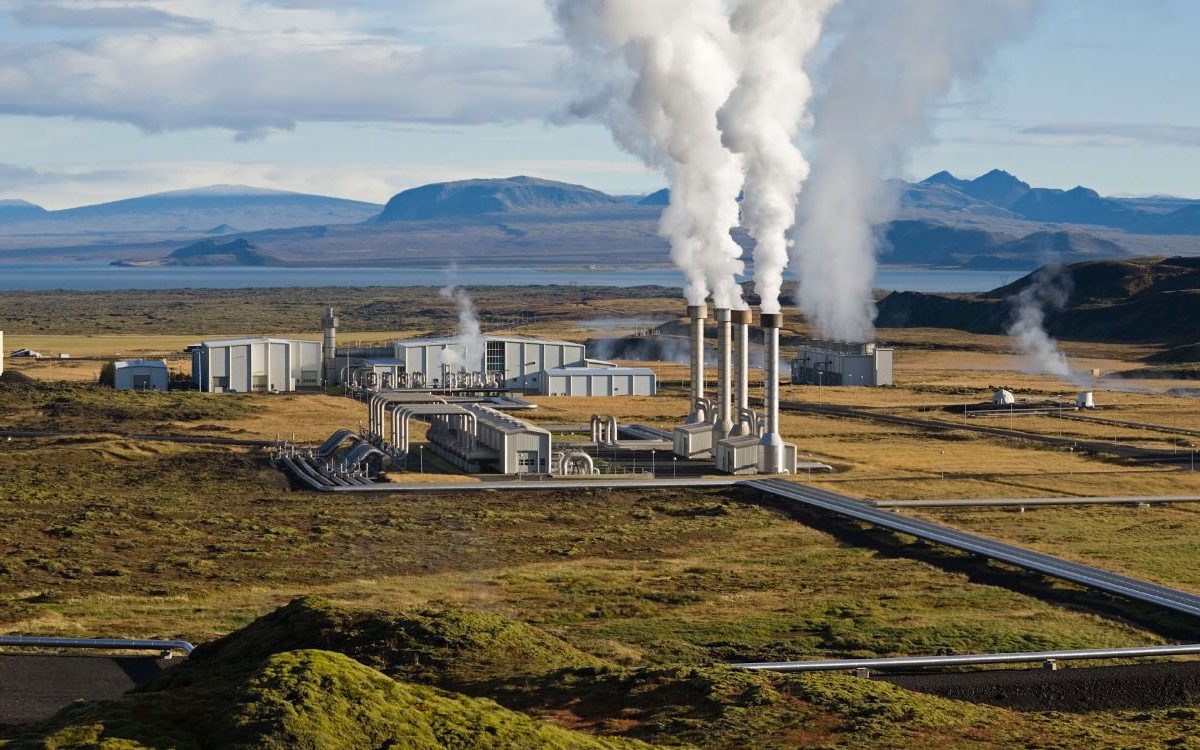
That’s the job of an actual geothermal power plant, the kind that taps deep, naturally hot rock in places like Iceland or Northern California. A home system, more accurately called a ground-source heat pump, runs on something simpler. Dirt and rock a few feet under the frost line stay close to the region’s average annual air temperature, whether it’s January or July.
A sealed loop of high-density plastic pipe, filled with water or a water-antifreeze mix, runs down into that zone and back up to a heat exchanger. In winter, fluid cooler than the house but warmer than the outside air comes up from the ground, and the heat pump concentrates that warmth and pushes it inside. In summer the process runs backward. Heat gets pulled out of the house and dumped into the ground, so the compressor does far less work than an air-source unit fighting a frigid night or a scorching afternoon.
Four ways to bury the loop
How the loop gets installed depends mostly on how much land there is and what’s underneath it.
Horizontal loops get buried in trenches 4 to 6 feet deep, and they’re often the least expensive option when there’s enough open yard for one, according to EnergySage.
Vertical loops go into boreholes drilled 150 to 250 feet deep per ton of heating and cooling capacity. They cost more, since drilling is expensive, but they work on small lots where a horizontal trench field has no chance of fitting.
Pond or lake loops submerge coiled pipe in a pond or lake at least a half-acre wide and 10 to 12 feet deep, with the pipe coiled at least 8 feet below the surface so it won’t freeze. Where a homeowner already has a pond like that, running a loop through it skips the trenching or drilling the other options need.
Open-loop systems pull groundwater from a well and run it through the heat exchanger before it returns to the aquifer through a second well or an approved discharge point. Where there’s an adequate well, it can cut excavation costs compared with a horizontal or vertical loop, but it only works where local water rights and groundwater quality allow it, and plenty of jurisdictions restrict or ban it outright.
How efficient these systems run
ENERGY STAR certifies closed-loop water-to-air geothermal systems at a coefficient of performance, or COP, of at least 3.6. Open-loop systems have to reach a COP of 4.1 or higher. In plain terms, a COP of 3.6 means the system delivers 3.6 units of heat for every unit it consumes.
The Department of Energy says a well-built system moves between three and five times the energy it consumes between the ground and the house. That’s also why geothermal can use 25% to 50% less energy than an air-source heat pump, even though it costs more to install.
What installation costs
That range swings a lot in practice. EnergySage flags a real installation in Massachusetts that hit $78,000 in 2023, well above the typical high end.
Vertical drilling costs more per foot than a horizontal trench, and rock underneath a lot costs more to drill through than soil. A larger home needs more capacity, which means deeper wells or a bigger horizontal field. Retrofitting an older home often means new ductwork at the same time as the heat pump and loop, a cost Carrier lists as one of its main price drivers. Leaky, undersized ducts are also a major source of home heat loss on their own, loop or no loop.
The federal tax credit is gone
The 30% federal tax credit for residential geothermal, Section 25D, is not available for any property placed in service after December 31, 2025, and it doesn’t come back after that. The One Big Beautiful Bill Act, signed July 4, 2025, repealed Section 25D along with Section 25C, which had covered air-source heat pumps and other efficiency upgrades.
Homeowners who got a system running before the end of 2025 can still claim the 30% credit on Form 5695 with their 2025 return. Anyone installing one now pays full price at the federal level. The IRS defines “placed in service” as the installation being complete and operating, not just paid for or under contract.
The law did carve out one workaround. Commercial-grade geothermal systems are now exempt from a rule that used to block leasing them to homeowners, so some installers are shifting toward leased systems instead of owned ones with a credit attached.
What’s left federally are the HEAR and HOMES rebate programs, which pay out based on income or on measured energy savings and, as of September 2026, are available in some states with more coming. The DSIRE database tracks whatever state and utility programs are running where you live.
Payback, and what moves it
DOE’s own consumer guide puts payback at about 5 to 10 years in energy savings. EnergySage’s version of that same guidance puts it closer to 10 to 15 years. Either estimate can be right, depending on the house.
What fuel you’re replacing matters. Swapping out propane or heating oil, both expensive per unit of heat, pays back faster than swapping out cheap natural gas. Your local electricity rate matters too, since the system’s entire operating cost is electric. And with the federal credit gone, every project now takes meaningfully longer to break even than it would have with the 30% credit knocking a third off the upfront cost.
When an air-source heat pump is the better call
Ground-source systems aren’t the right answer for every house. A standard air-source heat pump installed whole-home runs an average of $15,393 before incentives, with a national range from about $8,000 in New Mexico to $33,000 in New York. The equipment is no bigger than a central air conditioner and a furnace, and there’s no loop field to size against the shape of your lot.
Cold-climate air-source units have also closed a lot of the performance gap. Northeast Energy Efficiency Partnerships found that replacing electric resistance heat with a cold-climate heat pump saves about 3,000 kWh a year, worth about $459. Swapping out oil heat instead saves more, 6,200 kWh, worth about $948.
The easiest geothermal sale is a homeowner already burning propane or oil, with either the yard for a horizontal loop or the budget for vertical drilling. Add a plan to stay in the house long enough to see the payback through, and it’s an easy case to make. Take away any one of those conditions and an air-source heat pump usually wins.
A small urban lot without room for a loop field forecloses geothermal on its own. A house on a slab that needs new ductwork anyway erases part of geothermal’s advantage. Someone who might sell in five years won’t be the one collecting a payback that takes a decade or more to arrive.
The math could still shift back. HEAR and HOMES rebates are available in some states, with more coming as of September 2026, and a state rebate stacked on a leased system can bring payback closer to where the federal 30% credit used to put it.