Originally published November 7, 2016. Updated September 28, 2026.
COP30, the UN’s climate summit in Belém, Brazil, from November 10 to 21, 2025, closed without a binding promise to phase out fossil fuels. That gap between ambition and the final text has shown up at every COP before it, and the pledges filed so far still point to a hotter world than the one countries agreed to hold to in Paris.
If every pledge on the books gets kept, the world tracks toward about 2.3 to 2.5 degrees Celsius of warming by 2100, the UN Environment Programme found. Go by current policy instead of promises, and that figure climbs to 2.8 degrees, still short of the Paris Agreement’s goal of holding warming well below 2 degrees Celsius.
Belém closes without a binding fossil fuel deal
COP30 in Belém closed with a package of decisions the UN calls the Belém political package. UN Secretary-General António Guterres said the summit had “delivered progress,” pointing to an accord that calls for tripling funding for developing nations to handle climate impacts and build clean energy, while adding that countries still need “clear and credible plans to transition away from fossil fuels,” a sign the final text stopped short of making that transition a binding rule. If you’re trying to gauge whether COP30 delivered anything concrete, the funding commitment is the number you can hold onto. The fossil fuel language never became one.
That funding builds on a number set the year before. Money for a solar farm or a flood wall in a country that didn’t cause the problem has to come from somewhere, and this is the number. At COP29 in Baku, developed countries agreed to lead the effort to mobilize $300 billion a year by 2035 for developing nations, up from the old $100 billion goal, and the summit called for $1.3 trillion a year from all sources by the same date, a goal Belém reaffirmed.
What the pledges add up to for warming
How much warming the current round of pledges adds up to depends on which tracker you check, because the two trackers use different methods that don’t blend into one number. The UN Environment Programme’s Emissions Gap Report, published November 4, 2025, found the 2025 round of pledges “barely moved the needle” from the year before.
Climate Action Tracker, updated November 13, 2025, put current policies at roughly 2.6 degrees, and pledges and targets bring that median down to roughly 2.2 degrees. If you’re sizing up a company’s own net-zero pledge against those numbers, this is the honest comparison. Even every net-zero promise on the books, kept in full, gets the world to roughly 1.9 degrees, not zero.
Both trackers point the same direction even after the different math. None of these numbers gets warming under the Paris Agreement’s 1.5 degree benchmark, the threshold the Intergovernmental Panel on Climate Change treats as the line for avoiding the worst climate impacts.
The US pulls out of the agreement it helped write
If you’re a US taxpayer, the clock already ran out. On January 20, 2025, the White House signed an executive order directing the US ambassador to the UN to file a withdrawal notice from the Paris Agreement “immediately,” but the agreement doesn’t work that fast. Article 28 requires a full year’s notice before a withdrawal takes legal effect, and the UNFCCC’s own count of member parties dropped from 195 to 194 as of January 27, 2026, a year after that notice went in.
That leaves 194 parties working from a new round of national pledges, called NDC 3.0, shaped by the first Global Stocktake’s findings from COP28. Every pledge a country files goes into the UNFCCC’s public registry for anyone to check, the US pledge included, for as long as it stays on file.
How the rules got built, from Copenhagen to Dubai
The summit process started out fragile. At COP15 in Copenhagen in 2009, negotiators produced the Copenhagen Accord, but the conference never adopted it by full consensus. It still moved money, with rich countries pledging $30 billion in “fast-start” finance for 2010 through 2012 and setting a target of mobilizing $100 billion a year by 2020. COP16 in Cancún a year later formally adopted the 2 degree limit and created the Green Climate Fund, run by a 24-member board with the World Bank as its interim trustee.
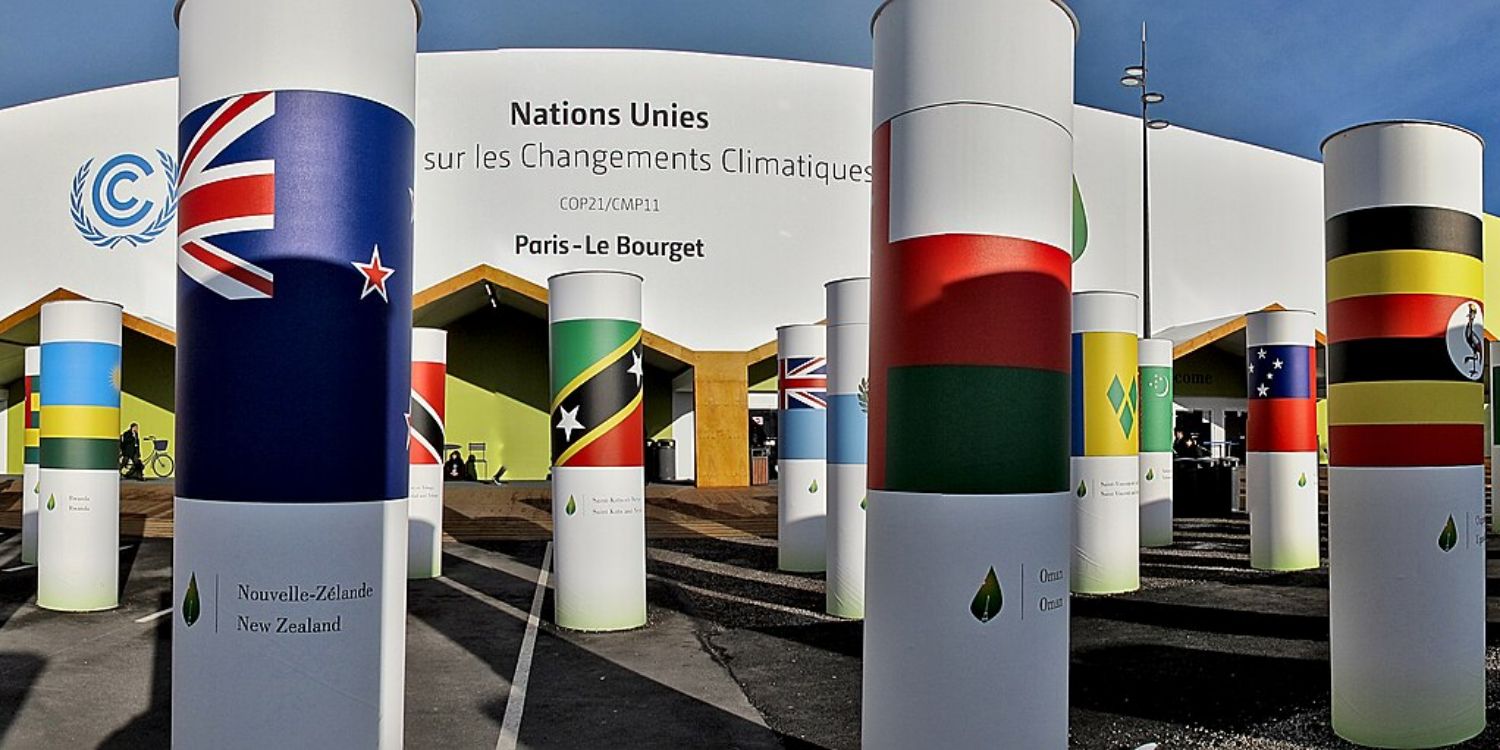
COP17 in Durban in 2011 launched what negotiators called the Durban Platform, a mandate to negotiate a new agreement with legal force that would apply to every country, with talks due to wrap by 2015 and the resulting deal to take effect from 2020. They hit that deadline. The Paris Agreement was adopted at COP21 on December 12, 2015, by 195 parties, setting the current target of well below 2 degrees Celsius while pursuing efforts toward 1.5 degrees, and it took legal effect on November 4, 2016. COP22 in Marrakech convened days after that.
COP26 in Glasgow finished the Paris Agreement’s operating manual in 2021. Negotiators agreed the Article 6 rules for international carbon markets after six years of deadlock, the system that lets a solar farm in one country sell the emissions it avoided as a credit a refinery in another country buys to meet its own target. Glasgow’s decision text also became the first at a COP to mention coal and fossil fuel subsidies by name, and COP28 in Dubai went further two years later. The summit completed the first Global Stocktake and found progress “too slow across all areas,” and its decision text became the first to call on every country to start “transitioning away from fossil fuels in energy systems, in a just, orderly and equitable manner.”
COP31 in Antalya inherits Belém’s unfinished fight
Whether a future summit’s text uses the words “fossil fuels” the way COP28’s did is still an open question. Türkiye hosts COP31 in Antalya from November 9 to 20, 2026, after a preparatory ministerial meeting held in Fiji, Tuvalu, and Australia from October 5 to 8, 2026. Negotiators pick the fight back up there, with Belém’s finance package as their starting point and a binding fossil fuel exit still missing from the text.
The next pledge cycle runs on its own separate clock. Countries file national pledges on a five-year cycle, and the next full update to the UNFCCC’s registry comes due in 2030, years before any of the century-end numbers above get tested against what happened.