The capacity factors and useful service lives of industrial wind turbines are important determinants of levelized wind energy costs. Some recent studies have brought to light the capacity factors are less and useful service lives are shorter than typically used in spreadsheet-based analysis by IWT promoters to obtain bank financing and governmental approvals and sway the lay public, including legislators.
Lesser IWT Capacity Factors: Based on analyses of actual IWT production results, it appears the capacity factors of wind energy projects in many areas of the world are much less than estimated by project developers. As a result, the capital costs and environmental impacts of implementation would be much greater, because a greater capacity of wind turbines and transmission systems would be required to generate the same quantity of energy. See detailed explanation below.
Shorter IWT Useful Service Lives: in this article, a 20-year life is assumed, instead of the 25 years typically used by IWT project developers to obtain bank financing, federal and state subsidies and "Certificate of Public Good" approvals.
http://www.telegraph.co.uk/earth/energy/windpower/9770837/Wind-farm-turbines-wear-sooner-than-expected-says-study.html
https://www.wind-watch.org/documents/rethinking-winds-impact-on-emissions-and-cycling-costs/
http://docs.wind-watch.org/global-wind-resource-overestimated.pdf
NREL WIND ENERGY VISION
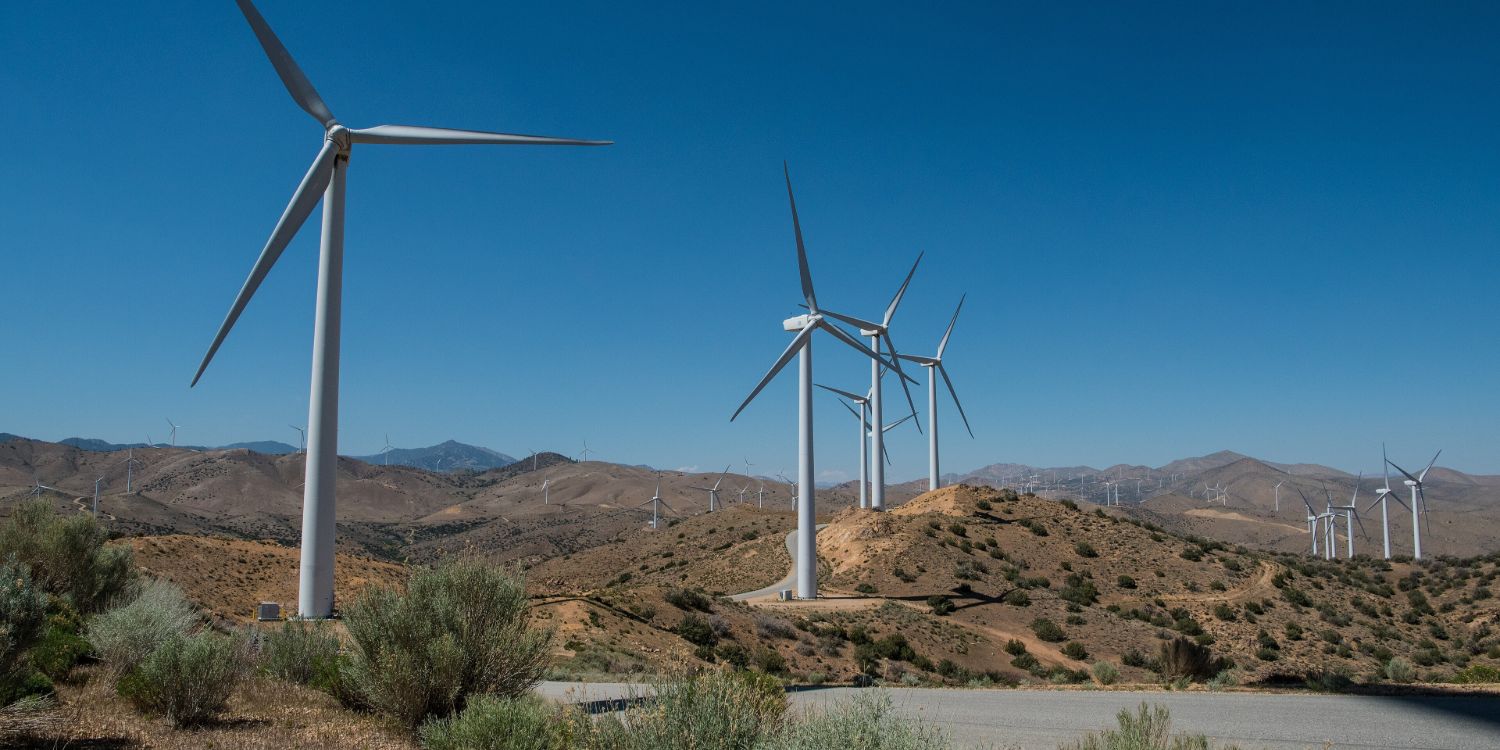
The US-DOE is envisioning the US having at least 20% of its energy from IWTs by 2050. Most of the wind turbines would be located in the Great Plains, where are the good to excellent winds. Currently, about 90% of wind turbine capacity, generating at least 95% of wind energy, is located west of Chicago.
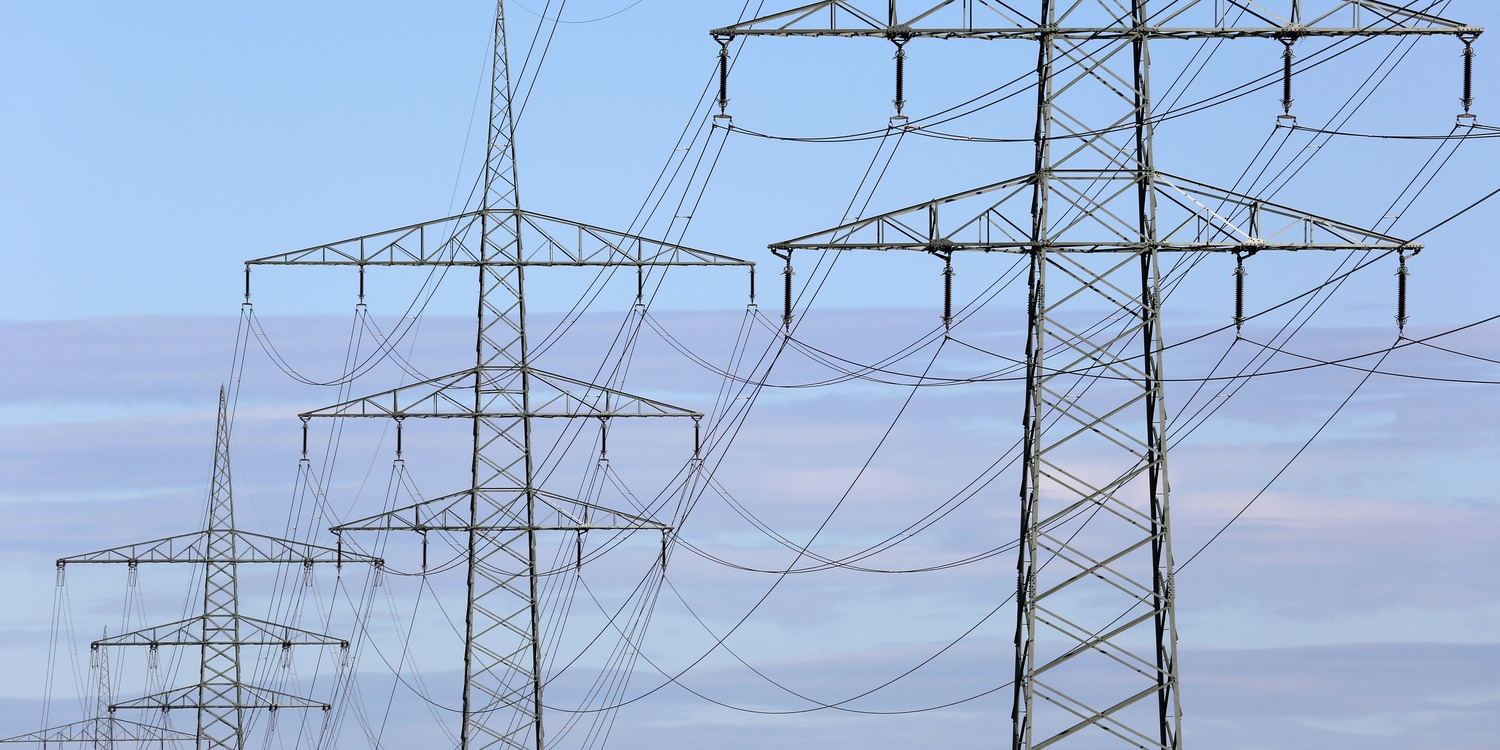
The National Renewable Energy Laboratories, NRELs, have proposed multiple corridors with High Voltage Direct Current, HVDC, lines from the Great Plains to the East Coast, where the people are. Those lines have much less line losses than HVDC lines, and can be buried, or on pylons, as needed, to satisfy NIMBY concerns.
The implementation of at least 20% wind energy would have major impacts on the US electric power system and would require trillions of dollars.
Wind Energy Production and Transmission: About 90% of all wind turbines are west of Chicago. Transmitting their energy from the Great Plains to the East Coast via the envisioned seven (7) HVDC lines incurs energy losses. Below is a list of assumptions.
Average capacity factor, CF, of all wind turbines = 0.38
Loss due to gathering wind energy to AC lines = 1%
Loss due to step up to Great Plains AC voltage = 1%
Loss due to AC transmission to HVDC lines = 2%
Loss due to step up to HVDC voltage = 1%
Loss due to AC to DC conversion = 2%
Loss due to HVDC transmission to the East Coast = 5%
Loss due to DC to AC conversion = 2%
Loss due to step down to East Coast AC voltage = 1%
Loss due to transmission on East Coast = 3%
Loss due to distribution to users = 4%
As a result of the above losses, the net CF at the user’s meter is about 0.304.
Captal Cost of NREL Build-out: As the above NREL-envisioned IWT build-out proceeds to achieve 20% wind energy by 2052, and assuming a 20-year life, almost all of the existing 52,000 MW of IWTs would need to be replaced during 2012 - 2032, if economically/technically viable, plus the new IWTs built during 2012 - 2032 would need to be replaced during 2032 - 2052, etc.
Plant Level Costs: Assuming a life of 20 years, onshore capacity factor of 0.30 and offshore of 0.38, energy production growth at 0.9%/yr (due to electric vehicles?), a spreadsheet-based analysis shows, it would take about 425,000 MW of IWTs, onshore and offshore, to provide about 1,170 TWh in 2052, about 20% of the total US production in that year.
Grid Level Costs: As RE build-outs take place, more becomes known regarding grid level costs. The below OECD study quantified the levelized costs of the grid level effects of variable energy, such as wind and solar, on the grid. It includes back-up (adequacy), balancing, grid connection, grid reinforcement and extension.
In the US, at 10% annual wind energy on the grid, the cost for onshore IWTs is $16.30/MWh, at 30% it is 19.84/MWh. This is significantly greater than the about $5/MWh usually mentioned by IWT proponents. See page 8 of this URL.
http://www.oecd-nea.org/ndd/reports/2012/system-effects-exec-sum.pdf
The 40-year cost for new and replacement IWTs, back-up (adequacy), increased balancing and spinning capacity, grid connection, grid reinforcement and extension would be about $2 TRILLION, unsubsidized, with further annual capital costs after 2052 to maintain the 425,000 MW of IWTs as an on-going energy producer.
Economic Impact of NREL Build-out: The increased capital cost of IWT build-outs, IWT replacements, balancing plants and grid reorganization, and the impact of the lesser CFs and shorter lives would greatly increase the US levelized cost of energy. If US wind energy goals were increased to 30% or even 40%, levelized costs, and various other adverse impacts, would be proportionately greater.
Unless developing nations, i.e., China, India, Brazil, etc., handicap themselves in a similar manner (which appears unlikely, based on the outcome of COP-18 in Dohu, Qatar, in 2012), the US, with a low-growth economy and huge trade and budget deficits, would be at an even greater relative economic disadvantage than at present.
Add to that situation wind energy not being anywhere nearly as effective regarding CO2 emission reduction as increased energy efficiency, one may wonder if the Western World is on the right course regarding CO2 emission reduction.
http://theenergycollective.com/willem-post/151031/global-warming-targets-and-capital-costs-germany-s-energiewende
http://theenergycollective.com/willem-post/71771/energy-efficiency-first-renewables-later
http://theenergycollective.com/willem-post/46652/reducing-energy-use-houses
http://theenergycollective.com/willem-post/89476/wind-energy-co2-emissions-are-overstated
Note: It is common practice among utilities to perform levelized cost analyses of energy systems. The annual cost of (Owning + O&M) is estimated and summed for, say 20 years, and the annual energy production, MWh, is estimated and summed for 20 years to obtain the 20-year average or levelized cost, $/MWh. Such analyses become more complex, if various financing aspects, subsidies, depreciation, renewable energy credits, aging factors and replacements of equipment, etc, are applied.
GERMANY's RENEWABLE ENERGY
Germany has set the ambitious goals of increasing renewable energy to 35 percent of total power consumption by 2020 and 80 percent by 2050 while phasing out all of Germany's nuclear power plants by 2022. RE was 20.3% in 2011, 21.9% in 2012.
Germany, after it closed about 50% of its nuclear plant capacity, is rapidly building out CO2-emitting coal and gas plants to offset the loss of the CO2-free nuclear energy, and rapidly building out renewable energy facilities.
At the end of 2012, Germany had about 31,000 MW of IWTs producing about 7.3% of its total generation and 32,800 MW of PV solar systems producing about 4.6% of its total generation.
Transmission systems and balancing plant capacity to support these rapid build-outs were not built in time to prevent frequent grid instabilities that adversely affect industrial production.
As a result of the existing RE build-outs, Germany has the 2nd highest household electric rates in Europe, about 26 eurocent/kWh, including taxes, fees, surcharges, etc; Denmark has the highest at about 30 eurocent/kWh; France's are among the lowest.
http://epp.eurostat.ec.europa.eu/statistics_explained/index.php?title=File:Half-yearly_electricity_and_gas_prices.png&filetimestamp=20130305151126
Germany's Wind Energy: Energy transmission facilities between North Germany and South Germany were not that important before the IWT build-out in North Germany and the PV solar system build-out in South Germany. As a result of these build-outs, there frequently is excess wind energy in the North and excess solar energy in the South.
Germany is planning to build HVDC lines from North Germany to South Germany. Because of NIMBY concerns, these lines are about 10 years overdue. There will be losses similar to the above NREL scheme.
Germany had been dumping its excess wind energy into the Polish grid, i.e., "unplanned energy flows", for some years AND NOT PAYING FOR THE BALANCING which cost Poland money AND destabilized its largely coal-based grid. Poland told Germany it would build a big switch unless it stopped.
They finally agreed: Two GERMAN grid operators, who were causing the problems, are paying for the transformers at the border; at least 15 million dollars. Poland, the innocent party, is paying nothing. Poland will be getting excess wind energy from Germany, only if and when it agrees and its system can take it.
http://www.bloomberg.com/news/2012-12-22/germany-poland-sign-deal-to-boost-grid-security-power-trade.html
Germany exports a significant quantity of its variable wind energy (17.54 TWh during Jan-Oct 2012) at very low prices to the Netherlands, because it cannot use it on its own grid. Fortunately, the Netherlands has a large capacity of CCGTs and OCGTs for balancing it.
Germany already practices curtailment of wind energy production, but IWT owners, a politically well-connected group, have complained about losing revenues, and CCGT plant owners have complained about their reduced outputs, inefficiently produced, adversely affecting their plants' economic viability.
Germany's Solar Energy: About 22,000 MW of Germany’s 32,800 MW of PV solar systems (end 2012) are in South Germany. On a sunny summer day, from an output of about 0 MW at 6 AM, the PV solar output increases to about 16,000 MW at about noon, and back down to about 0 MW at 6 PM. As this would create major disturbances on the grid and, as PV solar panels cannot be turned off, Germany has to export part of the PV solar energy from about 10 AM to about 2 PM.
Germany has been exporting the excess PV solar energy to France and the Czech Republic at very low prices, after subsidizing it at 30 - 60 eurocent/kWh; France and Czech Republic net energy exports to Germany were 10.3 TWh and 4.8 TWh, respectively, during Jan-Oct 2012.
France has a significant hydro capacity for balancing part of the excess PV solar energy, but the Czech Republic is building a big switch. Any excess energy not wanted gets grounded!!!
http://theenergycollective.com/willem-post/89476/wind-energy-co2-emissions-are-overstated
http://theenergycollective.com/barrybrook/206306/can-household-solar-photovoltaics-provide-primary-source-low-emission-power
DANISH WIND ENERGY EXPORTS
Energy Flows: The Danish Wind Energy Association claims all wind energy is consumed in Denmark. That claim is invalid, according to NORPOOL grid energy flow analyses.
This study shows, during 2005 wind energy production was 18.7% of Danish demand, wind energy consumption in Denmark was 13.6% of demand, with the difference 5.1% exported, or 5.1/18.7 = 27% of the wind energy is exported. For 2006, the corresponding numbers were 17%, 10.3%, 6.7%, 6.7/17 = 39%.
http://docs.wind-watch.org/dk-analysis-wind.pdf
However, whereas energy is exported to the NORPOOL grid during strong-wind periods, energy, mostly from Norway’s hydro plants and Sweden’s hydro and nuclear plants, is imported from NORPOOL during other periods. During more windy years, Denmark may have a surplus energy trade balance, during less windy years, a deficit.
During strong-wind periods, traditional generation and its fuel consumption would show reductions, based on hourly or 15-minute records, if all wind energy stayed in Denmark. However, the Danish system cannot ramp up and down, i.e., lacks sufficient flexibility, to keep pace with all the wind energy variations, especially during strong-wind periods; the energy the Danish system cannot, or for various reasons, does not balance, is exported to NORPOOL; the hydro plants of Norway (98% hydro) and Sweden (53% hydro) perform most of the balancing function of NORPOOL.
As Denmark rapidly increases its future wind energy production to meet RE goals, the energy consumed within Denmark would not materially change, i.e., exports to NORPOOL and other grids would have to increase, unless Danish energy consumption is augmented by measures, such as adding electrically-heated hotwater storage tanks to district heating systems, charging several hundred thousand plug-in hybrids, increasing electric space heating, increasing supply management (reduce outputs of traditional generators, feathering turbine rotors) and demand management (varying hybrid vehicle charging rate, turning on/off selected demands of users), etc.
Money Flows: Energy flows have time-varying prices. As wind energy is generated mostly at night, it is likely, Denmark exports energy at low prices at night and imports at high prices during the day, which, depending on the quantities and prices, may yield a dollar deficit or surplus for a year.
CALIFORNIA's WIND AND SOLAR ENERGY
Sometimes California wind speeds suddenly decrease to near zero, or a cloud bank passes over solar arrays in the desert. The result is a rapid decrease in wind or solar energy that could cause instabilities and blackouts in the grid.
To prevent such instabilities and blackouts, quick-ramping OCGTs are kept in synchronous spinning mode (3,600 rpm), i.e., consuming fuel at about 6 to 8 percent of consumption at rated output, but not sending energy to the grid, to instantly make up for the missing energy.
Some generators, such as OCGTs and slower-ramping CCGTs, are started and stopped more frequently and/or operated in part-load-ramping mode 24/7/365 (instead of more steadily, near rated output), due to the variable, intermittent wind and solar energy.
The increased spinning, start/stop and part-load-ramping operations 24/7/365 have high Btus/kWh and high CO2 emissions/kWh. The extra fuel and extra emissions offset a significant part of what wind and solar energy was meant to reduce.
http://articles.latimes.com/2012/dec/09/local/la-me-unreliable-power-20121210
http://theenergycollective.com/willem-post/89476/wind-energy-co2-emissions-are-overstated
AUSTRALIAN WIND ENERGY
A study was performed of the performance of the 21 IWT facilities on eastern Australian grid which is geographically, the largest, most widely dispersed, single interconnected grid in the world.
http://aefweb.info/data/Wind%20farming%20in%20SE%20Australia.pdf
http://multi-science.metapress.com/content/f1734hj8j458n4j7/
Whereas, the NRELs rely on subjective computer models to “predict” IWT wind energy production over large areas, this study (second URL, behind a paywall) relies on 5-minute, time-averaged, operational data. The results are grim, but not unexpected.
The study focuses on the year 2010, which was, apparently, not significantly different from other years. The study:
- uses an unusually low wind energy production standard of 2% of installed capacity for the Minimum Acceptable Level (MAL).
- relies on data provided by the grid operator that covers average power output over five minutes. Shorter time periods are preferable and instantaneous output is ideal.
For 2010, the combined output of all 21 IWT facilities failed to produce 2% of installed capacity 109 times. The longest period was for 70 minutes. One wind farm, described as typical, failed 559 times in the six months. The longest period was for 2.8 days.
Not only does the entire fleet fail frequently, but also it fails throughout the year. Clearly, such performance would be unacceptable for any traditional method of generating electrical power.
After analyzing the data, the authors stated wind energy cannot be used for base load, and that the installed capacity of required back-up must be at least 80% of IWT installed capacity.
In Eastern Australia the required back up is OCGTs which are far less efficient than CCGTs. As CCGTs are less quick-reacting than OCGTs, the latter need to operate in synchronous spinning mode 24/7/365 (using 6-8 % of their rated fuel consumption while sending no energy to the grid) to instantly provide energy when wind energy is ebbing.
WORLDWIDE WIND ENERGY CAPACITY FACTORS
Danish Offshore: Offshore turbines are located in very windy areas. Their capacity factors range from 0.235 to 0.484, with an average of 0.391.
http://energynumbers.info/capacity-factors-at-danish-offshore-wind-farms
CFs in Europe: This URL has detailed information regarding energy conditions, wind energy, CFs in Europe.
http://pfbach.dk/firma_pfb/statistical_survey_2012.pdf
Below are the averaged CFs in some widely-dispersed geographical areas for the 2006 - 2011 period.
http://www.coalitionforenergysolutions.org/wind_5-yr_avg_cfs-1.pdf
Sample calculation: US wind energy CF in 2011 = 119,747 MWh/(46,919 MW, end 2011 + 40,180 MW, end 2010)/2 x 8,760 hr/yr) = 0.314; based on AVERAGE installed capacity. The US 6-yr average CF, similarly calculated, is 0.289; this is a more accurate value, as it evens out varying winds from year to year.
Germany, onshore 0.187; dismal, but rising due to offshore IWTs
Denmark, including offshore 0.251; rising due to offshore IWTs
The Netherlands 0.228
The US 0.289; a high value due to excellent winds in the Great Plains.
Texas 0.225
Ireland 0.283; Ireland and Scotland have the best winds in Europe. Spain 0.241
China 2009, 0.153; 2010, 0.152; 2011, 0.161; 2012, 0.166
Australia 0.300
UK, 2012 0.275; rising due to offshore IWTs
https://restats.decc.gov.uk/cms/load-factors/
http://www.windaction.org/documents/38237
NEW YORK AND NEW ENGLAND WIND ENERGY CAPACITY FACTORS
All US IWT owners connected to the grid have to report their quarterly outputs, MWh, to the Federal Energy Regulatory Commission, FERC. The data is posted on the FERC website, and, with some effort, can be deciphered.
https://www.wind-watch.org/documents/u-s-wind-capacity-factors-2011/
http://www.windaction.org/documents/38449
http://www.windaction.org/var/images/File/US-WINDmap(1).jpg
Here are the 2011 CFs of all wind turbine facilities in the US, as reported by wind turbine owners to FERC and the IEA/DOE.
The 2011 CFs of the NE states were: MA, 0.177; ME, 0.276; NH, 0.314; RI, 0.222; VT, 0.206.
The 2012 CFs of the NE states were: MA, N/A ; ME, 0.243; NH, N/A ; RI, N/A ; VT, 0.231
New York: 19 facilities; 2009, 0.189; 2010, 0.227; 2011, 0.236; 2012, 0.235
Pennsylvania: 17 facilities; 2011, 0.273
New Hampshire: Lempster Wind LLC; 24 MW; 66,092 MWh (2011); CF 0.314
Rhode Island: Portsmouth Wind Turbine; 1.5 MW; 2,912 MWh (2011); CF 0.222
Maine: Maine's plans to have 2,000 MW of IWTs by 2015 and 3,000 MW by 2020 may need to be reviewed, as energy production is well below expectations. About 400 MW was in operation at the end of 2012.
Production and CFs for 2011, as reported by IEA/DOE.
Mars Hill 42 MW 127,554 MWh CF 0.347
Kibby Mtn 132 MW 278,436 MWh CF 0.241
Stetson I 57 MW 154,348 MWh CF 0.309
Stetson II 26 MW 59,745 MWh CF 0.296
Beaver Ridge 4.5 MW 11,676 MWh CF 0.296
Fox Island 4.5 MW 11,098 MWh CF 0.282
Below are some numbers regarding the much less than expected results of the Maine ridge line IWTs for the 12-month periods indicated in the below table.
Oct 2011-Oct 2012 Dec 1011-Dec 2012
Mars Hill, 42 MW 0.353* 0.3613
Stetson I, 57 MW 0.254 0.2140
Stetson II, 26 MW 0.227 0.1837
Kibby Mtn, 132 MW 0.238 0.2278
Rollins, 60 MW 0.238 0.2408
Record Hill, 50.5 MW 0.197 0.2462
Weighed average 0.247 0.2427
*Uniquely favorable winds due to topography.
Example: The Maine weighted average CF = (42 MW x CF 0.353 + 57 x 0.254 + 26 x 0.227 + 132 x 0.238 + 60 x 0.238 + 50.5 x 0.197)/(42 + 57 + 26 + 132 + 60 + 50.5) = 0.247; excluding Mars Hill, the weighted average CF is 0.234.
Note: CF reduction due to aging is not yet a major factor, as all these IWTs were installed in the past 5 years.
http://www.coalitionforenergysolutions.org/maine_wind_thru_3q2012m1.pdf
http://www.windtaskforce.org/profiles/blogs/maine-wind-sites-production-for-entire-year-2012
CAUSES OF CAPACITY FACTORS LESS THAN PROMISED
CFs less than promised are likely due to:
- Turbulent winds entering 373-ft diameter rotors varying in speed AND direction under all conditions; less turbulent in the Great Plains and offshore, more turbulent, if arriving from irregular upstream or hilly terrain.
- Turbine performance curves being based on idealized conditions, i.e., uniform wind vectors perpendicularly entering rotors; those curves are poor predictors of ACTUAL CFs.
- Wind testing towers using anemometers about 8 inch in diameter; an inadequate way to predict what a number of 373-ft diameter rotors on a 2,500 ft-high ridge line might do, i.e., the wind-tower-test-predicted CFs of 0.32 or better are likely too optimistic.
- Rotor-starting wind speeds being greater than IWT vendor brochure values, because of turbulent winds entering the rotors; for the 3 MW Lowell Mountain IWTs rotor-starting wind speed with undisturbed winds is about 7.5 mph, greater with turbulent winds.
- IWT self-use energy consumption up to about:
up to 4% for various IWT electrical needs during non-production hours; in New England, about 30% of the hours of the year (mostly during dawn and dusk hours, and most of the summer), due to wind speeds being too low or too high, and due to outages. This energy is drawn from the grid and treated as an expense by the owner, unless the utility provides it for free.
up to 8% for various IWT electrical needs during production hours; power factor correction, heating, dehumidifying, lighting, machinery operation, controls, etc.
Note: In case of the 63 MW Lowell Mountain, Vermont, ridge line IWT system, a $10.5 million synchronous-condenser system to correct power factors was required, by order of the grid operator ISO-NE, to minimize voltage variations that would have destabilized the local rural grid; self-use energy about 3% of production, reducing the IWT CF of about 0.25 or less, to about 0.2425 or less.
http://windfarmrealities.org/u-minn-and-vestas-reality-check/
http://theenergycollective.com/willem-post/53258/examples-wind-power-learn
http://en.wikipedia.org/wiki/Synchronous_condenser
- CFs declining up to 1%/yr, based on UK and Denmark experience, due to aging IWTs having increased maintenance outages, just as a car.
http://www.nrel.gov/wind/pdfs/day1_sessioniv_04_shermco_alewine.pdf
- Reduced production for various other reasons, such as:
* Curtailment due to the grid’s instability/capacity criteria being exceeded
* Curtailment due to excessive noise; nearby people need restful sleep for good health
* Curtailment due to excessive bat or bird kill
* Flow of an upwind turbine interfering with downwind turbine’s flow. As a general rule, the distance between IWTs:
- in the prevailing wind direction should be at least seven rotor diameters
- perpendicular to the prevailing wind direction should be at least three rotor diameters.
Note: In case of the 63 MW Lowell Mountain, Vermont, ridge line system, 21 IWTs, with 373-ft diameter rotors, are placed on about 3.5 miles of 2,500-ft high ridge line. Construction drawings indicate the spacing varies from about 740 ft to about 920 ft, or 1.96 to 2.47 rotor diameters.
New England ridge line directions are from SW to NE, as are the prevailing winds. Significant wind flow interference, increased noise, increased wear and tear, such as rotor bearing failures, and lesser CFs will be the result.
GMP opting for the greater diameter rotor, to increase the CF, worsened interference losses, i.e., likely no net CF increase, but an increase in lower frequency noises that are not measured with standard dBA testing.
http://www.wwindea.org/technology/ch02/en/2_4_1.html
http://www.windpowerengineering.com/construction/wider-spacing-leads-to-greater-farm-efficiency-says-cfd-study/
http://www.nrel.gov/wind/pdfs/day1_sessioniv_04_shermco_alewine.pdf
Note:
US bird kill = 1 bird/day x 39,000 IWTs x 365 days/yr = 14,235,000 birds/yr.
US bat kill = 2 bats/day, or 28,470,000 bats/yr, for a total of 42,705,000 animals/yr.
http://www.cfact.org/2013/03/18/wind-turbines-kill-up-to-39-million-birds-a-year/
Note: Irregular air flows to the rotor cause significant levels of unusual noises, mostly at night, that disturb nearby people. Details in this article.
http://theenergycollective.com/willem-post/84293/wind-turbine-noise-and-air-pressure-pulses
The net effect of all factors shows up as real-world ridge line CFs of 0.25 or less, instead of the vendor- predicted 0.32 or greater, i.e., much less than estimated by IWT project developers to obtain financing and approvals.
Government Regulator Lack of Due Diligence: It appears regulators:
- Did not ask the right questions on their own (likely due to a lack of due diligence and knowledge of power systems), or
- Ignored/brushed aside the engineering professionals, who gave them testimony or advised them what to ask, or
- Received invalid/deceptive answers from subsidy-chasing IWT project developers and promoters, or
- Kowtowed to wind energy-favoring politicians allied with wind energy oligarchs, i.e., not hinder IWT build-outs, or
- Did all of the above.
The developers told Maine regulators their IWT projects would have CFs of 0.32 or greater, and 25-year lives, to more easily obtain bank financing, federal and state subsidies, and "Certificate of Public Good" approvals. Once they get approval, there is no accountability for poor performance. Meaningful players in the IWT smoke-and-mirrors game, including regulators, know this. All understand IWTs are about subsidy chasing and tax sheltering, not about efficient, high-quality energy production.
Because of subsidy-chasing by IWT project developers, and politicians wanting to be seen as doing something about climate change and global warming, the vetting process of proposed IWT projects by boards of political appointees is much compromised, which is creating distrust, resentment, anxiety and division among the lay public, and especially among the many thousands of people "living" nearby the IWTs, whose quality of life is greatly compromised.
http://theenergycollective.com/willem-post/98061/irelands-wind-energy-export-plan
http://theenergycollective.com/willem-post/61309/lowell-mountain-wind-turbine-facility-vermont
http://theenergycollective.com/willem-post/84293/wind-turbine-noise-and-air-pressure-pulses
VERMONT RIDGE LINE WIND ENERGY CAPACITY FACTORS
Bolton Valley Ski Resort
Since October 2009, the Bolton Valley Ski Resort has had a Vermont-made, 100 kW “community” wind turbine, project capital cost $800,000 (includes a $250,000 gift from the Clean Energy Development Fund); vendor-predicted energy production 300,000 kWh/yr, for a CF = 0.34; vendor-predicted estimated useful service life 20 years.
A recent check of the Bolton Valley website in January 2013 indicates actual energy production from October 2009 to-date (39 months or 3.25 yrs) was 509,447 kWh, for an actual CF = 509,447 kWh/(3.25 yr x 100 kW x 8,760 hr/yr) = 0.179, 47.4% less than the vendor-predicted CF of 0.34 to obtain VT-PSB approval. Like selling a car and telling the new owner it will do 34 mpg, whereas it actually does only 18 mpg. Also, an early red-flag indication of poor CFs on Vermont ridge lines that should have been heeded by the VT-PSB and VT-DPS.
Value of energy produced = (509,447 kWh x $0.125/kWh)/3.25 yr = $19,594/yr; if annual O&M and financing costs, amortized over 15 - 20 years, are subtracted, this value will likely be negative, i.e., a CEDF-subsidized, money-losing project.
Sheffield Mountain
Vermont Electric Cooperative, VEC, purchased energy from the Sheffield Wind LLC project (16 IWTs, each 2.5 MW = 40 MW) since it came on line in October 2011.
Under two Power Purchase Agreements, PPAs, VEC purchased 2 x 20,124 MWh in 2012, for a VEC-calculated CF = 0.23, less than the vendor-predicted CF of 0.32 or better, to obtain VT-PSB approval. In Mar 2013, CF = 0.249, a winter month.
Note: The Maine ridge line IWTs had a 2012 CF = 0.234; data source FERC website. See above.
VEC paid 10 c/kWh for the energy and received 5.5 c/kWh by selling Renewable Energy Credits, RECs, to out-of-state entities that should have reduced their CO2 emissions, but likely did not want IWTs to destroy their ridge lines.
Lowell Mountain
The Green Mountain Power 63 MW Lowell Mountain wind turbine facility with (21) 3 MW Danish, Vestas V-112 wind turbines, 367.5-ft (112 m) rotor diameter, 275.6-ft (84 m) hub height, total height (275.6 + 367.5/2) = 459.3 ft, stretched along about 3.5 miles on 2,600 ft high ridge lines, has nothing to do with community-scale wind, everything with industrial, utility-scale wind. The housings, 13 ft x 13 ft x 47 ft (3.9 m x 3.9 m x 14 m), on top of the 280-ft towers, are much larger than a Greyhound bus.
Gaz Metro of Quebec, Canada, owns GMP (and CVPS). It recently acquired Central Vermont Public Service Corporation. It now controls at least 70% of Vermont’s electrical energy market.
The GMP name for this facility is “Kingdom Community Wind”. GMP is using blatantly deceptive PR to soft-soap/deceive
Vermonters.
Exclusion Zone: The blasting, clearing, road building, and foundation areas of the Lowell project directly impacts 159 acres of land. The Lowell project land area includes a total of about 2,700 acres that remain undisturbed and acts as a buffer zone.
As wind turbines’ capacity, MW, increased from 500 KW to 3,000 kW, their environmental impact is much greater. About a 1.25 mile (2 km) distance from a residence is needed for IWTs 2 MW and up to minimize adverse:
- infrasound and low frequency noise impacts on nearby people, especially pregnant women and children.
- impacts on the ambiance, quality of life and property values of nearby residences.
Lowell would need an exclusion zone of (3.5 m + 2.5 m), length x 2.5 m, width x 640 acres/sq m = 8,125 acres.
Lowell and the Grid: GMP claims to be all about renewables, but it recently entered into an agreement with the Seabrook nuclear power plant to buy 60 MW of steady, near-CO2-free nuclear energy at 4.66 cents/kWh, much less than the cost of the HEAVILY-SUBSIDIZED Lowell wind energy, which is variable and intermittent energy, i.e., junk energy, and only partially CO2-free. To make the wind energy useful on the NEK grid, it requires:
- voltage regulation
- extra, quick-ramping/quick-starting, OCGT spinning plant capacity*
- extra OCGT/CCGT balancing plant capacity*
- grid modifications
* Because the annual wind energy percent on the NE grid is small, about 1%, the owners of existing generators do not yet “see” adverse impacts on their operations. As the percent increases, owners will “see” increasingly adverse impacts and will demand to be compensated, as happened on other grids with a greater percent, say 3-4 %, i.e., present owners are free-loading off other generator owners.
http://energy.worldconstructionindustrynetwork.com/news/green_mountain_power_selects_vestas_turbines_for_kingdom_community_wind_project_110607/
http://www.vestas.com/Files/Filer/EN/Brochures/Vestas_V_112_web_100309.pdf
Voltage Regulating Facility: Lowell wind energy varies with the cube of the wind speed; double the wind speed, eight times the energy. According to ISO-NE, because the variations of the wind energy voltage are too excessive for the NEK grid, a 27.5 MVAR voltage regulating facility needs to be installed by GMP. It will be located adjacent to the Jay Peak 46 kV Switching Station, housed in a 40’ x 68’ x 45’5” tall building, surrounded by 70’ x 90’ x 8’ tall fencing.
The voltage regulating is performed by a bank of synchronous-condenser systems*, consisting of motors operating at 3,600 rpm and at no load, 24/7/365 (high-speed idling, year-round), plus electrical systems to modify the variable wind energy by adding or subtracting reactive energy to satisfy below-criteria voltages on the 115 kV transmission system. The system will cost about $10.5 million and be operational by the end of 2013. During all of 2013, Lowell will be operated in curtailed mode.
S-C systems have energy losses of about 3%, i.e., 97% efficient, plus the facillity has its own levelized (Owning+O&M) costs which will adversely affect the project economics.
http://psb.vermont.gov/sites/psb/files/248j/2013/02.%20Petition.pdf
*Newly-developed systems are available from GE, Siemens, Vestas, that perform two functions: vary the pitch of the blades, based on wind velocity, as measured at the nacelle, to more-efficiently obtain energy from the wind, and, using partially-charged batteries that absorb and supply energy, to reduce voltages variations. The resulting processed outputs are collected from each IWT and fed, via a substation, into the grid. The likely net effect, claimed by Vendors, is an increased CF and less disturbance of the grid.
Capital Cost: GMP calculated the Lowell capital cost at about $160 million, plus about $10.5 million for a synchronous-condenser system, per ISO-NE requirements, to minimize voltage variations and instabilities of the Northeast Kingdom grid, for a total of about $170.5 million.
The above capital costs may not include transmission upgrades ($10,280,000) and substation upgrades ($3,160,000 or $17,420,000) of which Vermont Electric Cooperative will pay 41% and GMP 59%. See page 14 of URL.
http://psb.vermont.gov/sites/psb/files/docket/7628LowellWind/Testimony%20&%20Exhibits/VOLUME%201/03.%20Pughe/Exh.%20Pet.-CP-5%20GMP-VEC%20LOI.pdf
Production: GMP estimated the Lowell production at 63 MW x 8,760 hr/yr x CF 0.336 = 185,570 MWh; or 180,003 MWh, adjusted for 3% voltage regulation losses.
http://vermontspeed.com/project-status/
More Likely Energy Production: Based on 5 years of Maine ridge line production results, the Lowell CF is likely to be about 0.25 or less. More likely production = 63 MW x 8,760 hr/yr x 0.25 x 0.97 = 133,831 MWh/yr, or 134/5,800 x 100% = 2.3% of Vermont’s annual consumption.
Energy Cost: GMP calculated the levelized Lowell energy costs, based on a vendor-provided CF of 0.336 and a vendor-provided 25-year life, at 10 c/kWh, heavily-subsidized; it would 15 c/kWh, unsubsidized, per AEI/US-DOE.
More Likely Energy Cost: A percentage of the 10 c/kWh, say 40%, is due to the site preperation (land acquisition, blasting, road building, foundations, site runoff, connection to the grid, etc.) and the rest, 60%, is due the IWTs (mast, nacelle, rotor, etc.). Only the part associated with the wind turbines is affected by a lesser CF and a shorter life.
More likely energy cost = (0.60 x 10 c/kWh x CF ratio 0.336/0.25 x Life ratio 25/20 x S-C system 1/1.03) + (0.40 x 10 c/kWh) = 14.1 c/kWh, heavily-subsidized; it would be 21.2 c/kWh, unsubsidized, per AEI/US-DOE.
http://theenergycollective.com/willem-post/61309/lowell-mountain-wind-turbine-facility-vermont
Note:
- NE grid prices have averaged about 5-6 c/kWh (there are occasional spikes, as shown by below ISO-NE data), have been at that level for about 3 years, are likely to stay there for some decades, as a result of abundant, domestic, low-cost, low-CO2-emitting natural gas.
http://www.ferc.gov/market-oversight/mkt-electric/new-england/elec-ne-rto-mth-pr.pdf
- Hydro Quebec and Vermont Yankee pricing is about 5.5-6 c/kWh, inflation and or grid price adjusted; 24/7/365, steady, near-CO2-free energy.
- GMP bought 60 MW of steady, near-CO2-free nuclear energy at 4.66 cents/kWh, inflation and or grid price adjusted. Smart move, now that Lowell has become a PR disaster and will likely be a financial fiasco as well.
CO2 Emission Reduction: GMP claimed 25-yr CO2 emission reduction, shown below, is based on 0.5 metric ton CO2/MWh, NE grid intensity, CF = 0.336 and 25 yr life.
Realistic 20-yr energy production, accounting for aging at 0.5%/yr, lesser CF of 0.25, shorter life of 20 years, 3% synchronous-condenser losses, is shown below.
Energy Production CO2 Emission Reduction
MWh metric ton
GMP 25-year Claim 4,639,250 2,319,625
Realistic 20-year 2,522,860 1,261,430
Less pre-production* 100,000
Net** 1,161,430
** Pre-production CO2 emissions are for mining, processing, manufacturing the wind turbines, excluding shipping, site preperation, erecting, interconnecting to the grid.
* Not adjusted for wind energy-induced grid inefficiencies, because New England annual wind energy is only 1%. At future greater annual wind energy percent on the NE grid, CO2 emission reduction effectiveness declines, as confirmed by a study of the Irish grid which shows at 17% annual wind energy, effectiveness is 0.526, which would reduce the net CO2 emission from 1,161,430 to 563,512 metric ton.
Conclusion: The GMP CO2 emission reduction claim is at least 1.997 higher than the more likely reduction. In the future, with 17% annual wind energy on the NE grid, that claim will be even more extravagant, i.e., at least 4.116 higher than the more likely reduction.
http://theenergycollective.com/willem-post/89476/wind-energy-co2-emissions-are-overstated
http://docs.wind-watch.org/Wheatley-Ireland-CO2.pdf
http://www.clepair.net/Udo201303payback.html
GMP’s Optimistic Assumptions: GMP used a vendor-predicted CF of 0.336, but that value is much greater than the average CF of 0.234 of six ridge line IWT facilities in Maine, based on FERC production data.
For comparison: New York State, 19 facilities 2009, 0.189; 2010, 0.227; 2011, 0.236; 2012, 0.235. See below URLs.
GMP used a vendor-predicted 25 year life, instead of a 20 year life.
GMP used optimistic vendor-predicted values to:
- obtain bank financing and federal and state subsidies
- obtain "Certificate of Public Good" approvals from the VT-PSB
- make Lowell look good on paper to befuddle the gullable lay public, including legislators
- polish its “greenness” in the eyes of the public
Failure to base approval decisions on realistic spreadsheet-based analyses is a malfeasance of a public trust, which has legal consequences.
Note: CFs were a closely guarded business secret, until it became known IWT owners have to report quarterly energy production to the Federal Energy Regulatory Commission, FERC.
Based on the FERC data, the CFs on ridge lines are about 0.25 or less, instead of the 0.32 or better claimed, largely due to overestimating wind speeds and quality, aging of the IWTs and various outages and curtailments. See URLs.
http://theenergycollective.com/willem-post/169521/wind-turbine-energy-capacity-less-estimated
http://www.telegraph.co.uk/earth/energy/windpower/9770837/Wind-farm-turbines-wear-sooner-than-expected-says-study.html
GMP Made Whole, Others Pay: Whereas Lowell Mountain may have significantly greater levelized energy costs than the above 10c/kWh, this would not affect GMP's bottom line, as it would roll all its costs regarding Lowell Mountain mostly into its household rate schedules, subject to PSB approval, after pro forma hearings.
Because the business records of this heavily-subsidized project are "proprietary", it is likely, the lay public will never learn what the real costs were, and legislators do not dare investigate lest they be seen as less green.
VT-PSB AND LACK OF DUE DILIGENCE
The VT-PSB, VT-DPS, etc., likely knew CFs on Vermont ridge lines would be less than the vendor-predicted values (the evidence was on the FERC website, and they are on my email distribution list), but rooted for and/or approved the above three projects anyway, after pro forma hearings.
It should be obvious to the VT-PSB (it is supposed to serve/protect the public) and other government entities, whereas IWT project developers make claims of IWTs having:
- CFs of 0.32 or greater, this claim should be discounted to at most 0.25, based on real-world ridge line results in Maine and in Vermont.
- Useful service lives of 25 years, this claim should be discounted to at most 20 years, based on real-world useful service life results.
The spreadsheet levelized energy cost analyses prepared by IWT project developers, currently based on their dubious claims, should be revised to better reflect the real world, rather than an "Alice in Wonderland" world.
Failure to base approval decisions on real-world, spreadsheet-based analyses is, as a minimum, a lack of due diligence, or, if facts were known to the VT-DPS, as is the case with the Lowell Mountain and Sheffield Mountain approvals, a malfeasance of a public trust; both have legal consequences.

About Social Media Today