Originally published August 25, 2014. Updated September 3, 2026.
A 2020 peer-reviewed study found that backing a mostly renewable grid with batteries raised its energy return by about 10%, which cuts against a widely cited 2014 argument that storage would wreck the energy return of wind and solar. The study modeled California’s planned 2030 grid, 80% renewable with lithium-ion batteries doing the buffering, against the state’s 2018 mix. Batteries have also gone from a rounding error to about 52 gigawatts on the US grid by mid-2026. Most of them hold only a few hours of power, though, so carrying a grid through a windless week is still beyond them.
How much battery storage is on the grid now
The US ended 2024 with a little over 26 gigawatts of utility-scale battery storage, after adding 10.4 gigawatts that year, a 66% jump according to the Energy Information Administration. By the end of 2025 the total had reached 43.6 gigawatts, and another 8.3 gigawatts came online in the first half of 2026. US battery capacity grew by an average of 70% a year from 2023 to 2025, and EIA expects about 54 more gigawatts through 2028, with 26 of them planned for 2027 alone.
The rest of the world is building fast too. Global battery storage additions reached 108 gigawatts in 2025, up about 40% from the year before, according to the International Energy Agency.
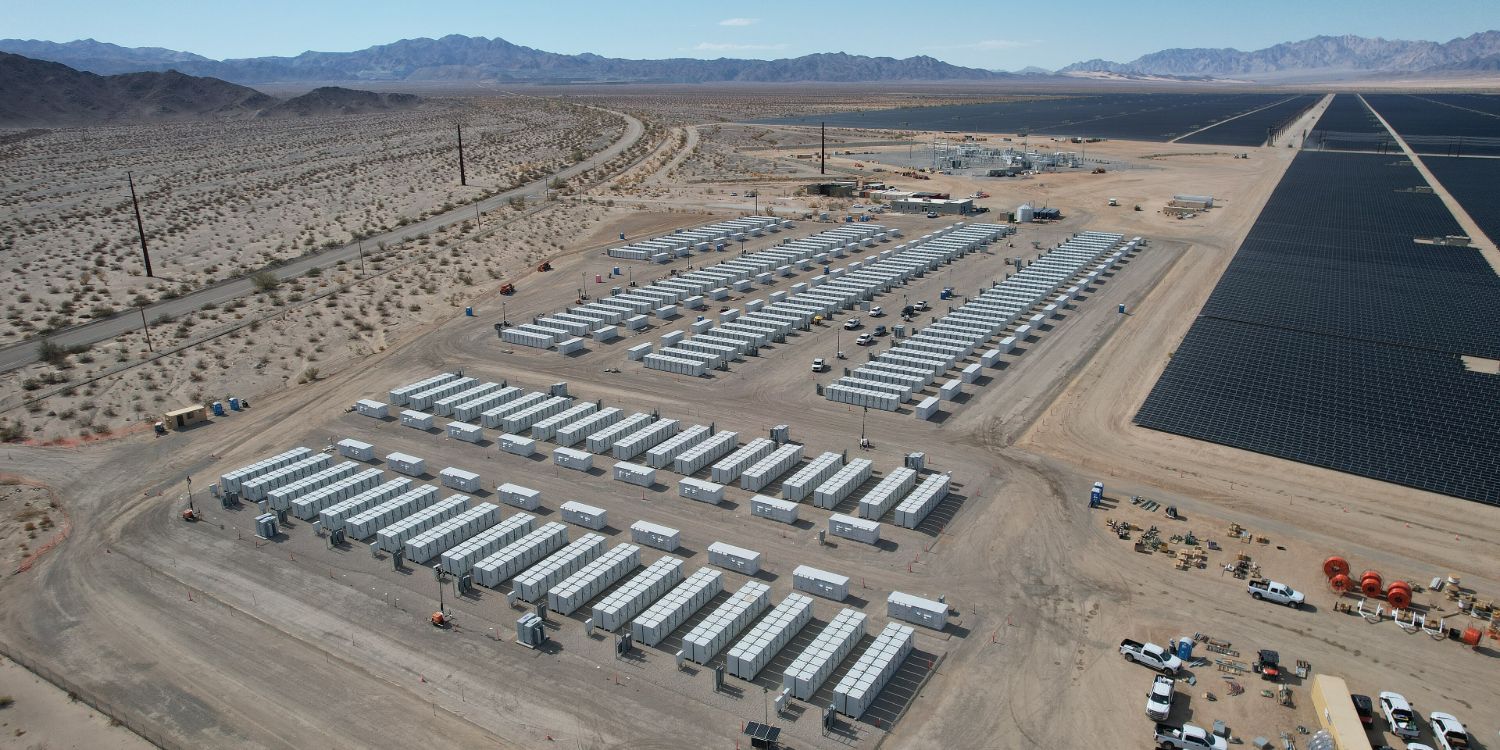
That buildout is landing on a grid already strained by aging wires and rising demand. A battery bank next to a solar farm can soak up power at noon and release it into the evening peak, when households come home and switch everything on.
The 2014 argument against storage
In August 2014, John Morgan, a physical chemist and chief scientist at a Sydney smart-grid startup, wrote “The Catch-22 of Energy Storage”. It first ran in the magazine Chemistry in Australia and was then posted on Barry Brook’s blog, Brave New Climate. It was reposted on this site under Brook’s account. Morgan asked a fair question. If wind and solar need storage to be reliable, does building that storage cost so much energy that the whole system barely breaks even?
His case rested on EROI, or energy return on investment, which counts how many units of energy a source delivers over its life for every unit spent building and running it. He cited a commonly used floor of about 7 as the minimum a modern economy needs to keep hospitals and factories running. In his numbers, wind’s return of around 16 fell to about 3.9 once storage buffering was added. Solar’s return of about 3.5 fell to roughly 1.6 with pumped hydro, and in Morgan’s estimate was likely negative with batteries.
He built those figures on a 2013 method from Weissbach and colleagues and on the idea that batteries take about ten times more energy per unit stored than pumped hydro. He also treated the problem as a hard physical limit that cheaper equipment couldn’t fix, and pointed to France’s nuclear fleet and Ontario’s mix of hydro and nuclear as the only proven routes to a fully decarbonized grid.
Why the numbers look different in 2026
Batteries are far cheaper than when Morgan was writing. BloombergNEF’s 2025 survey put the average lithium-ion pack at $108 per kilowatt-hour, and packs for stationary storage, the kind grid batteries use, were the cheapest segment at $70, down 45% from a year earlier. The IEA puts the total fall in battery pack costs at more than 90% since 2010.
Performance improved alongside price. The National Renewable Energy Laboratory’s planning assumptions for utility-scale batteries use 85% round-trip efficiency and a 15-year working life.
Then came a direct test of Morgan’s question. In 2020, Raugei, Peluso, Leccisi and Fthenakis modeled California’s projected 2030 grid, 80% renewable with lithium-ion batteries doing the buffering, and compared its energy return with the state’s 2018 mix. The battery-backed grid came out about 10% higher. Storage still takes real energy to build, which was Morgan’s underlying point. The study found that cost is small enough for a heavily renewable grid to come out ahead. The two analyses count storage’s energy cost in different ways, so researchers still argue over method, but the newer one is built on today’s batteries.
Most grid batteries cover only a few hours
What batteries do well is shift a few hours of midday solar into the evening. Lithium-ion grid batteries average around 2 hours of storage, according to Wood Mackenzie, which covers an evening peak and not much more. Long-duration systems, built to run more than four hours, made up only about 6% of storage installations in 2025.
Money for longer storage is shrinking. Wood Mackenzie found overall funding for long-duration storage fell about 30% in 2025, with venture funding down 72%.
That’s the part of the 2014 worry that still holds. Nobody has made multi-day or seasonal storage cheap at scale. Batteries can carry solar and wind through the night, and getting a grid through a calm, cloudy week or a whole winter still falls to other kinds of power plants.
How a home battery differs from a grid battery
Everything so far is about grid-scale storage, the battery banks utilities build beside solar and wind farms. A home battery is sized for one house and does a different job.
Tesla’s Powerwall 3 stores 13.5 kilowatt-hours at 89% round-trip efficiency and carries a 10-year warranty. The average US home uses about 10,791 kilowatt-hours a year, or roughly 30 a day, so one Powerwall holds a little under half a day of typical use. Grid batteries are measured in megawatt-hours and gigawatt-hours.
Its main job is keeping the lights and refrigerator running when the grid goes down, which used to be a generator’s job. Our home battery backup guide compares the systems and what they cost installed.
| Home battery (Powerwall 3) | Grid-scale battery | |
|---|---|---|
| Typical size | 13.5 kWh | Megawatt-hours to gigawatt-hours |
| Round-trip efficiency | 89% | About 85% (NREL planning assumption) |
| Main job | Backs up a house during an outage | Shifts solar and wind power to match demand |
Source: Tesla Powerwall 3 datasheet and the NREL Annual Technology Baseline for utility-scale battery storage.
What would change the answer
Morgan warned about a battery market that no longer exists. Pack prices have fallen by more than 90% since 2010, and the 2020 California study found a battery-backed renewable grid with a higher energy return than the one it replaces.
The open question is duration. If long-duration storage stays expensive and its funding keeps falling, grids that lean harder on wind and solar will keep needing other plants for the hours batteries can’t cover. The price of long-duration systems is the number to watch. Lithium-ion packs fell by more than 90% in 15 years, and whether longer-lasting storage can follow a curve like that will decide how much of a grid can run on renewables and batteries alone.
