Originally published August 20, 2012. Updated September 28, 2026.
Electric vehicle adoption hit a record worldwide in 2025, with drivers buying more than 20 million electric cars globally, a 20% jump from 2024. In the US, adoption reversed. EV sales fell to 5.8% of new-vehicle sales in the fourth quarter of 2025, down from a record 10.6% share the quarter before, once the federal $7,500 tax credit for new EVs expired on Sept. 30, 2025. The rest of the world kept buying, led by China and Europe.
Global EV sales hit a record in 2025
Worldwide, EVs took roughly a quarter of every new car sold in 2025, up from 17 million electric cars sold globally in 2024, which was already a bit over one in five new cars that year. The IEA projects 23 million EV sales and a 28% global share for 2026, roughly 3 million more than the world bought in 2025. If you’re comparing notes with someone who shops for cars in Europe or China, the model they’re looking at is far more likely to be electric than the one on a typical US lot. Two markets are doing most of that work, and the regional breakdown for 2025 looks like this:
| Market | EV share of new car sales, 2025 |
|---|---|
| China | ~55% |
| Europe | ~28% |
| Worldwide | ~25% |
| United States | under 10% |
Source: IEA, Global EV Outlook 2026.
China’s EV market is now more than half electric
In China, EV sales topped 11 million units in 2024, shy of half of every new car sold there that year. By 2025, that share had grown to about 55% of new car sales, more than double the roughly 25% global share the same year. Among the four markets this piece tracks, China is the only one that has crossed the halfway mark.
Europe’s EV sales are growing at a slower pace
Europe’s EV sales grew too, at a steadier pace than China’s. In 2025, EVs made up about 28% of new car sales across Europe, up nearly 30% from the year before, up from roughly 21% in 2024. Europe’s 28% share in 2025 trailed only China’s among these four markets, and ran a few points ahead of the worldwide average of about 25% the same year.
Europe’s EV market didn’t stall out the way the US market did in 2025, even as American buyers pulled back once their federal incentive disappeared. If you’re shopping for a car in Germany or elsewhere in the EU, the lot you’re looking at already skews electric in a way a typical US dealer’s doesn’t. This figure covers Europe as a whole, not any single country, so it doesn’t show how individual markets like Germany or Norway compare with each other.
US EV sales spiked, then dropped fast
For the full year, EVs made up shy of 10% of new US vehicle sales in 2025, a figure that blends two sharply different halves of the year. Buyers rushed to beat the tax credit deadline, pushing US EV sales to 437,487 units in the third quarter of 2025, up 29.6% from a year earlier, a record 10.6% market share. Once the credit expired, sales fell fast.
By the fourth quarter, EV share had dropped to 5.8%, down 36% from a year earlier and 46% from the quarter before, and it hasn’t recovered since. US EV sales came to 216,399 units in the first quarter of 2026, a 5.8% share and a 27% drop from a year earlier, roughly half the third quarter’s volume.
The second quarter improved only a little, with 247,226 units sold and about a 5.8% share. That was down 20.5% from a year earlier but up 14.7% from the first quarter. Together, the first half of 2026 slightly outsold that single big quarter that came before it. If you were shopping for a new EV in the fall of 2025, you had plenty of company rushing to beat the deadline, and far less company after it passed.
Cox Automotive’s quarterly figures and the IEA’s full-year average measure the US market differently, which is why a single quarter’s share and a full-year blend won’t match exactly.
The federal EV tax credit that disappeared
The credit behind that third-quarter rush was worth up to $7,500 for a new electric vehicle and $4,000 for a used one, and it expired on Sept. 30, 2025. A separate $1,000 federal credit for home EV chargers ended the same day. A buyer who claimed both before that date could combine the vehicle credit with the charger credit for one bigger discount at checkout. Buy the same EV and charger today, and both discounts are gone from your final price.
US EV sales dropped within one quarter of both credits disappearing. For a look at another alternative-fuel vehicle market, see the page on CNG vehicles.
Public charging kept growing while demand fell
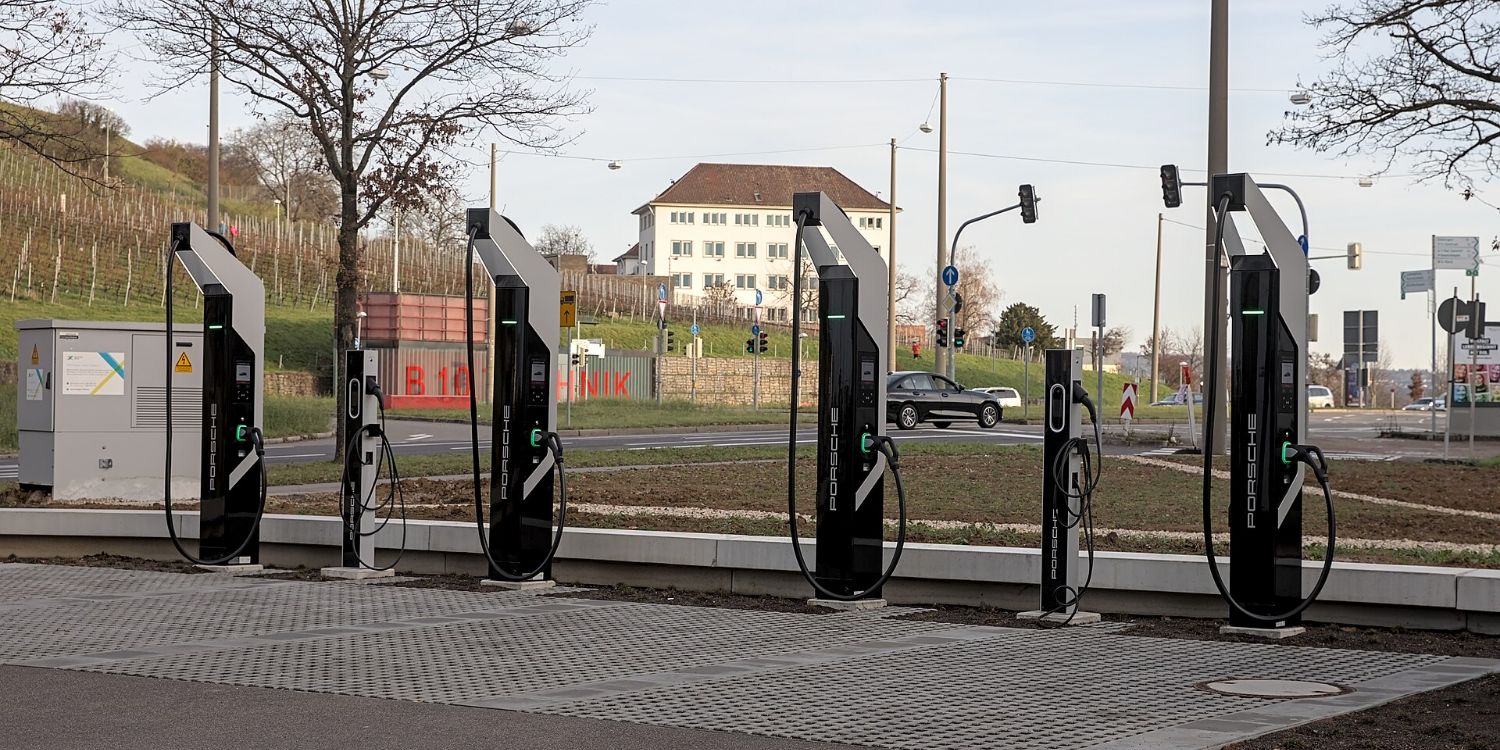
US public charging kept expanding even as EV sales fell, which is good news if you’re hunting for a plug near home or along your commute. As of June 2026, the country had 253,319 public charging ports combining Level 2 and DC fast chargers, per an industry tracker citing Department of Energy figures. That’s up from 168,388 ports across 64,641 station locations in 2023, the most recent year the Department of Energy’s own published count covers.
That’s a rough 50% increase in public ports since 2023, and the 2023 count worked out to about 2.6 ports at the average charging station. Charging supply kept growing in 2026 while EV sales fell, which puts the bottleneck on the demand side of the market.
NHTSA has not decided whether EVs still count toward mileage rules
US fuel economy rules could get weaker in the next few years. In December 2025, NHTSA proposed rolling fuel economy targets back to 34.5 mpg by model year 2031, down from the Biden-era target of 50.4 mpg, about 32% less strict. The proposal also excludes EVs from the math automakers use to show compliance and ends credit trading between manufacturers.
Under the Biden-era rule, an automaker’s EV sales helped pull its fleet average up. Under the proposal, EVs wouldn’t count toward that number at all, and manufacturers couldn’t trade compliance credits to make up the difference. If you’re shopping for a new car after 2031, the fuel economy sticker you compare could look different. Automakers would count the mileage of the gas models on the lot and nothing from the EVs sitting beside them.
The CAFE debate isn’t new. A Nov. 2012 fact-check from PolitiFact assessed Obama’s promise to cut US dependence on foreign oil, citing that era’s CAFE standards debate as evidence. For the oil-market side of that story, see how OPEC shapes oil prices.
NHTSA closed public comments on the proposal on Feb. 4, 2026 and still hasn’t set a date to finalize it or said whether the final rule will keep EVs out of the compliance math.