Nuclear fusion is the reaction that powers the sun, in which light atomic nuclei merge and release energy, and the best laboratory shot so far released 8.6 megajoules at the US National Ignition Facility (NIF) in 2025. Firing the laser behind that shot takes around 400 megajoules of electricity by Physics World’s estimate, so it returned far less energy than the facility drew. ITER, the largest tokamak under construction, plans to start burning deuterium and tritium in 2039. The figures come mostly from national labs, ITER and the Fusion Industry Association (FIA).
Top nuclear fusion statistics
- NIF set its record yield of 8.6 megajoules on April 7, 2025, at a target gain above 4.
- On June 20, 2026, NIF reached ignition for an 11th time, with a yield of 7.9 megajoules.
- JET’s final run in 2023 produced 69 megajoules over 5 seconds from 0.2 milligrams of fuel, a record for a single pulse.
- China’s EAST tokamak held a steady-state high-confinement plasma for 1066 seconds in 2025.
- ITER’s July 2024 baseline puts the start of deuterium-tritium operation in 2039.
- Fusion companies reported raising $4.48 billion in the 12 months to July 2026, the most in any of the six annual FIA surveys, for a total of $14.24 billion since 2021.
- The IAEA counted more than 160 fusion devices that were operating, under construction or planned in its World Fusion Outlook 2025.
- Every cubic metre of seawater holds 33 grams of deuterium, one of the two fuels energy researchers focus on.
What is nuclear fusion and how does it work?
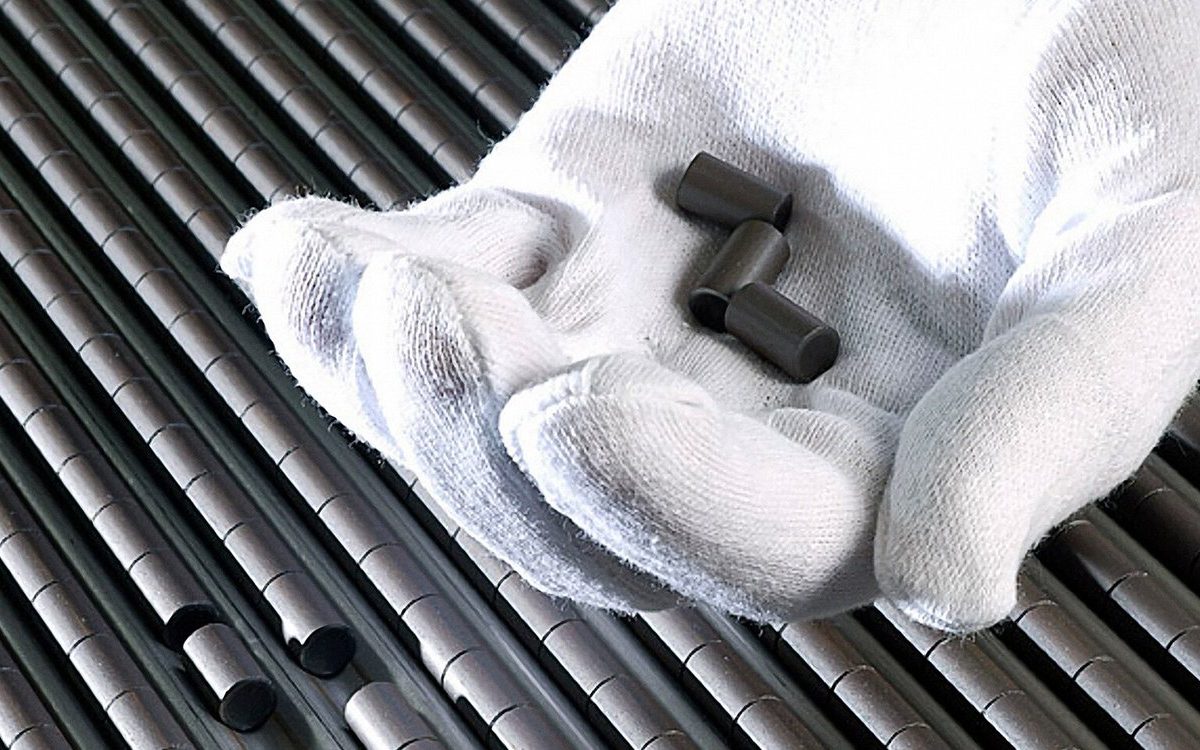
Fusion happens when two light nuclei merge to form a single heavier nucleus, and the energy comes from the small amount of mass that goes missing in the merger. Energy research centers on deuterium and tritium, two forms of hydrogen. Their reaction makes a neutron and a helium nucleus and releases 17.6 million electron volts each time.
Deuterium comes from water. Tritium is scarce in nature, so a power plant would make it from lithium, and ITER names breeding and recovering tritium reliably as a major hurdle.
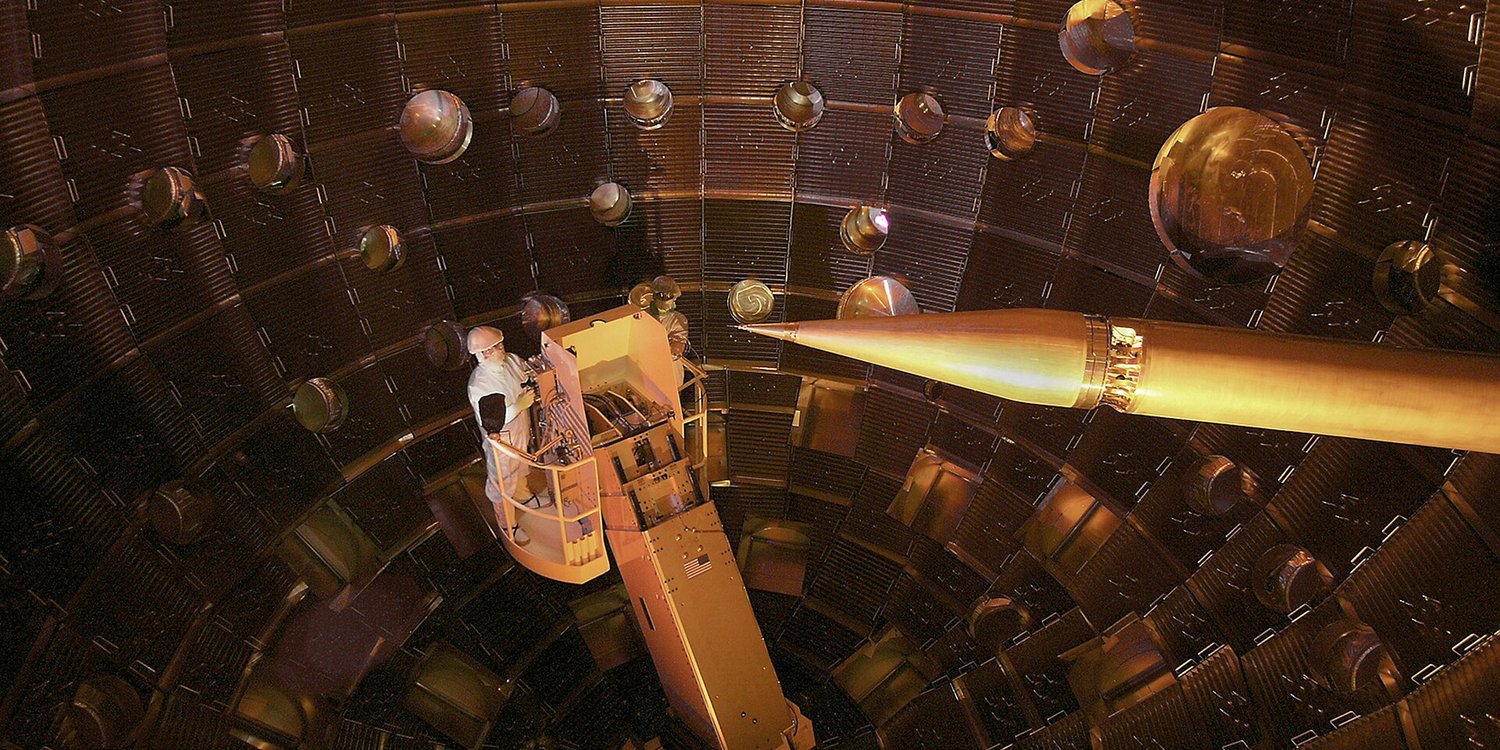
The hard part is the heat. ITER designed its plasma for 150,000,000 degrees C, so reactors hold the plasma in place with magnets or lasers. Inside a tokamak such as ITER’s, strong magnetic fields confine the plasma in a doughnut-shaped vacuum chamber. NIF takes the other route and focuses 192 laser beams into a cylinder that encases a spherical target of hydrogen fuel.
How is nuclear fusion different from fission?
Fission splits a heavy atom and fusion joins light ones. DOE describes fission as a neutron slamming into a larger atom so it splits, which is how nuclear power plants make heat.
| Fission | Fusion | |
|---|---|---|
| What happens | A neutron splits a heavy atom | Two light nuclei merge |
| Common fuel | Uranium and plutonium | Deuterium and tritium |
| What’s left over | Fission products and hot spent fuel | Helium and a neutron |
| High-level waste | Decays over hundreds of thousands of years | No long-lived, high-activity waste (ITER) |
| Energy per equal mass | 1 | 4 |
| Status | Supplies power to the grid | Experimental |
Source: US Department of Energy, Fission and Fusion, US Nuclear Regulatory Commission, High-Level Waste, NRC, What is Nuclear Fuel? and ITER, Advantages of Fusion. Energy per equal mass is ITER’s comparison, set to 1 for fission.
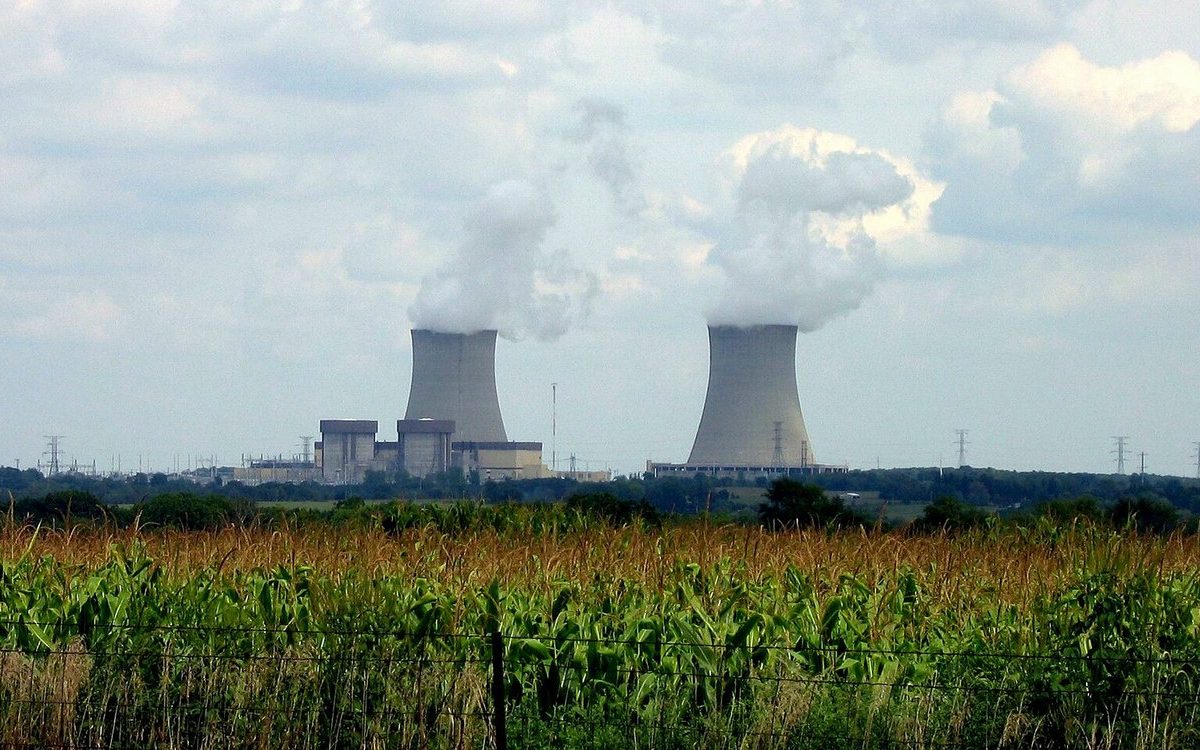
If your electricity includes nuclear power, it comes from fission, which DOE says supplies nearly 20 percent of US electricity. The outlook for nuclear power is built on that fleet of nuclear power plants, and its own risks are a separate debate in whether nuclear power is safe.
Fusion’s waste story has a catch. ITER expects the parts of a reactor that turn radioactive to be low enough to recycle or reuse within 100 years, depending on the materials. DOE adds that fusion is difficult to sustain for long periods because of the pressure and temperature it needs.
How much energy has NIF’s laser fusion produced?
NIF’s fusion yield rose from 3.15 megajoules in December 2022 to a record 8.6 megajoules in April 2025, and every shot in the table gave back more energy than the laser delivered to the target.
| Date | Laser energy on target (MJ) | Fusion yield (MJ) | Target gain |
|---|---|---|---|
| Dec. 5, 2022 | 2.05 | 3.15 | 1.54 |
| July 30, 2023 | 2.05 | 3.88 | 1.89 |
| Feb. 12, 2024 | 2.2 | 5.2 (estimated) | 2.36 |
| Nov. 18, 2024 | 2.2 | 4.1 | 1.86 |
| Feb. 23, 2025 | 2.05 | 5.0 | 2.44 |
| Apr. 7, 2025 | 2.08 | 8.6 | 4.13 |
| Oct. 1, 2025 | 2.065 | 3.5 | 1.74 |
| June 20, 2026 | Not listed | 7.9 | About 3.8 |
Source: Lawrence Livermore National Laboratory, Achieving Fusion Ignition. Target gain is yield divided by laser energy. LLNL published the gains for Feb. 23, 2025, Apr. 7, 2025, Oct. 1, 2025 and June 20, 2026, and we calculated the other four.
A Los Alamos-led team also reached ignition at NIF on June 22, 2025, with a yield of 2.4 megajoules.
Target gain compares the fusion energy with the laser light that hit the fuel, and it leaves out the electricity the laser pulled from the wall. Think of rating a heater by the heat in the room without reading the electric meter. Physics World reported that NIF’s flash-lamp pumped laser needed around 400 megajoules of electricity for a 2 megajoule pulse, a wall-plug efficiency of 0.5%. LLNL hasn’t published that figure for each shot.
Lasers pumped by diodes could reach efficiencies as high as 20%, according to Riccardo Betti of the University of Rochester, and a power plant would still need higher target gains than NIF has shown. NIF also remains the only facility to have achieved ignition, the US National Nuclear Security Administration says.
What are the nuclear fusion records for energy and duration?
JET holds the record for fusion energy from a single pulse, with 69 megajoules in 5 seconds in its last deuterium-tritium run in 2023.
| Facility | Year | Record | Value |
|---|---|---|---|
| JET (UK) | 2023 | Fusion energy in one pulse | 69 MJ over 5 s |
| NIF (US) | 2025 | Fusion yield from lasers | 8.6 MJ |
| EAST (China) | 2025 | Steady-state high-confinement plasma | 1066 s |
| WEST (France) | 2025 | Plasma duration | 1337 s |
| Wendelstein 7-X (Germany) | 2025 | Triple product in long discharges | 43 s |
Source: UK Atomic Energy Authority, JET release, LLNL, NIF user group news, Physics World on EAST, Oenergetice on WEST and EUROfusion on Wendelstein 7-X.
The records measure different things, so the rows can’t be ranked. EAST’s 1066 seconds broke its own 2023 record of 403 seconds.
WEST then held plasma for 22 minutes and 17 seconds. Oenergetice and Nuclear Engineering International give 1337 seconds, and Physics World’s update gives 1336.
Wendelstein 7-X is a stellarator, and its record is for the triple product in long discharges, with high performance sustained for 43 seconds, so it isn’t a duration record.
That JET figure is energy released. ITER lists a different JET result as the magnetic-confinement power record, 16 megawatts of fusion power from 24 megawatts of heating in 1997.
When will ITER start running, and what will it cost?
ITER’s July 2024 baseline moves the start of research operation to 2034, almost a decade later than the 2016 plan’s first plasma in 2025.
| Milestone | Year | Plan |
|---|---|---|
| First plasma | 2025 | 2016 baseline |
| Start of research operation | 2034 | July 2024 baseline |
| Full magnetic energy | 2036 | July 2024 baseline |
| Deuterium-tritium operation | 2039 | July 2024 baseline |
Source: ITER Organization, press conference on the new baseline and Physics World on ITER’s new baseline. ITER presented the July 2024 baseline as a working reference that its Members were still evaluating.
ITER is designed for 500 megawatts of fusion power from 50 megawatts of heating, a Q of 10. It won’t convert that heat into electricity, so ITER won’t send any power to your meter.
ITER has no official total cost to quote. Many parts are built by its Members as in-kind contributions, and governments aren’t required to publish what they cost. The one official figure is ITER’s statement in July 2024 that the new plan adds EUR 5 billion for the ITER Organization, a figure the Members were still reviewing.
How much money have fusion companies raised?
Fusion companies reported raising $4.48 billion in the year to July 2026, the highest total across FIA’s six annual surveys.
| FIA report year | Cumulative funding (USD billion) | Raised in the prior 12 months (USD billion) |
|---|---|---|
| 2022 | 4.8 | 2.8 |
| 2023 | 6.21 | 1.4 |
| 2024 | 7.1 | 0.9 |
| 2025 | 9.766 | 2.64 |
| 2026 | 14.24 | 4.48 |
Source: FIA’s 2022 and 2023 reports via World Nuclear News, ANS Nuclear News, World Nuclear News on the 2024 report, World Nuclear News on the 2025 report and Power Technology on the 2026 report. The 2022 row is the figure the 2023 report gave as the year before, and the 2022 new-funding figure is ANS’s.
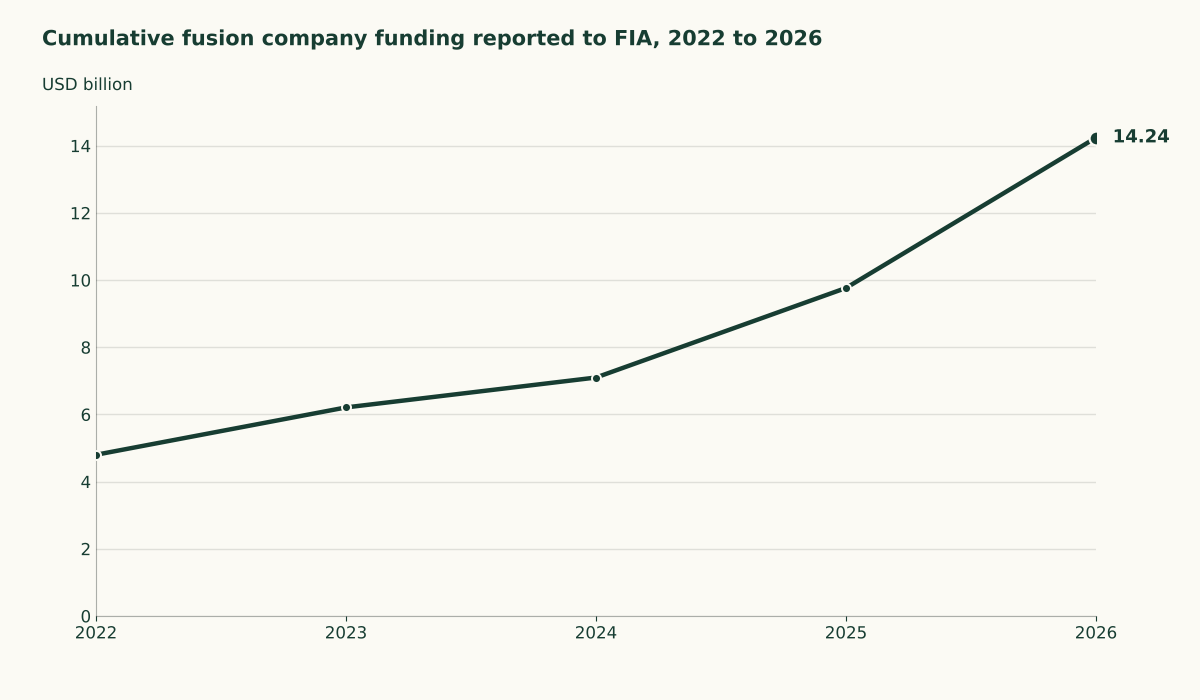
FIA counts the private and public funding its member companies report, and the 2026 survey covered 56 companies, up from 23 in 2021. The largest rounds in the 2026 report were $863 million for Commonwealth Fusion Systems and $518 million for Proxima Fusion.
Among those 56 firms, 48% pursue magnetic confinement and 21% inertial confinement. The IAEA reported investment exceeding $10 billion across nearly 40 countries in October 2025, a count with a different scope from FIA’s.
What are the fusion companies promising?
These are company targets, each dated to when it was reported, and none of them is a result yet.
| Company | Target | Date reported |
|---|---|---|
| Commonwealth Fusion Systems | SPARC shows more fusion energy than it uses (Q above 1) in 2027 | Aug. 24, 2026 |
| Commonwealth Fusion Systems | 400 MW ARC plant in Virginia on the grid in the early 2030s | July 1, 2025 |
| Buys 200 MW from the first ARC plant | June 30, 2025 | |
| Helion | Orion plant online by 2028 at 50 MWe or more | July 31, 2025 |
| Microsoft | Agreement to buy electricity from Helion’s first plant | May 2023 |
Source: Utility Dive on Commonwealth Fusion Systems, World Nuclear News on Google and CFS, ANS Nuclear News on the Google deal and World Nuclear News on Helion.
Commonwealth Fusion Systems says SPARC will produce more energy from fusion than it needs, a plasma gain above 1, and its CEO said SPARC is about 80% complete in August 2026. Helion describes its Polaris prototype as built to demonstrate converting fusion energy into electricity.
In FIA’s 2026 survey, 71% of companies expect a fusion plant to deliver power to the grid by the 2030s. DOE’s roadmap, released October 16, 2025, aims to deliver commercial fusion power to the grid by the mid-2030s. Utility Dive notes that experts remain divided on how soon fusion can be commercial.
Where these numbers come from
We calculated the target gains marked in the NIF table by dividing yield by laser energy, and nothing else on the page is computed. FIA’s totals are the funding its member companies report, they include public money, and they come through news coverage because FIA’s own report files wouldn’t load. World Nuclear News says the 2023 report’s 43 companies were up from 27 and NucNet says up from 33, so the page leaves the 2022 company count out.
The fusion machines already built, funded or scheduled
NIF’s laser is getting an upgrade. The US Department of Energy and the National Nuclear Security Administration approved a project in April 2026 to raise its peak laser energy from 2.2 to 2.6 megajoules, which is aimed at nuclear stockpile work.
Helion began earthwork on the site of its Orion plant in Malaga, Washington, in July 2025.
The open problem is the one ITER names itself, breeding tritium and recovering it reliably. Until a fusion plant feeds a grid, every nuclear kilowatt-hour on your bill comes from fission, the older technology that already competes with solar on cost.