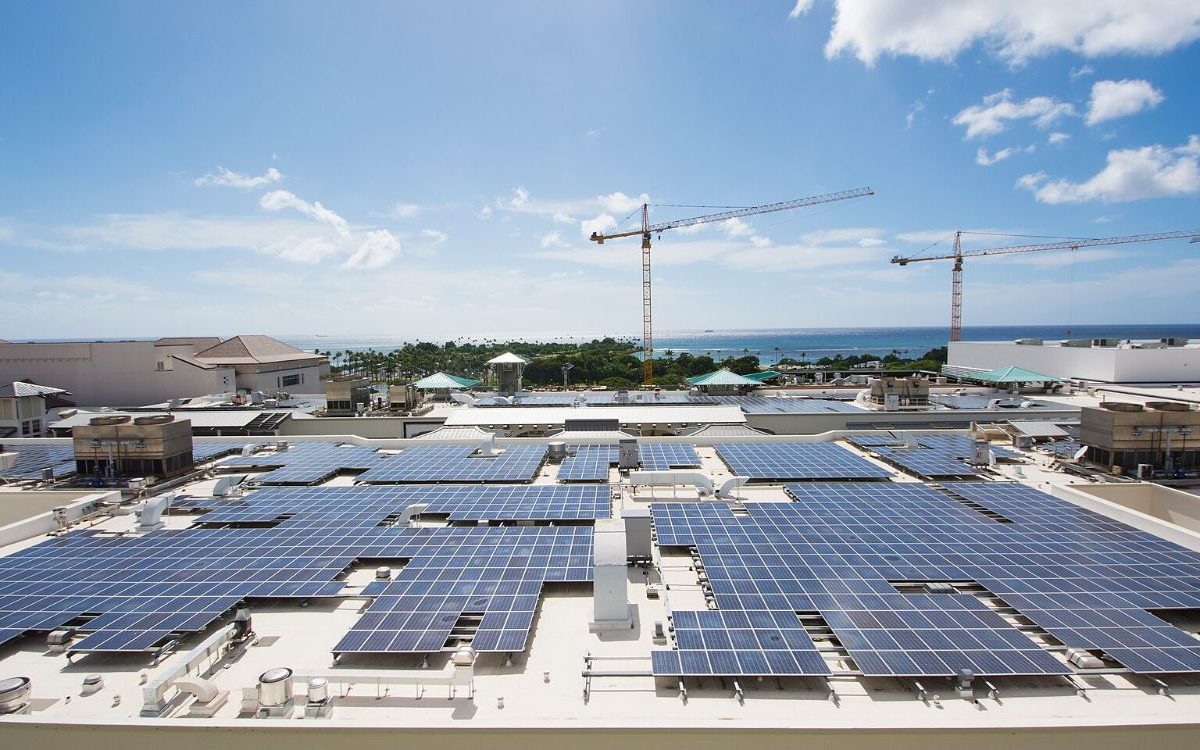
Most home solar systems keep at least 80% of their original power output after 25 years, the US Department of Energy says, and the maintenance behind that number is mostly staying out of the way. Panels have no wiring that moves and nothing that spins, so the routine care is a seasonal wash for the glass and a yearly check of the wiring and mounts.
The parts that cut into what a system produces are dirt and snow on the glass, plus an inverter with a shorter working life than the panels above it. Understanding those pressure points ahead of time means you can budget for the decades of bills instead of getting hit with them one at a time.
How dirt and snow cut into what panels produce
Dust and other debris settle on a panel’s surface and block or scatter some of the sunlight hitting the cells underneath, Sandia National Laboratories’ modeling guide explains. Some of that layer washes off on its own the next time it rains. The rest needs a manual wash, the same guide notes, since caked-on grime doesn’t rinse away the way a light dusting does.
Snow does more damage than dust in the places that get it. Sandia has compiled published estimates of snow-related energy losses ranging from 1% to 12% a year, with some individual months losing close to 100% of production while a buried panel sits idle. A single storm rarely matters much on its own. If your roof holds snow through a whole winter instead of shedding it, that lost production shows up directly on your electric bill until spring clears the panels.
EnergySage, a solar marketplace, suggests you clean panels a couple of times a year, and notes that enough rain often does the job for free. A sloped roof usually gets that rinse on its own between storms. A flat array in a dry climate is the one you’ll end up hosing down, or paying someone to, every season.
What a professional visit involves and costs
An annual check by a technician covers the wiring connections and mounting hardware, plus the inverter, the parts likely to develop a fault between cleanings and the ones you can’t safely inspect yourself from a ladder. Budget a few hundred dollars a year if you sign up for one of these bundled maintenance plans, EnergySage reports, since it folds the cleaning and the basic check into one visit.
Utility-scale operators budget on a different scale entirely. Lawrence Berkeley National Laboratory found that operators now plan for $5 to $8 per kilowatt of DC capacity a year in operations and maintenance spending, a figure for big solar farms, several orders of magnitude larger than the single rooftop array on your own roof.
The other bill that can catch you off guard is a roof replacement. Pulling panels off and reinstalling them once the job is done runs about $200 per panel, EnergySage says, on top of whatever the roofing job itself costs. Timing a re-roof to happen before your solar install, where possible, avoids that bill entirely.
How fast panels actually lose output
Panel output declines a little every year, and DOE says most systems sold over the last several decades lose about 1% of their power a year. That’s slow enough to miss from your own yard, since a system won’t visibly dim and the drop shows up when you compare a full year’s production against the year before. A broader literature review that pooled nearly 2,000 field-measured systems found a median decline of 0.5% a year, lower than DOE’s rounder estimate partly because it draws on newer, better-performing hardware alongside decades-old panels.
Either rate lands in roughly the same place by the 25-year mark DOE treats as a healthy system’s baseline, keeping at least 80% of its original output, the same number that shapes how panel warranties are written.
What the warranty behind a panel actually promises
Panel warranties run in two layers, an equipment warranty against physical defects and a performance warranty guaranteeing a minimum output. REC’s warranty fact sheet guarantees its Alpha series at 92% of rated power in year 25. Its other two lines, TwinPeak 5 and N-Peak 3, guarantee less. Those panels are rated to keep 86% of their output at the same 25-year mark.
Every REC panel carries a 25-year product warranty underneath those performance numbers. Other makers land in a similar range with different terms of their own. Qcells backs its residential panels with a product warranty of up to 25 years and a performance warranty that runs to 30. Silfab offers a 25-year product warranty alongside a 30-year linear power warranty.
A performance warranty pays out when a panel underperforms the curve its maker guaranteed in writing. It doesn’t cover storm damage or outright neglect. Keep your own notes on cleanings and inspections, in case you need to prove the panel was maintained when you file a claim.
Why the inverter usually needs attention before the panels do
The inverter is the one part of a home solar system built almost entirely from switching electronics, and its own maker warranties show the difference from a panel’s slow, steady decline. Enphase backs its IQ8 microinverters with a limited warranty running up to 25 years, and SolarEdge’s Home Wave inverter carries a 12 to 25 year warranty range, depending on whether you pay to extend past the standard term.
Even the shorter end of that range falls short of a panel’s 25-year product warranty. Skipping the extension is the practical reason an inverter swap, not a panel replacement, tends to be the one big maintenance bill a system generates in its lifetime. Set money aside for that swap somewhere around the middle of your system’s life. The inverter swap is the maintenance bill that shows up, even though the panels get all the attention.
Why year 15 to year 30 is still a guess for most US systems
The industry’s own planning assumptions keep moving because the evidence keeps arriving late. Lawrence Berkeley National Laboratory found that the average project-life assumption utility-scale developers use grew from about 21.5 years in 2007 to about 32.5 years in 2019. Most of the operators LBNL surveyed now plan on 30 years or more for a project’s working life.
DOE runs its own reliability and safety research for the same reason, to give owners and manufacturers a clearer picture of how a system degrades and what its upkeep costs over time as more of the fleet ages into its second and third decade. Roughly 70% of the panels in the US fleet went up since 2019. If your system is part of that group, most of what a panel does in the back half of its working life hasn’t happened yet, including on your own roof.