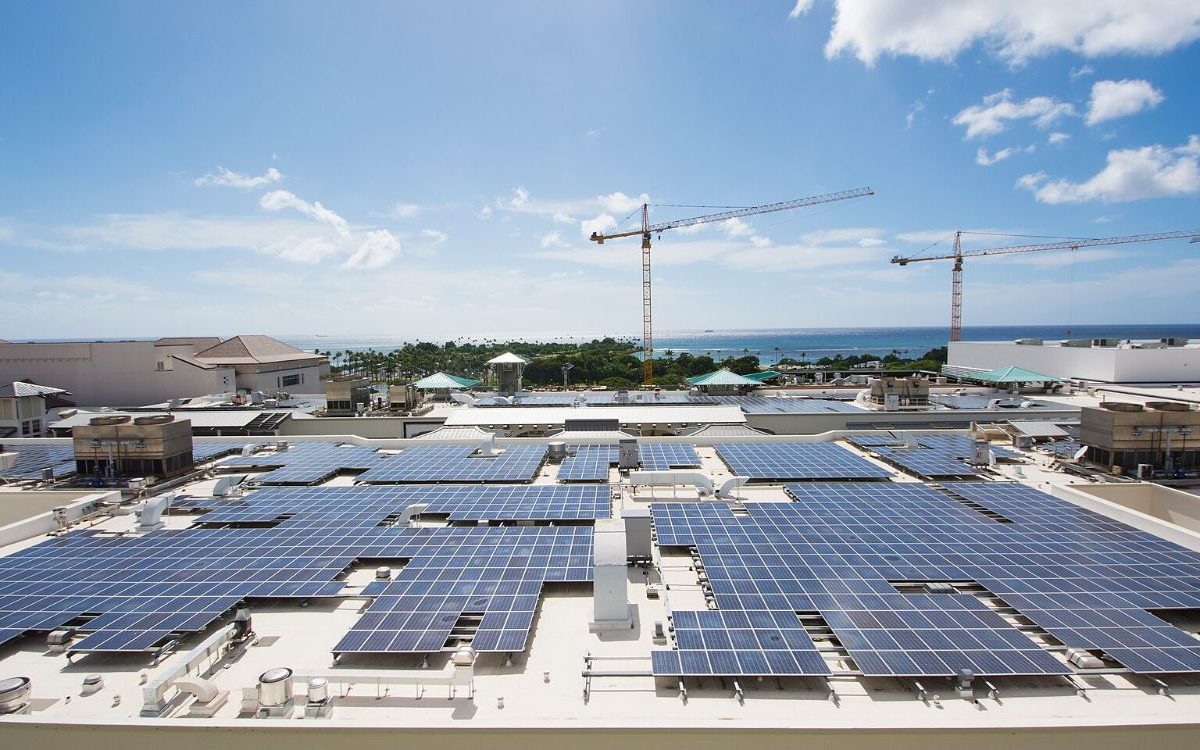
Solar panel efficiency is the share of sunlight a panel turns into electricity, and residential panels sold in 2026 typically run from about 21% to nearly 25%. That’s far above the less than 10% efficiency of the panels sold in the mid-1980s, but it’s still a lab number, measured under standardized test conditions. A panel bolted to your roof rarely hits its spec-sheet number, because heat, shade, dust and the wrong angle all take a bite out of it, and most of the fixes cost you nothing.
What the percentage on a panel means
The number on a panel’s spec sheet is its rated efficiency. The Department of Energy defines it as the share of sunlight a cell turns into usable electricity. Inside the cell, sunlight knocks electrons loose in a wafer of silicon, and the wafer’s own electric field pushes those electrons into a current your house can run appliances on.
Not all the sunlight that hits a panel gets that chance. Bare silicon reflects away more than 30% of the light that lands on it, which is why every commercial panel gets an anti-reflective coating before it ships. Of the light that does get through, some passes straight through the cell or turns into heat instead of current, which is a separate loss a coating can’t fix.
A rooftop panel’s percentage has nothing to do with the numbers chased in a lab. Experimental cells built for satellites and other niche uses have reached nearly 50% efficiency, a figure no panel on your house gets anywhere close to.
Today’s panels run from about 21% to nearly 25%
Four current spec sheets show where that range sits. LONGi’s Hi-MO 9 line rates up to 24.80% efficient, and REC’s Alpha Pure-RX reaches 22.6% using a different cell design called heterojunction, or HJT. Maxeon’s Maxeon 6 line tops out at 22.8% in its March 2024 datasheet. Canadian Solar’s standard PERC panels run from 20.8% to 21.3%.
| Panel line | Rated efficiency |
|---|---|
| LONGi Hi-MO 9 | Up to 24.80% |
| Maxeon Maxeon 6 (440 W) | Up to 22.8% |
| REC Alpha Pure-RX | Up to 22.6% |
| Canadian Solar HiKu and Ku PERC lines | 20.8% to 21.3% |
Source: Manufacturer datasheets and product pages (LONGi, Maxeon, REC Group, Canadian Solar), live as of September 2026.
These ratings also fade over time, and the makers put a number on that too. Maxeon warrants its Maxeon 6 line to keep at least 98% of rated output in year one and lose no more than 0.25% a year after that. REC warrants its Alpha Pure-RX to still deliver 92% of its rated power in year 25.
A few percentage points of rated efficiency mostly decide how much of your roof a given amount of power needs. They don’t decide how close any of these panels gets to its own number once it’s installed on your house. Heat, shade, dust and orientation do that.
Heat cuts more output than most people expect
Solar cells actually work better in the cold. The Department of Energy explains that higher cell temperatures cause a slight increase in current but a much larger decrease in voltage, and since power is current multiplied by voltage, the net effect is less electricity on a hot day, not more.
Every panel’s spec sheet lists a temperature coefficient, the percentage of power it loses for each degree Celsius above its 25°C test rating. LONGi’s Hi-MO 9 loses 0.260% of its power per degree. Maxeon’s Maxeon 6 loses 0.29% per degree. A rooftop runs far hotter than that lab bench on a sunny afternoon, so the gap between two panels’ coefficients matters more in a hot climate than a cool one.
If your own roof runs hot in summer, checking the temperature coefficient next to the efficiency rating before you buy shows how much of that heat will show up as lost output instead of staying on the spec sheet.
A shaded panel loses more than its own share of power
Manufacturers don’t treat shade as a minor problem. Maxeon’s Maxeon 6 datasheet says its wiring uses an “electrical architecture that mitigates the impact of shade and prevents hot-spot formation”, and lists three bypass diodes built into the panel’s junction box. LONGi built a separate “soft breakdown” design into its Hi-MO 9 line specifically to prevent localized overheating from shade.
A shaded cell can heat up in addition to losing output, and that’s the failure bypass diodes and shade-tolerant designs exist to stop. A tree branch that has grown in since installation or a new structure next door can turn a small patch of shade into a bigger problem than the shaded area alone suggests. If a tree in your own yard has filled in since your panels went up, that one shaded panel could be pulling down every panel it shares a string with.
One system-level fix is inverter choice. DOE notes that a microinverter allows independent operation of each panel, “which is useful if some modules might be shaded,” instead of one shaded panel pulling down every other panel wired to the same inverter.
Dust and dirt take a real but uneven bite
Soiling is the industry’s word for what builds up on a panel’s glass over time. Sandia National Laboratories’ PV Performance Modeling Collaborative describes it as dust and other particulates that accumulate on module surfaces, absorbing and scattering some of the sunlight before it reaches the cells.
There’s no single loss percentage that holds on every roof. Sandia’s own modeling guide calls local soiling assumptions a major source of uncertainty in performance models, because how much a panel loses depends on local dust and rain and on the panel’s own surface coating. How much collects on your panels depends on your climate and how often it rains, so a roof in a dry, dusty region needs more attention than one that regular weather rinses clean.
A 2026 study in IEEE Journal of Photovoltaics, hosted through DOE’s research library, tested two commercial panel models from the same manufacturer side by side and found that one lost roughly twice as much power to soiling as the other, a gap the researchers traced partly to differences in the panels’ surface coating. Sandia’s guide notes that some soiling washes off naturally in rain, while other types need manual washing to remove.
Orientation sets the ceiling before any of this happens
Everything above assumes a panel is already pointed the right way, and orientation is fixed at installation. DOE says that for the highest annual energy output, panels in the Northern Hemisphere should point due south and tilt to the local latitude. The EIA adds that panels produce the most power facing the sun directly, which is why most US systems face south at a tilt chosen to optimize output.
If your own roof faces east or west instead of south, none of the fixes below close that gap, because orientation sets the ceiling before heat, shade or dust get a chance to subtract from it.
None of that changes a panel’s rated efficiency. It changes how close a system gets to that rating over a full year, a question of a system’s capacity factor more than the number printed on the panel.
What you can still change once the panels are up
Orientation is fixed the day the installers leave, and so is your local climate. Shade and dust are not. If a tree or a new structure has grown into your panels’ sightline since installation, ask an installer whether microinverters would stop that one shaded panel from dragging down the rest of the array.
If your roof collects more dust than the local rain washes off, a manual wash clears soiling that otherwise sits there. Neither costs anything close to a new set of panels, and both push your real output back toward the number printed on the spec sheet.