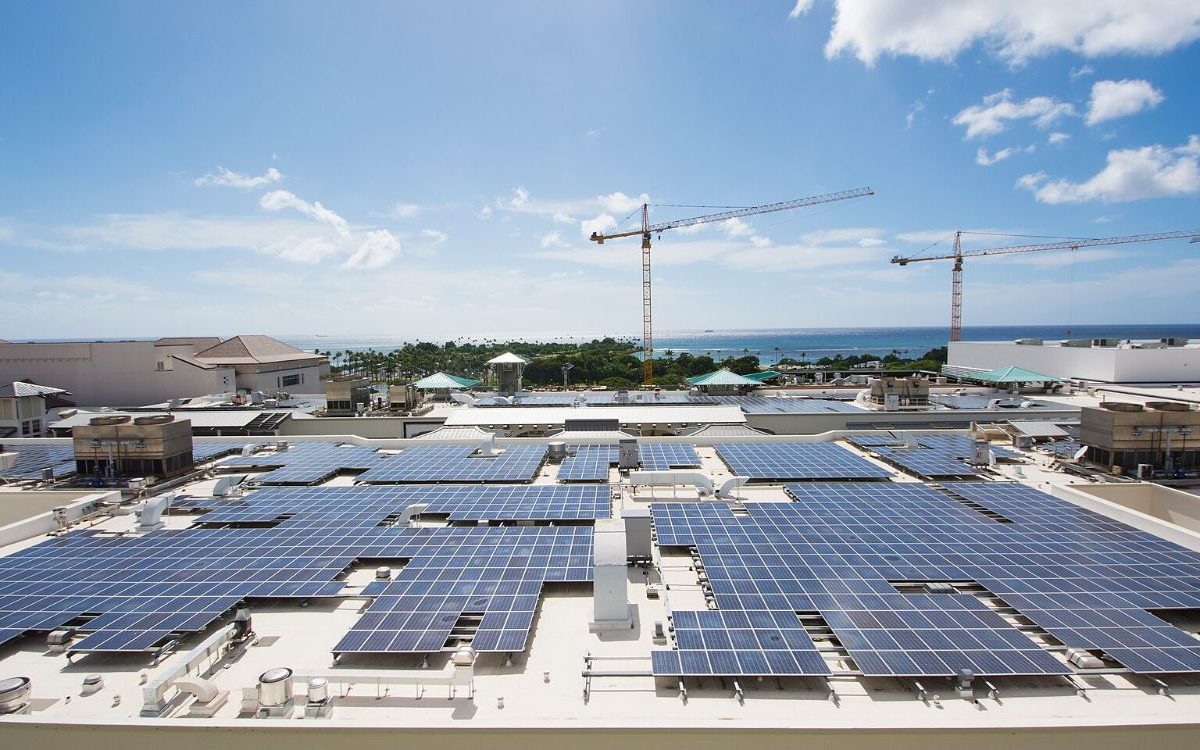
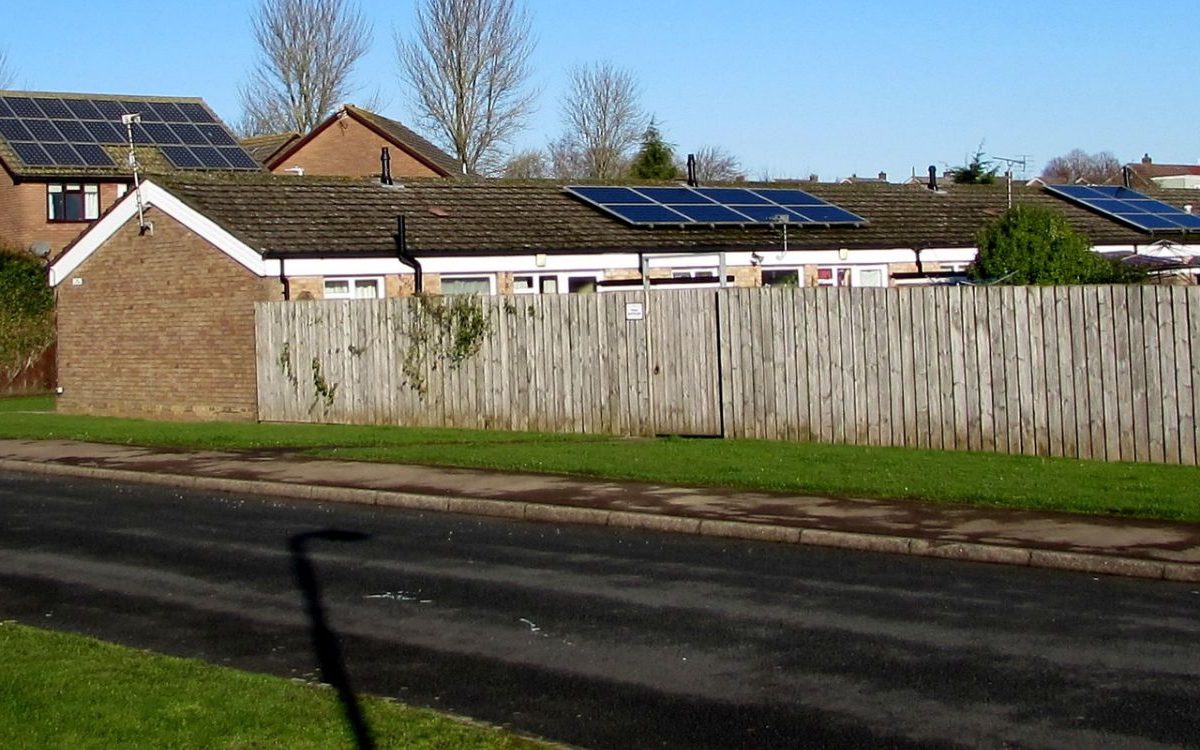
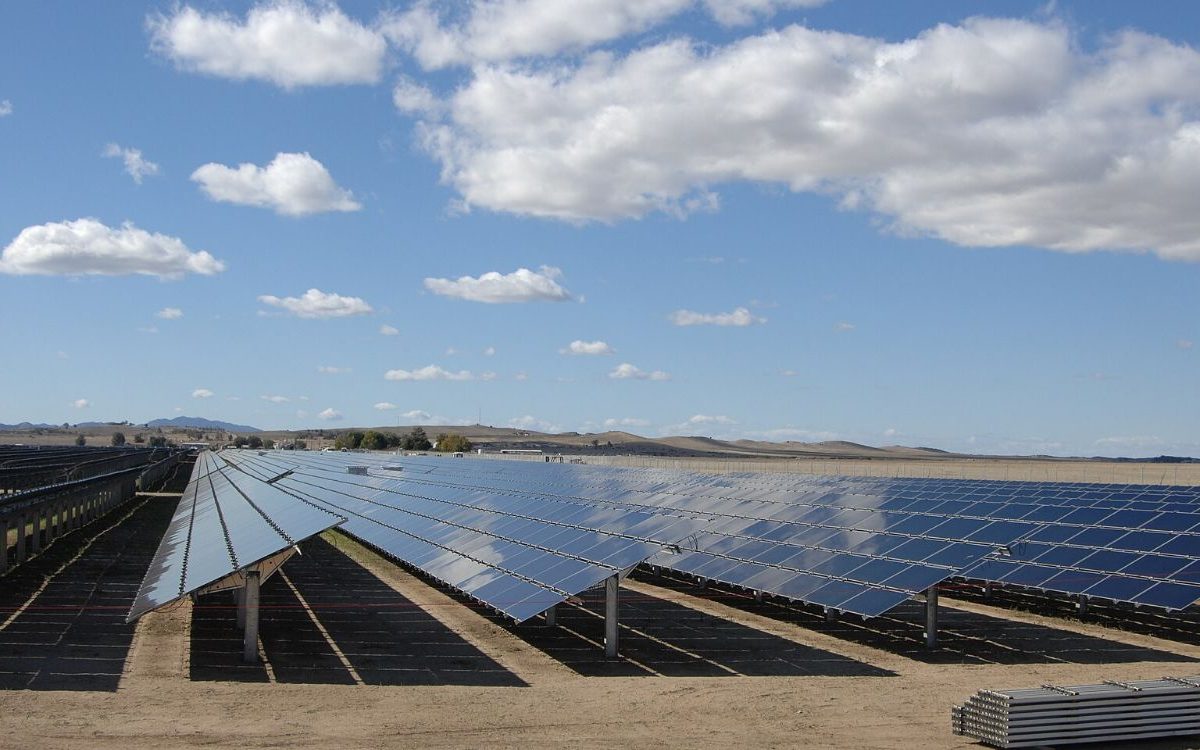
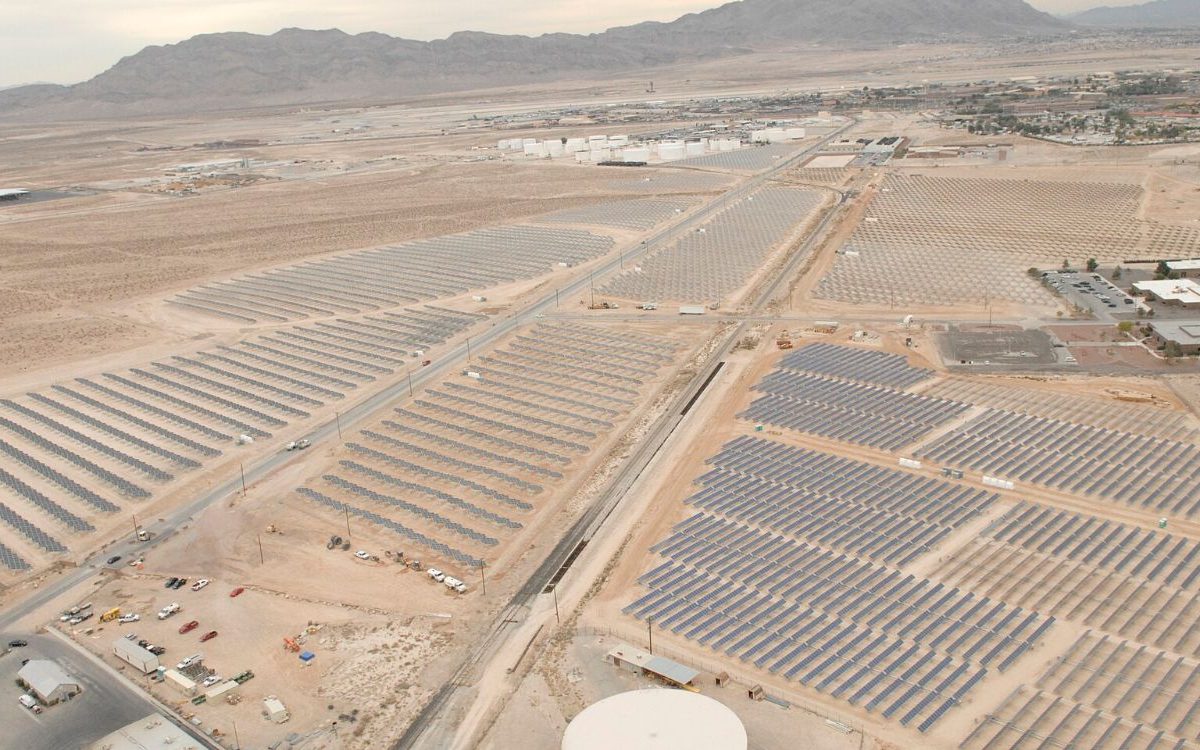
It has been widely assumed among pundits and policy makers that the continued expansion of solar photovoltaic (PV) installations will drive down PV costs until the electricity they produce is competitive with conventional power sources without the need for subsidies. This belief is grounded in both recent PV cost trends and the well-known "experience curve" effect in manufacturing, in which costs tend to fall in proportion to cumulative output. However, anyone following the fortunes of big PV manufacturers like First Solar, SunPower, and China-based Suntech and Trina Solar might have reason to question this conventional wisdom. Their latest earnings reflect an industry stressed by softening demand in its core market in Europe and facing global overcapacity along the supply chain. This has me wondering how much of the recent decline in PV prices was due to the inherent progression of the technology, and how much to unsustainable market and competitive pressures.
The solar industry has made tremendous progress in the last several years. One indication of that is the price trend for PV in the annual "Tracking the Sun" survey from Lawrence Berkeley Lab. Between 2007 and 2010 the average cost of PV installed in the US fell by around 22%, with the largest portion of that drop occurring last year, followed by a further 11% decline in the first half of this year. Most of the reduction is attributable to the falling price of solar modules, rather than from the non-module, or "balance of system" costs (inverters, structures, installation, etc.) The fact that these declines coincided with an explosion of global PV capacity and output seems entirely consistent with expectations about the likely path of PV costs. Cumulative global PV capacity doubled twice in that interval, based on figures in the newly released Renewables 2011 Global Status report from REN21, so we'd expect to see strong experience-curve cost reductions.
The problem is that the industry dynamic behind this trend didn't much resemble the pristine image that the term "experience curve" evokes, of diligent engineers relentlessly focused on continuous improvement. Without diminishing the contribution of a lot of smart people, a key driver was the tough competition for market share between silicon-based PV, which had to overcome a major bottleneck in the supply of its primary raw material, polysilicon--the price for which spiked and subsequentlycollapsed--and cheaper but less efficient thin-film PV technologies relying on entirely different chemistries such as cadmium telluride and copper, indium, gallium and selenium.
A further hint that this wasn't quite the standard picture of predictable cost declines promoted by the PV industry is that PV prices appear to have been falling faster than actual costs, which in the case of at least some manufacturers are no longer dropping much at all. This can be inferred from thecompression of gross margins reported by the leading firms, and in results that show profits stalling orfalling even as volume grows. SunPower, the largest US silicon-based PV maker, reported a net loss for the third quarter of 2011, following a loss in Q2, and issued guidance forecasting a loss in 4Q, as well. We'll get a better picture of the health of the big China-based producers when they report 3Q earnings next week, but in the second quarter Suntech, the world's largest solar panel maker, reported a substantial loss, even though sales were up by a third from a year earlier, similar to results at rival JA Solar. In response Suntech and other Asian producers have apparently slowed planned expansions and reduced throughput at existing facilities, while US PV leader First Solar postponed its new factory in Vietnam.
It's a testament to the ingenuity of the big, established PV producers that they haven't all shared the fate of Solyndra after investing so much in expanding capacity ahead of demand--a major accomplishment in itself when demand has been growing by roughly 80% per year--only to see the market weaken due to a prolonged economic slump and a financial crisis in Europe that has undermined the ability of governments to provide generous subsidies for PV installations. Assumptions about the future cost trend of PV won't mean much if the industry doesn't emerge from its current difficulties as a collection of healthy firms with solid balance sheets and financial performance that investors find attractive. That will require better margins achieved by some combination of improved pricing power--implying better matching of capacity to demand--and cost reductions that don't just rely on further scale-up, which will become less fruitful as experience-curve benefits stretch out.
In other words, even if PV manufacturing costs continue to fall quickly for the next few years, it's less clear that the PV prices paid by project developers, businesses and consumers will follow suit, particularly if the current low margins lead to a global shakeout or consolidation among producers. Time will tell whether the solar industry can sustain the cost path that it's been on, or if future cost reductions will be more modest, in which case a number of scenarios for future PV penetration and renewables-based emissions reductions would require revision.
Is the Photovoltaic Price Trend Sustainable?
Other Posts by Geoffrey Styles
E15's Problems Are Symptomatic of A Failing Biofuels Policy - May 22, 2012
Are Chesapeake's Problems A Red Flag For Shale Gas? - May 17, 2012
Where Gas is Already $10 per Gallon - May 9, 2012
Resources from Space? - May 4, 2012
US Natural Gas Price Nears $10 per Barrel Equivalence - April 30, 2012
» Already a member? Login now to comment!
» Not a member? Register to comment!
Patrick Takahashi said:
On the potential of ocean thermal energy conversion suggested by Jim Baird, a couple of months ago I co-facilitated the first real gathering of OTEC companies, ever:
http://bluerevolutionhawaii.blogspot.com/
From all subsequent developments, things are finally beginning to happen.
OTEC electricity by itself is many many decades away from commercialization. However, the total package of co-products, as represented by the Blue Revolution:
http://www.huffingtonpost.com/patrick-takahashi/blue-revolution_b_166977...
shows particular promise. In fact, I think the only future for Japan is the Blue Revolution:
http://www.huffingtonpost.com/patrick-takahashi/the-blue-revolution-is-t...
There are some of us who feel that the open cycle system might have nearer term applicability, as resort hotels and certain military bases seem ideal for such ventures.
Bill Katakis said:
On Solar PV,advances in the lab related to micro and nano thin layers of CdTe and even Si and CIGS,etc., use a tenth, a hundreth, even a thousandth of the materials that todays PV cells use, and with nano pillars/nano antennae , some will eliminate reflected light, channeling the light down through the PV cell. Some are also working with dye layers to utilize a greater portion of the suns bandwidth. The companies moving from lab cells to production line testing right now, intend on tripling , at a minimum, the output of today's PV panels. At the same time , NREL and others are looking to standardize and cheapen installation, and all balance of costs. For instance, a several thousand watt grid tie inverter, why should it be any more expensive than a stereo receiver , when mass produced? Expect fully to see PV comany changes, even turnover, as a technology that's been ignored since Jimmy Carter, is finally given a tiny bit of incentive. We can burn coal and continue to kill 30,000 Americans a year, and release tons of Uranium and Thorium and Mercury, etc. or, we can revoke coal's license to kill and move the coal subsidies, tax breaks, giveaways, to solar. Someone said that to leave a liveable planet for our children, we need a renewables effort that uses all the money, resources, and legislative assistance as a general mobilization in time of world war,,, and it's true. A Sierra Club energy advisor says that with state mandated efficiency programs we can pay for all the renewable energy we need to beat global warming. I have to agree, because that alone would push the renewable and efficinecy industries to expansion and innovations that will push solar to us as the cheapest energy source conceivable. The storage solutions for solar and wind are coming online, and the power switching problems that are oft fretted about for clean power, won't emerge as a problem for twenty years at the current rate of expansion of wind power. Rooftop solar won't require a grid upgrade either. Some current solar pv requires the glass to be brought to the PV factory, heated to near melting, before the films are applied. Coming solar will use a printing process, or dipping. That's another huge energy savings. One thing that's needed is a light substitute for glass, that can withstand the sun, acid rain, bird droppings and all the things that would currently degrade most alternatives to glass. Solar PV will survive the next quarter's earnings report. It's encouraging to see G.E.'s attemp at a 10-15 MW wind turbine, and their builing the biggest PV plant in the U.S., and claim they can beat the Chinese with CdTe.
RickEngebretson said:
Once they obey market forces instead of political forces the PV industry will continue price reductions. Many current renewable energy designs are for a big show, not efficient electrical power production.
The leftists (I don't know what else to call them because I'm an environmentalist) yell about "externalities" but never calculate their own. Those giant for show windmills use ridiculous amounts of steel, concrete, plastics, and fabrication and transportation costs; not to mention electrical distribution issues Willem Post has described so well. A lot of coal based electricity and big trucks and big boats go into just getting iron ore to the steel mill; very impressive tourist site in Minnesota. But all the leftists want to talk about is bad CO2. It doesn't add up.
Similarly, current PV designs use a lot of tempered optical glass that is very expensive. Huge areas and huge PV fabrication costs completely run contrary to the whole electronics industry move to "doing more with less." Solar thermal concentration schemes take 6000 degree energy and degrade it to steam. I don't see how it won't go to concentrated PV with sophisticated optics and cooling in a market based development environment.
Jim Baird said:
Rick, I submit the Laws of Nature are even more compelling.
Entropy, such as is produced by the degrading of 6000 degrees to steam, is what is doing us in.
For Geoff it even has an economic component.
The Second Law of Thermodynamics - the Law of Entropy - "is about the irreversibility of natural processes. It states that there is a physical quantity called entropy that increases in all processes irreversibly. Physicists identify entropy as a measure of the disorder or complexity of a system. In economic terms, the Second Law can be regarded as Nature’s unyielding tax collector. It exacts a tax from all our activities by increasing the disorder of our thermodynamic system. No process eludes Nature’s Second Law; her tax code contains no loopholes and no tax shelters. Through increases in entropy, the Second Law controls and dictates the way all processes proceed in the universe. For this reason, it maintains a supreme position within the Laws of Nature. It demands our undivided consideration." Jack Hokikian.
The First Thermodynamic Law states that the amount of energy in the universe is constant; energy cannot be created or destroyed but can be transformed from one form to another. That is why I continue to "HARP" in the opinion of some, on the notion that our only salvation is to convert energy we already have in the greatest abundance - solar energy being stored in the oceans causing it to expand and melt the icecaps - to productive use.
Geoffrey Styles said:
Jim,
So lets talk about the practical application of thermo in engineered systems. Although I lean heavily on economics in my writing, I also still remember my heat transfer studies as part of my chemical engineering training. If you want to transfer a lot of heat to do lots of work (e.g., running a generator) then you want wide temperature differences between source and sink. Although you can indeed extract heat from the relatively small delta-T between different ocean depths, capturing enough of it to do useful increments of work requires much more hardware, and hence higher costs. The wind turbines Rick mentioned are also subject to natural constraints that drive engineers toward designing larger structures: the power captured increases as the square of the blade radius. That's why home-scale wind generators are generally so expensive per kWh of output.
Jim Baird said:
Geoff, another analogy - a hurricane is one of the most powerful forces in nature. They are atmospheric heat pipes moving as much as 30 TW worth of heat in each storm, in the form of vapour to the tropopause where the moisture condenses. Some of that heat is then radiated to space and the balance falls back as rain. Virtually the same delta-T drives hurricanes as would drive OTEC. With my approach you use thousands of small, inverted, ammonia, hurricanes to produce all of the power we will ever need.
Geoffrey Styles said:
"Virtually the same delta-T drives hurricanes as would drive OTEC."
Of course a hurricane also covers an area of a good-sized state, so a small flux across a huge surface yields big numbers. I've never doubted the potential of OTEC, but it would be a lot easier to get excited about if it hadn't effectively languished for 3 decades while everything else from wind to tidal moved ahead. To what do you attribute that? (I'll check for my answer after the holiday weekend. Have a good one.)
Jim Baird said:
Geoff, 2nd point, you transfer a lot more heat a lot faster with a heat pipe using phases changes than you can using fluids alone.RickEngebretson said:
Geoff, "The wind turbines Rick mentioned are also subject to natural constraints that drive engineers toward designing larger structures: the power captured increases as the square of the blade radius."
If you've ever studied the matter, as I have, coupling efficiency of wind to mechanical torque is the critical design goal. A barn roof provides an aerfoil concentrator for far better wind capture; plus you have a high value structure with materials used.
You should study some of the propeller engineering skills from WWII. It has a lot more involved than Area=pi*r(squared). A lot is a gross understatement. These contraptions will likely never cover the carbon cost of iron ore production in them, much less the aluminum power lines all over.
Geoffrey Styles said:
Rick,
I'm sure you're right that it's far more complicated than just swept area. I was merely comparing the small (10 kW) freestanding turbines that generate more in the way of tax credits and self-satisfaction than power to commercial units of 2 MW and above.
RickEngebretson said:
Jim Baird, I am very impressed you understood the point of that comment.
I never understood thermodynamics (the earlier science) until I understood quantum physics and statistical mechanics. By then I had forgotten too much thermodynamics to speak the language and spoke photon frequency and temperature instead.
Werner Heisenberg promoted the concept that the earth is a negative entropy machine, turning a few high energy photons into many low energy (blackbody) photons (increased entropy), and leaving an equivalent decreased entropy (increased order) behind on earth. Biochemistry is order to the utmost degree.
I believe your idea has merit, and will give it still more thought. However, I don't comment on issues I don't understand (same with nuclear reactors; who the h--- am I to judge).
Thanks for the follow-up.
Geoffrey Styles said:
And here's an article from ReCharge describing the impending solar shakeout, and identifying the likely survivors: http://www.rechargenews.com/energy/solar/article290533.ece
-
Baby You Can Drive My (Electric) Car
Posted May 11, 2012 by Scott Edward Anderson
-
Siemens develops ABS plastic alternative
Posted May 9, 2012 by Doris de Guzman
-
Reduce CO2 and Slow Global Warming?
Posted April 30, 2012 by Willem Post
-
WGC 2012 - 25th World Gas Conference
June 4, 2012, Kuala Lumpur, Malaysia
-
Ecwatech 2012
June 4, 2012, Moscow, Russia
-
Intersolar Europe
June 11, 2012, Munich, Germany
Scott Edward Anderson is a consultant, blogger, and media commentator who blogs at The Green Skeptic. More »
Marc Gunther is a writer, speaker and consultant, who focuses on business and the environment. More »
Christine Hertzog is a consultant, author, and a professional explainer focused on Smart Grid. More »
Jesse Jenkins is the director of energy and climate policy at the Breakthrough Institute. More »
Robert Rapier works in the energy industry and writes and speaks about energy and the environment. More »
Geoffrey Styles is Managing Director of GSW Strategy Group, LLC and an award-winning blogger. More »
Dan Yurman is a nuclear energy blogger and writes regularly for Fuel Cycle Week. More »
The Energy Collective
- YOU
- Rod Adams
- Scott Edward Anderson
- Charles Barton
- Barry Brook
- Dick DeBlasio
- Simon Donner
- Big Gav
- Michael Giberson
- James Greenberger
- Lou Grinzo
- Marc Gunther
- Tyler Hamilton
- Christine Hertzog
- David Hone
- Jesse Jenkins
- Lynne Kiesling
- Sonita Lontoh
- Jesse Parent
- Vicky Portwain
- Tom Raftery
- Robert Rapier
- Joseph Romm
- Robert Stavins
- Robert Stowe
- Geoffrey Styles
- Alex Trembath
- Gernot Wagner
- John Whitehead
- Dan Yurman
Hidroenergia 2012
When: Wed, 2012-05-23 09:00
NERC CIP Compliance Training
When: Thu, 2012-05-24 08:00
Webinar on Transported Asset Protection Association’s (TAPA) Freight Security Requirements and Trucking Security Requirements
When: Thu, 2012-05-24 14:00
Global JOJOBAWORLD 2012
When: Fri, 2012-05-25 09:00
NESCO Town Hall: Security Risk Management Practices for Electric Utilities
When: Wed, 2012-05-30 13:00
WGC 2012 - 25th World Gas Conference
When: Mon, 2012-06-04 09:00

About Social Media Today