It was bound to happen. As long as US corn output continued to climb year after year, the federal mandate to blend steadily increasing quantities of ethanol into gasoline could be accommodated without creating a shortage of this staple grain. Unfortunately, crops are subject to all sorts of uncertainties, including the severe drought conditions that the middle of the country is experiencing this year. Estimates for this year's corn crop have been revised downward, and corn prices have already broken through $8 per bushel, up from less than $6 a month ago, with consequences for the livestock, processed food and ethanol industries, as well as for export markets. As soaring feed grain prices begin to translate into higher grocery prices for meat, poultry, dairy and other goods, will consumers demand relief from the EPA, which has the authority to curtail ethanol volumes? The current betting appears to be that the administration will stand fast on the mandate, but anything can happen in an election year.
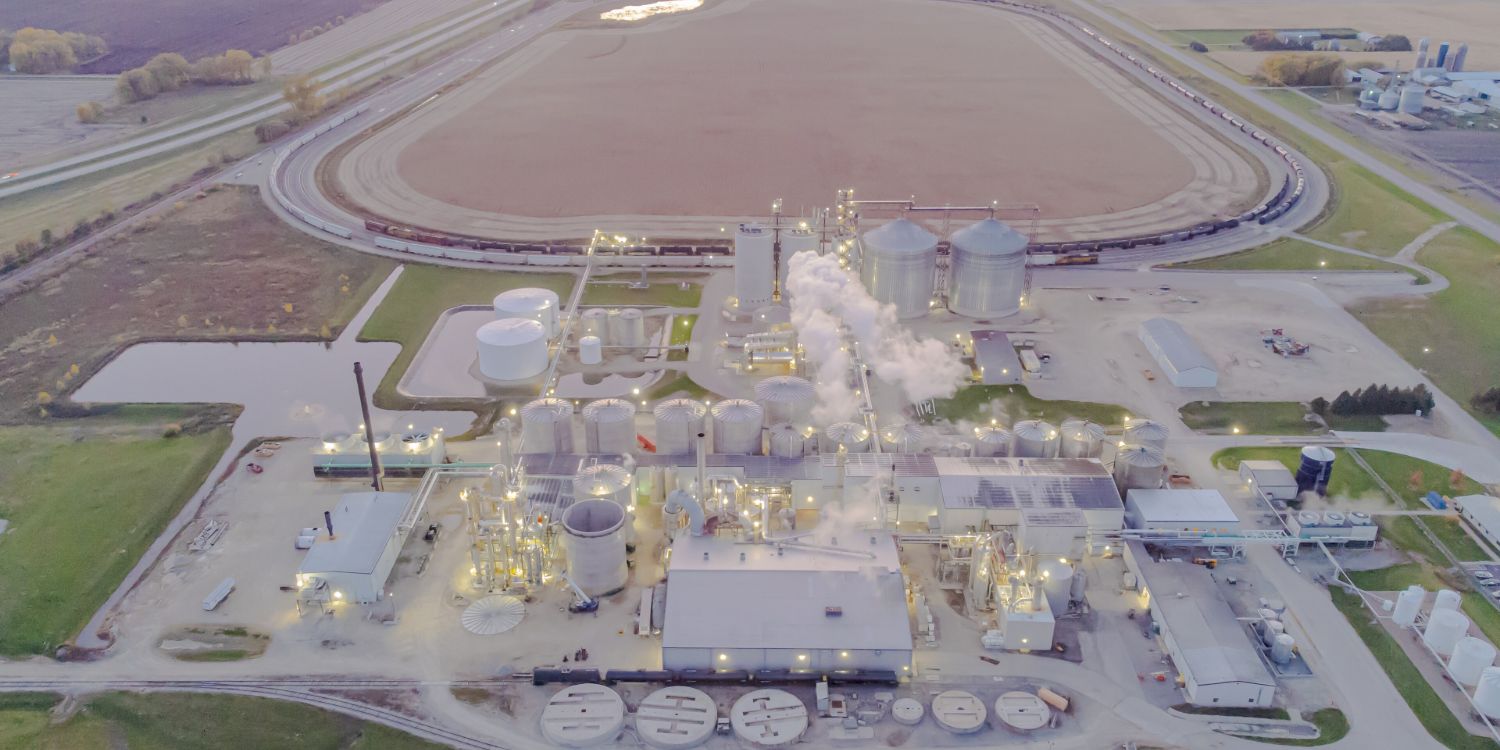
Ethanol now accounts for at least 10% of US gasoline blending, by volume. To meet that demand, ethanol producers will require around 5 billion bushels of corn. In recent years, the ethanol industry's expanding corn demand was met by a combination of increasing yields and planting more acres in corn. However, corn yields per acre are dropping sharply this year, potentially pushing output below last year's 12.4 billion bushels, if conditions don't improve soon. That's in contrast to earlier expectations that this year's corn crop would exceed last year's by 20% . This isn't the first time that the food vs. fuel trade-off inherent in crop-based biofuels has become an issue, but it might be the first time when both the demand for corn for ethanol is so high and the need for that ethanol in the gasoline blending pool is arguably so low. In this context, food vs. fuel quickly boils down to a debate over the tangible benefits of corn-based ethanol as a fuel. There's growing evidence that those benefits have been oversold, despite industry claims.
Start with the widely touted study from Iowa State University indicating that ethanol saved consumers $1.09 per gallon at the gas pump in 2011 and $0.89/gal. in 2010. I read both the original study and its updated version when they came out. It seemed obvious to me that the authors' grasp of gasoline markets and oil refining were inadequate, but I lacked the time necessary to dig through their math to uncover the source of their exaggerated results. Fortunately, a pair of researchers from MIT and my alma mater, U.C. Davis, have now done that work and concluded that the Iowa State paper's findings--and the claims based on them--depended on a "spurious correlation": the relationships they saw were coincidental.
In contrast to the Iowa State studies, the MIT/Davis paper is very readable, and I recommend it to you. In addition to debunking the statistics, the authors point out the key flaws in their counterparts' logic. Foremost among these is that in order to have a large influence on gasoline prices, ethanol would have to have had a large impact on crude oil prices, which are the largest determinant of gas prices, by far. From 2005-11 US ethanol production expanded by 10 billion gallons per year, the energy equivalent of 350,000 barrels per day of oil, or 0.4% of 2011 global oil supply. I've argued many times that the oil market responds disproportionately to modest changes in supply and demand, but the idea that a few hundred thousand barrels per day could translate into the equivalent of $45/bbl exceeds the wildest dreams of any trader I ever met. The MIT paper concludes with the authors summarizing the likely impact of ethanol on gasoline prices as "near zero and statistically insignificant."
However, if ethanol hasn't done much to hold down gas prices, could a drop in US ethanol production resulting from paring back the ethanol mandate to reduce the pressure on corn prices cause a big spike in gasoline prices? That's where the analysis in a paper presented to members of Congress yesterday comes in. Dr. Elam's report suggests that rather than displacing imported crude oil, the main effect of increasing US ethanol use in fuels has been to divert domestic gasoline production into exports, while US crude imports have fallen based on a combination of lower demand (from the recession) and improved product yields per barrel of crude oil refined. Even if you are inclined to be skeptical of these findings because the study was supported by poultry interests, data from the US Energy Information Agency and elsewhere show that US refineries are not fully utilizing their capacity, are exporting significant volumes of gasoline, and have a wider array of domestic and imported crude oils at their disposal than they did just a few years ago. In short, we're in a far better position to forgo a few billion gallons of ethanol this year than we would have been in 2008, the last time food vs. fuel concerns spiked along with gas prices.
Corn growers have experienced droughts before, and in the past the price of corn sorted out who needed it most. However, the market can't prioritize fairly among the competing calls on a drought-diminished corn crop when the single largest segment of demand is locked in place by a federal mandate. This represents a massive distortion that only the government can rectify. I'm sympathetic to the ethanol industry's dilemma. After all, the federal government virtually begged them to overbuild capacity, but it couldn't guarantee they would earn a profit, even when it was providing a $0.45/gal. subsidy for their customers, who are required by law to use their main product. However, the economic and environmentalbenefits of ethanol are too modest to shield this industry while forcing all other corn users to absorb the likely shortfall in corn supply. The most sensible remedy would be to unshackle ethanol demand, at least temporarily, and waive at least a portion of the ethanol mandate for 2012-13.
Food vs. Fuel and the Midwest Drought
Authored by:
Geoffrey Styles
Geoffrey Styles is Managing Director of GSW Strategy Group, LLC, an energy and environmental strategy consulting firm. Since 2002 he has served as a consultant and advisor, helping organizations and executives address systems-level challenges. His industry experience includes 22 years at Texaco Inc., culminating in a senior position on Texaco's leadership team for strategy development, ...
Other Posts by Geoffrey Styles
» Already a member? Login now to comment!
» Not a member? Register to comment!
Rick Engebretson says:
This is a great discussion of ethanol fuel. But the point remains, corn ethanol is a waste product from value added food processing. And the "food vs. fuel" myth is as false as the myth that corn ethanol is a liquid fuel replacement to fossil oil.
Other myths played with here include; terrible fuel mileage while in fact auto mileage is greatly improved, evil blenders subsidies that in fact go to the oil industry, engine wear while cars easily run over 200,000 miles.
The air is cleaner, we drive more, and more of us are fatter. We have over-run every corner of the world, and learned clever new digging and extracting methods, while replacing evolved nature with laboratory genetics.
Pandering to consumption is the underlying theme of our socio-economic-political human evolution. Any myth that sells consumption is attempted. After thousands of years of developing human history, it is an open question whether we have another 100 years. This discussion is certainly very short sighted.
Geoffrey Styles says:
Rick,
I can't argue biochemistry with you; if you say that ethanol is a waste on the cellular level, I accept that. However, I do believe that you're confusing what happens at the cellular level with the business and regulation-steered purpose of the entire US ethanol industry. Since the Energy Policy Act of 1978, the corn ethanol industry has been driven by incentives and mandates to produce fuel, not upgraded animal feed. Arguing that ethanol is a byproduct of ethanol plants is like arguing that residual fuel is the main product of oil refineries, while gasoline is just a byproduct.
As for the "myth" of degraded fuel economy, it has been demonstrated in numerous studies, including this one by Oak Ridge National Laboratory. ORNL found that "All 16 vehicles exhibited a loss in fuel economy commensurate with the energy density of the fuel. With E20 the average reduction in fuel economy (i.e., the reduction in miles per gallon) was 7.7% when compared to E0." That's actually slightly more than the 7% loss you'd predict from blending a fuel with an LHV of 76,000 BTU/gal into one yielding 116,000 BTU/gal LHV. That is evidence-based science.
As for characterizing this as a short-sighted discussion, the fundamental question of whether food-crop-based biofuels (as distinct from crop waste or algal biofuels) represent an appropriate and sustainable energy solution for a planet with population headed toward 9 billion is very much a long-term concern. There's no free lunch involved in turning corn into motor fuel. Even if its protein is conserved for animal feed--or for human consumption if this DDG enthusiast has his way--its calories are not, and the land cultivated in corn to feed ethanol facilities could be planted in other crops. The current drought is a wake-up call to rethink our long-term priorities.
Rick Engebretson says:
Geoff, I'll not mention it again, since most Americans are advised from grade school that a proper diet is not solely sugar and starch. Where do you think most livestock get their balanced nutrition?
Yes, I remember the saturation advertising of "ADM, supermarket to the world." And the false promise that corn would grow along the highway with pump nozzles. And that is about how silly your claims seem to me that they ferment expensive corn grown on expensive land to produce cheap, abundant fuel that rivals your oil costs.
There is now simply no other way to produce the protein diet the world requires.
As for cars, they come in several drive system designs these days.
Rick Engebretson says:
Yes, Geoffrey, it is frustrating. It would be fun to participate in a discussion how reactive/hydrogen rich biomass waste chemistry might complement low quality carbon rich oil chemistry. A sustainable, low carbon, designer liquid fuel for improving transportation technology. Both now abundant in the center of North America.
A little industrial cross-pollination. I tried getting Solid State Physics to cross-pollinate with Biochemistry and only made enemies on both sides. People like walls.
Geoffrey Styles says:
One last thought re products and byproducts. If a typical dry-mill ethanol plant yields 2.8 gallons of ethanol @ $2.60/gal and 17 lb. of distillers dried grain @ $200/ton, then the ethanol accounts for 81% of gross revenue and DDG for 19%. So while it may in fact be silly to "ferment expensive corn grown on expensive land to produce cheap, abundant fuel that rivals your oil costs", follow the money.
As for an exploration of how "hydrogen rich biomass waste chemistry might complement low quality carbon rich oil chemistry" I for one would like to see more about that and encourage you to write it up for publication on The Energy Collective.
Rick Engebretson says:
I appreciate the opportunity to discuss my perspective.
25 years ago (1987), after walking away from "homogeneous ratiometric chemiluminescent immunoassay" because nobody (except Japan and Germany) believed a PC could automate radio-isotope immunoassays using numerical analysis, I pushed two farm projects (recycled plastic livestock septic tanks and hay crop extraction of protein feed with cellulose fuel). The interesting part was the old creamery owner did his Ph.D. on livestock nutrition and raised veal calves taken from their milk cow mothers. He imported truckloads of synthetic amino acids from Germany and had his proprietary blend. How accountants play with money on a ledger is anybody's guess. But livestock feed and manure is an old concern that is still being worked out, with the history of fermented corn starch directly competing with my effort to extract protein from hay. I was never an advocate of the corn everywhere process, and the guy that started the corn process liked alfalfa. So that is the background of my reality check for this article.
The biofuel law is now as clear as this group (with climate and drought added)
http://www.usesc.org/energy_security/
Maybe you should refer to them for further discussion. I can't follow accountants' number system.
We have the fuel ingredients in place.
Cliff Claven says:
Biofuels are absolutely competitive with food, regardless of whether they made from a food crop or not, or whether they are labeled "advanced" or "2nd generation" or whatever Orwellian newspeak tries to hide the simple truth; they compete for land, water, fertilizer, pesticide, herbicide, farm equipment, transportation, and manpower that otherwise could be used for food. The consensus for corn ethanol energy return on investment (EROI) after decades of research and debate is now broadly agreed to be 1.25:1. It's 1:1 for the ethanol, with the additional .25 output being in the form of energy credits given for DDGS. What that means is that all the tens of billions of subsidies taxpayers have paid for corn ethanol have gone only to reduce our foreign dependence on DDGS (which of course doesn't exist). We get no more energy out of the ethanol at the end than we put in in fossil fuel along the way (I would hope this audience realizes that fertilizer, herbicide, pesticide, farm equipment fuel, distillation heat all come from natural gas and oil). In other words, no petroleum is being displaced by ethanol, it is being consumed in the making of ethanol, BTU per BTU. It's time to kill this self-licking ice cream cone of federal government subsidies to the states that hold the earliest election primaries. Al Gore himself now admits this was a mistake motivated by his need to curry favor with farmers during his election campaign (Wynn, Gerard. “U.S. Corn Ethanol Was Not a Good Policy: Gore.” Reuters. Athens, November 22, 2010. http://www.reuters.com/article/2010/11/22/us-ethanol-gore-idUSTRE6AL3CN20101122 ). It is well past time to kill all the subsidies: all $2.8 B for big oil and all $14.7 B for alternative energy (Direct Federal Financial Interventions and Subsidies in Energy in Fiscal Year 2010. Energy Information Agency, July 2011. http://www.eia.gov/analysis/requests/subsidy/ ). The whole requirement of a primary energy source is that it must pay its own way in energy, i.e., have a very high EROI. Petroleum clocks in between 8:1 and 24:1. Only hydro and coal are higher. Your electric rates will tell you the same story depending on what your power company uses. Cut out the politics and special interests and let the market work.
Geoffrey Styles says:
Cliff,
I'm not sure there is truly a consensus on the energy return on energy invested for ethanol, but even if you use the figure of 1.67:1 that I encounter frequently, we can't run our economy on an energy source with such low energy returns. Corn ethanol is effectively "hamburger helper" for gasoline--stretching it without adding much energy value. It's also a simple gas-to-liquids technology, since much of the energy in ethanol derives from natural gas used to make fertilizer to grow corn and process heat and power to run the ethanol facility. By contrast, cane ethanol grown in the tropics has an EROEI that compares favorably with petroleum and utilizes few fossil energy inputs.
Eric Dorn says:
There are two points that seem to get lost in these discussions. The first is that while ethanol does have a lower Btu/gal content it also has a higher octane rating, so blending ethanol into the fuel mix has allowed refiners to produce a starting blend stock with a lower octane rating. This generally allows refiners, dependent upon the specific design of course, to improve gasoline yield output. The second is that modern societies for many years have generally valued portable liquid fuels much higher than non-portable fuels. Just compare the value of natural gas or coal on a $ / Btu basis to gasoline. Good or bad, different fuels are not valued simply based on their Btu content. Therefore any good energy valuation discussion should include that fact.
Finally I think it is important to remember that the fuel ethanol industry is still in many ways very young. Increases in ethanol yield along with reductions in energy and water consumption continue year after year right along with improvements in corn hybrid yields. While it is pretty clear that ethanol fuel is not the final answer, I believe it is one of the many answers. It is good to remember that it took the petrochemical industry about 100 years to be what it is today and any comparisons between growing and mature industries is difficult.
Cliff Claven says:
Many people think a higher octane rating means more energy or a higher quality fuel. It is only a measure of a fuel's resistance to ignition under compression. Adding water increases octane rating. Ethanol increases the octane rating in much the same way as adding water, by REDUCING the fuel quality. There are better ways (e.g., better additives) to enable higher compression gasoline engines than adding water or alcohol to the fuel. Ethanol also increases the emission of VOCs and smog precursors, which is rich irony. If the EPA was smart enough to regulate emissions by distance travelled instead of by gallon burned, we would all have much more fuel-efficient vehicles and much more efficient fuels. Ethanol and any oxygenates would be history. The UK has an 80 MPG Volkswagen that is illegal to be sold in the United States because of emissions, even though it puts out less pollution per mile than anything in the US.
Eric Dorn says:
My point was that utilizing ethanol as an octane booster allows refiners / blenders to utilize a lower octane blend stock. Unlike water, which does not have any energy value and does not blend with gasoline, ethanol does have fuel value and can be blended, stored and distributed along with standard gasoline. Starting with a lower octane blend stock often allows refiners / blenders to increase blending stock options and extend fuel yields above what normally would be available for a particular area - such as utilizing an 85 octane blend stock in an area with an 87 octane minimum standard. This opens up blending options and increases the marketing fluidity from one area and its set of fuel requirements with another. I did not mention the word quality, good or bad, in relation to ethanol blends - simply that one of its attributes is that it increases the octane of the fuel and refiners / blenders through the years have been able to maximize that value.
Interestingly it is possible to design a high compression engine to run on a high octane ethanol blended fuel that can achieve in many cases higher fuel economy than a standard fuel. But as Geoffrey had commented earlier, car manufacturers are required to design engines to run on a variety of fuels and therefore sacrifice potential benefits of high ethanol blends.
I would also be careful of some of the published emissions data on ethanol blends and look closely at the testing fuel blend stock and protocol. Much of the negative emissions data that has been published have been the result of a lower quality starting fuel blend stock for the ethanol blends and including multiple variables in the trial. Emission data that have been done with the only variable being added ethanol, ie. same engines, same starting blend stock fuel, etc. have generally shown ethanol addition reduces engine emissions.
Geoffrey Styles says:
You raise some very good points. The higher octane of ethanol has value, though that does not offset the fuel economy losses resulting from ethanol blending, which are generally proportional to energy content, since the engines of flexible fuel vehicles can't be tuned to take advantage of ethanol's higher octane without losing the option to run on ordinary gasoline (max 10% ethanol.) I'd like to see someone with current or recent oil refinery process engineering or production optimization experience comment on the processing trade-offs. The likeliest octane producer that would be backed off to accommodate ethanol, the catalytic reforming unit, is also an important source of hydrogen, which is in increasing demand for the more intensive hydrotreatingrequired to meet environmental regulations. Moreover, the rapid increase in ethanol blending over the last decade has coincided with a widening of the retail spread between unleaded regular and premium grades. While there might be other reasons for that, it doesn't support the view that ethanol is providing refiners with cheap octane.
The ethanol industry in its present form is relatively young, as you note, although industrial ethanol production has been going on for many decades. Unlike petrochemicals and other mature process industries, today's ethanol industry is almost entirely a child of regulation, adapting mainly to changes in those regulations rather than to changes in consumer or other end-use demands. If you want to know what it will look like in the future, look first to likely future regulation.
John Miller says:
Ethanol Blending 101
- Blending ethanol primarily backs out large amounts of relatively inexpensive butanes and pentanes from petroleum gasoline blends. This is required largely for meeting maximum gasoline vapor pressure (RVP) and is not due to ethanol’s relatively high octane. Butane also has a high octane. In addition, very small reductions in gasoline ‘reformer’ severities (very slight reduction in reformate octane & utility costs) and blending of alkylate (iso-paraffin’s) also result when blending ethanol. These Refiner cost savings are small compared to lost value of not blending butanes (normal & iso-) into gasoline. Backing butanes and pentanes out of the gasoline blending pool basically results in these hydrocarbons being sold at a large discount to gasoline (LPG heating fuels).
- Ethanol has a high octane (and vapor pressure), but also has very constraining physical properties including extremely high solubility in water and is corrosive to many synthetic-flexible materials. Due to the high affinity for water and corrosive properties ethanol must be handled specially or separately from bulk petroleum gasoline. Ethanol cannot be blended at the Refinery and transported via very efficient pipeline infrastructures used throughout the U.S. to transport 80% of all petroleum products. Ethanol picks up water and dirt from these systems and corrodes pump and valve seals. To properly handle ethanol it must be shipped separately by rail, barge and truck to the final blending terminal in the petroleum gasoline supply chain. The ethanol is then blended with the petroleum gasoline at the final terminal before loading into trucks for transfer to commercial and retail fuel station outlets.
- When the original Clean Air Act 1990 required blending oxygenates to reduce light vehicle tailpipe emissions, essentially all Refiners chose MTBE over ethanol due to the more favorable economics. MTBE did not require special handling and was cheaper to produce and blend into gasoline then ethanol. The nightmare of environmental issues cause by leaking service station buried tanks, killed MTBE’s use and made ethanol the only alternative for meeting the oxygenate blending mandate.
- Ethanol was used as an octane blending component at the beginning of the 20th century. The more favorable economics of reforming and alkylation (converting paraffins into high-octane iso-paraffins) quickly displaced ethanol as a economic high octane gasoline blending component. Today, ethanol is only used because the Federal Government mandates increasing volumes be blended. As I recall, back when the original oxygenate mandate was being developed, the 2% oxygenate level (7.4 vol.% or what we would now call E-7.4) was the optimal level for ethanol based on vehicle tailpipe emissions. Little appears to be researched or published on the current E-15 maximum blend level on tailpipe emissions.
- Question: Why doesn’t the EU blend large volumes of ethanol if its value and environmental impacts are as attractive as ethanol advocates believe? Brazil uses ethanol produced from cane sugar because it’s far more efficient and economic than U.S. conventional corn ethanol.
Geoffrey Styles says:
JE,
Thanks for the lucid explanation. Your perspective is clearly more recent than mine, since the last time I actually blended gasoline oxygenates weren't an issue, but meeting 9.0 RVP most of the year (Southern Cal.) squeezed out most butane and pentane with similar penalties. Your comment about the 2% oxygenate level is also a helpful reminder that we've gone past the ethanol proportion that provides measurable air quality benefits and may actually be degrading them, depending on the fate of evaporative losses from blends over 10%. I did not see any analysis of this issue when the EPA endorsed E15; their assessment seemed focused on whether E15 harmed catalytic converters and other emission control equipment. (They also appeared to have excluded engine durability from their analysis.)
As for Europe, ethanol is making modest inroads, but with most of the continent at high latitudes it is at an even greater disadvantage than we are in growing energy-efficient feedstock for it. Many of the European ethanol plant announcements I've seen referenced wheat as the feed. Biodiesel based on canola (rapeseed) is the clear favorite and fits well with Europe's preference for diesel cars.
Cliff Claven says:
Geoffrey, I like your perspective on corn ethanol being really nothing more than natural gas to liquids. I see it as fossil fuel to DDGS conversion. If you dig around in the latest (post 2008) literature in the science journals, I think you will find a pretty solid consensus on 1.25 for corn ethanol EROI. Dave Pimentel has been arguing for negative energy balance since 1980 and others for greater than 3:1 and now I literally have seen "1.25" and "consensus" popping up together in the peer-reviewed papers, particularly in the latest stuff by Dr. Charles Hall, who pretty much invented the term EROI. As to Brazil, their claims have never been matched by the U.S. or Europe who get less than 2:1 EROIs when they try sugar cane. In my research, I have discovered that the claimed 8:1 EROI is actually a calculation of External Energy Ratio, not EROI. They ignore the internal energy cost of burning bagasse. The proper calculation of EROI puts bagasse as an output in the numerator and the energy used to distill ethanol (from burning bagasse) in the denomator. When the math is done right, out pops the 2:1 result that everyone else gets ( Hagens, Nate. “Proper Calculation of Brazilian Sugar Cane EROI.” The Oil Drum, March 24, 2009. http://netenergy.theoildrum.com/node/5183). Also, their unsustainable farming practices have caught up with them. There is no miracle in Brazilian sugar cane. In fact, I predict that both US and Brazilian ethanol production have peaked and will begin a slow decline as both shift back toward petroleum. (“Revised Totals for South-Central Brazil Sugarcane Harvest Show Even Smaller Cane Crush for 2011/2012 Season.” SugarCane.org, November 1, 2011. http://sugarcane.org/media-center/sugarcane-statistics/2011/revised-totals-for-south-central-brazil-sugarcane-harvest2028show-even-smaller-cane-crush-for-2011-2012-season-1 ).
John Miller says:
Geoffrey, Interesting debate going on here. Yes, corn is just a feedstock for ethanol production within the U.S. It does not matter where an ethanol producer gets their starch or sugar feedstocks from (grains, fruits, cane, etc.), the fundamentals of fermenting sugars into ethanol are basically the same. Due to past strong lobbying and political decisions the U.S. is the largest producer of ethanol in the world, surpassing Brazil some years ago. (Strangely, the EU has not embraced ethanol as a solution to their energy or environmental needs including reduced GHG’s.) To protect the developing U.S. corn ethanol industry from more efficient and cheaper Brazilian imports, the U.S. established $0.54/gal. import tariffs many years ago. The combination of very generous ethanol subsidies, protection tariffs and the RFS1 ethanol blending mandate, facilitated building the U.S. corn ethanol industry over the years. Besides the recent food vs. fuel issue you have raised, many of the least efficient corn ethanol plants have been shutting down in the last year. The cause? You clearly identified it. Corn (feedstock) prices are skyrocketing. The problem with excessive government subsidies is that they can support building and operating inefficient corn ethanol production facilities. So what can we expect from the corn ethanol industry’s lobbyists? The industry needs another extension of the $0.45/gal. subsidies that are about to expire.
The issue of corn demand and food market price increases were raised 5-6 years ago when the Federal Government increased mandated ethanol blending up to 7.5 billion gal./yr. in 2012 under RFS1. One of the considerations supposedly included in the EPA’s decision to limit further future increased conventional corn ethanol blending mandate up to 15 billion gal./yr. in 2015, was the impact on food market prices. The EPA’s increased ethanol target development process obviously did not include sensitivity analysis of such market factors as a severe drought and possibly doubling the cost of corn.
I fully agree, it’s time for the Federal Government to reconsider RFS2 conventional corn ethanol blending mandates. Hopefully they can do a better job this time then how they have addressed the unconventional ethanol targets. In this case we are not concerned with the fair treatment of oil companies. As you clearly stated, the major concern is food prices. Driving up the cost of corn affects the cost of most food stuffs including meats. The cost of meat will be impacted by increased costs of animal feeds, including DDGS.
John Miller
Eric Dorn says:
I believe the $0.45/gal subsidy that you are referrring to is the blender's credit that expired Dec 30, 2011. There are currently active no "subsidies" for the fuel ethanol industry.
While the price of corn has certainly risen, the free market economy that we exist in is functioning as it is supposed to. Corn ethanol plants are slowing or shutting down as a response to high ethanol supply and corn prices. As the old adage states, "high prices cure high prices" - the market adjusts. In addition, the current Renewable Fuels Standard (RFS) allows for blenders to cut back on the amount of ethanol they blend and postpone that amount to next year. The system is adjusting without the need for additional government action.
Cliff Claven says:
"There are currently active no "subsidies" for the fuel ethanol industry. " Huh?
1. $6B year for corn ethanol in Farm Bill
2. Corn and cellulosic ethanol RFS mandates and guaranteed markets
3. Tariffs on imported ethanol
4. IRS biofuel tax credits and incentives
5. USDA loans and grants for cultivation and biorefineries
6. DOE grants and loans for fuels and biorefineries
7. DOD purchase of biofuels and attempted funding of biorefineries
See: Yacobucci, Brent D. Biofuels Incentives: A Summary of Federal Programs. Congressional Research Service, January 11, 2011.
Eric Dorn says:
I would be interested in a similar subsidy and tax incentive summary done for the large oil industry, which is a mature and quite profitable industry. It would be even more interesting if you included other costs such as military involvement in foreign countries with the implicit objective of stabilizing and securing world oil supply. The United States highly values the supply and stability of its transportation fuels, which largely "fuels" the economy. While I think open discussions and debates are the foundation of our country, it is helpful to put everyone on a even playing field and recognize our country protects fuels and fuel supply in general not just biofuels and ethanol.
Cliff Claven says:
As I posted somewhere above, the analysis you said you'd be interested to see was done in 2011 by DOE/EIA at the express request of Congress (Direct Federal Financial Interventions and Subsidies in Energy in Fiscal Year 2010. Energy Information Agency, July 2011. http://www.eia.gov/analysis/requests/subsidy/ ). For 2010, the big bad oil companies got $2.8B year and alternative energy got $14.7B. Meanwhile the fed government collected $36B in big oil corporate income taxes in 2010 and $32.7B in gasoline and diesel excise taxes from consumers in 2010. The federal government takes in $6.28 per barrel of crude oil consumed in the U.S. and subsidizes big oil at a rate of 27 cents a barrel. Who is subsidizing whom? The $14.7B in subsidies for alternative energy broken down by barrel of oil energy equivalent output each contributed in 2010 works out to be $10.46 a barrel for biomass, $31.33 a barrel for wind, and $59.60 a barrel for solar. Per the DOE website, the $34.7B in Recovery Act funds spent on alternative fuels so far have created 60,000 temp jobs and less than 4,000 permanent ones (per the Washington Post), working out to over half a million dollars per temp job and $9M per permanent job. Meanwhile here is a short list off the top of my head of Obama-backed taxpayer subsidized companies that no longer exist: Solyndra, Cello, Range Fuels, Abound Solar, Beacon Power, Bright Source, Eco1, Ecotality, ECD, Evergreen, LSP, First Solar, Sun Power, Solar Trust, Unisolar, etc. What an epic crime.
Geoffrey Styles says:
Cliff,
It's a fact that renewables typically receive an order of magnitude more in the way of federal tax benefits, incentives and subsidies per unit of energy produced than conventional energy companies, which generally pay substantial federal taxes even after their tax benefits are factored in. However, I'm afraid your top-of-the-head list of defunct renewable energy companies needs revising. I haven't followed all these companies, but BrightSource, First Solar andSunPower are still in business, to the best of my knowledge, while Solyndra, Cello, Range Fuels, Beacon Power, Evergreen Solar, Solar Trust of America, and ECD have all declared bankruptcy.
Geoffrey Styles says:
The broader issues you raise make a worthy topic for another day, and in fact I've written about this previously. In the context of our discussion of whether it makes sense to require food-related users of corn to absorb most of the shortfall of a drought-diminished corn crop while protecting fuel-related uses by federal mandate, it's worth noting that the oil & gas tax benefits you cite--equating to about $0.02/gal. including the Section 199 deduction that ethanol producers and all other US manufacturers also claim--work in the opposite direction as the renewable fuel mandate in this case. Instead of competing with food supplies, domestic oil & gas production enhance US food production by reducing fertilizer and energy costs, including the cost of the diesel fuel used all along the food supply chain.
Geoffrey Styles says:
Cliff,
I'm afraid your source is out of date. The blenders credit worth about $6 B per year expired on 12/31/11, along with the import tariff.
Cliff Claven says:
True, many of the 22 separate financial incentive programs expired at the end of last year. What the farm bill will contain remains to be seen, but that has been $12B cumulative in direct payments to corn farmers since 1995. DOE has a huge budget for alternative fuels and spent more than $600M on bierefineries in 2010 alone. $34.7B in stimulus money has so far been spent on alternative energy (“DOE-Loan Programs Office » Our Projects”, https://lpo.energy.gov/?page_id=45 ).
John Miller says:
My bad. What I meant say is that the Ethanol Lobby has not given up. They have a very successful history of eventually getting Government support for the ethanol producers and associated farming interests. If you research the USDA you will find significant other subsides related to corn production.
The Refining & Blending Industry's recent experience with the EPA's administration of advanced cellulosic ethanol blending requirements under RFS2 has been difficult. What could happen if the conventional corn ethanol production volumes fall short of RFS2 blending requirements may be equally challenging.
Geoffrey Styles says:
While the blenders credit was finally allowed to expire after more than 30 years, the RFS itself certainly represents a substantial subsidy, though the transfer is not from taxpayers via the federal government but from consumers via fuel marketers. If you want to see what an actual free market in ethanol would look like, you'd have to suspend the RFS.
Rick Engebretson says:
Geoff, repeating the "food vs. fuel" myth" does not make it true. Follow some basic biology and the obvious reveals itself.
Corn does not make ethanol, yeast makes ethanol after it eats and metabolizes food. Yeast is not an inert catalyst, it is a self replicating living organism. Living organisms have complex chemistries like DNA, RNA, lipids, proteins, subcellular structures. This cell biology is often studied as a model in medical research before human cell biology tests. People would starve eating corn starch alone, so growing yeast with supplements is food production. They don't dump this nutritionally complex and rich product.
Just like feeding a dairy cow produces milk, there will be manure. Farmers don't feed cows for their manure because of possible other uses. There is absolutely no truth to the "food vs. fuel" myth.
As for the effect of oil compounds on various water chemistry vapor pressures, this is one purpose of a car's radiator antifreeze. I've mentioned studies and single hull concerns when the Exxon Valdex and other tankers (eg. in France) leaked. I don't follow your industy news, but water vapor pressure and mixtures is basic science.
As much as it sounds like I'm blaming anybody, that is a mistake. The oil and agriculture industries work hard and do a good job providing billions of people with much. But the trajectory of more global consumption for a growing population will require new strategies besides digging harder for oil and plowing and spraying more farmland. Personally, I think we need a return to more rural agrarian demographics; lots of room and lots of work and lots to learn.
Geoffrey Styles says:
Rick,
"Corn does not make ethanol" sounds like sophistry, because without the corn these facilities couldn't produce ethanol. My chemical engineering curriculum might have been weak on biology, but its core emphasized mass and energy balances. Even if the protein from input corn is transformed, conserved and concentrated in the DDG and yeast, the carbohydrates are manifestly not; they provide the energy in ethanol and are lost to the global food chain. If DDG and yeast were the main products of the ethanol industry and ethanol a mere byproduct, the industry and all the policies that have supported it for four decades--and the debate surrounding those policies--would have looked completely different. Or are you suggesting that the ethanol blenders credit and the RFS were just expensive smoke and mirrors to distract us from the industry's real purpose?
"Food vs. fuel" may be an oversimplification, as are so many other labels, but that doesn't make it a myth, particularly in the current situation. Are you really arguing that we can carry on maximizing ethanol output without consequences, despite a major drought that cuts corn output below recent levels?
Rick Engebretson says:
Geoff,
' "Corn does not make ethanol" sounds like sophistry, because without the corn these facilities couldn't produce ethanol.' Well, take your pick; sugar from corn starch, sugar from sugar cane, sugar from cellulose, etc. It is still yeast making ethanol and enhanced food products and more yeast in the bio-process facilities.
I do think the market will sort out the best value added use of diminished corn expectations. And I do think this is a wake up for the food industry, consumers, and politicians.
Geoffrey Styles says:
Rick,
The main thrust of my post was that the market can't "sort out the best value added use of diminished corn expectations" when such a major use (~40%) is entrenched by mandate. Otherwise, I'd agree with everything you just said.
Rick Engebretson says:
Geoff, if you think mandates govern the retail end of this corn ethanol industry, you would be surprised how completely mandates govern the production side.
Most people are now so far removed from their basic life support provisions that we are now facing collapse. Food, energy, environment, economics, geopolitics, etc. I've never seen such a confused humanity.
Rick Engebretson says:
Aside from the "food vs. fuel" myth ( where US agriculture actually does export huge amounts of protein food while you only promise you might be able to export oil ), we might ask if the worst drought in 50 years following the worst oil spill in our history ( where that water comes from in the Gulf ) is just a coincidence.
I am the first to agree that over farming and use of land and water is unsustainable, just like ever more challenging oil supply. We could all use a dose of constructive discussion right now.
Geoffrey Styles says:
Rick,
Although about 30% of the corn fed to ethanol plants comes back as higher-protein "distillers grains", there's still a net removal from the food/feed chain in the billions of bushels. As I've pointed out, that gap had been adequately covered by larger plantings and higher yields recently, but it looks like it might be uncovered this year, forcing big adjustments in livestock feed, exports, or both. (Direct human consumption of corn in the US is small in comparison.) So until this year we haven't had to decide whether food or fuel is our higher priority, because we could pretty much have both, if at a somewhat higher price. However, at current mandate levels and facing a constrained corn supply, the federal RFS implicitly prioritizes fuel over food. That might make sense if fuel were in tight supply, but at the moment it's not. Barring a conflict in the Persian Gulf--the risk that has elevated oil prices in the last few weeks--the current prognosis is for less tightness as oil inventories grow. Against that background, asking EPA to show some flexibility in administering the RFS seems constructive.
As for any potential connection between the Deepwater Horizon spill in April 2010 and summer weather in 2012, that seems like a stretch. Have you run across any published scientific analysis on this? I'd be very interested in seeing it.
Recommended to follow
Scott Edward Anderson is a consultant, blogger, and media commentator who blogs at The Green Skeptic. More »
Christine Hertzog is a consultant, author, and a professional explainer focused on Smart Grid. More »
Gary Hunt Gary is an Executive-in-Residence at Deloitte Investments with extensive experience in the energy & utility industries. More »
Jesse Jenkins is a graduate student and researcher at MIT with expertise in energy technology, policy, and innovation. More »
Jim Pierobon is the former Chief Energy & Correspondent at the Houston Chronicle, a consultant and blogs at TheEnergyFix.com More »
Geoffrey Styles is Managing Director of GSW Strategy Group, LLC and an award-winning blogger. More »
The Energy Collective
- YOU
- Rod Adams
- Scott Edward Anderson
- Charles Barton
- Barry Brook
- Dick DeBlasio
- Simon Donner
- Big Gav
- Michael Giberson
- James Greenberger
- Lou Grinzo
- Tyler Hamilton
- Christine Hertzog
- David Hone
- Gary Hunt
- Jesse Jenkins
- Sonita Lontoh
- Jesse Parent
- Jim Pierobon
- Vicky Portwain
- Tom Raftery
- Joseph Romm
- Robert Stavins
- Robert Stowe
- Geoffrey Styles
- Alex Trembath
- Gernot Wagner
- Dan Yurman

About Social Media Today