Originally published November 26, 2015. Updated September 28, 2026.
Nuclear power supplied 19% of the electricity generated in the US in 2024, and American plants are doing something the industry has never done before. Reactors that fully shut down are switching back on instead of staying closed for good. If you’re on the US grid, roughly one in five of the electrons reaching your outlet already came from one of those 94 reactors at 54 plants, which together produce about 97 gigawatts.
Worldwide, reactor counts are flat too, but roughly half of the new construction is happening in China. Nuclear’s share of the world’s electricity has slid to 9% in 2025, down from a peak of 17.5% in 1996, per the World Nuclear Industry Status Report.
How many US reactors are operating
That fleet isn’t the whole clean-power picture where you live. Nuclear and renewables together supplied about 40% of US electricity generation in the first ten months of 2023, with nuclear responsible for 18 of those percentage points and renewable energy sources the other 22. If you pay a power bill anywhere in the US, roughly two of every five kilowatt-hours behind it already came from a source that doesn’t burn fuel.
Worldwide, the fleet is bigger and holding roughly steady too. The World Nuclear Association counts about 440 reactors running in 31 countries. Combined, those reactors produce 400 to 404 gigawatts of capacity.
Retirements happen even while that total holds steady. In 2025, the IEA counted 3 gigawatts of nuclear capacity retired worldwide, two-thirds of it in Belgium, offset by 3 gigawatts of new capacity in China, India and Russia. What’s shrinking is nuclear’s slice of a power market that keeps getting bigger.
American plants are coming back online
Palisades, an 805-megawatt plant in Michigan, shut down in May 2022 and began reloading fuel in late August 2026, aiming to become one of the first US commercial reactors to fully restart after closing for good. Then it hit a real snag.
The NRC confirmed on September 23, 2026 that a fuel assembly had tipped during loading, with no radiological release, and the plant’s final restart date is on hold while regulators sort out next steps.
Pennsylvania’s Three Mile Island Unit 1, rebranded the Crane Clean Energy Center, is targeting a 2027 commercial restart at 819 megawatts. Iowa’s Duane Arnold, at 601 megawatts, is aiming for an early 2029 return.
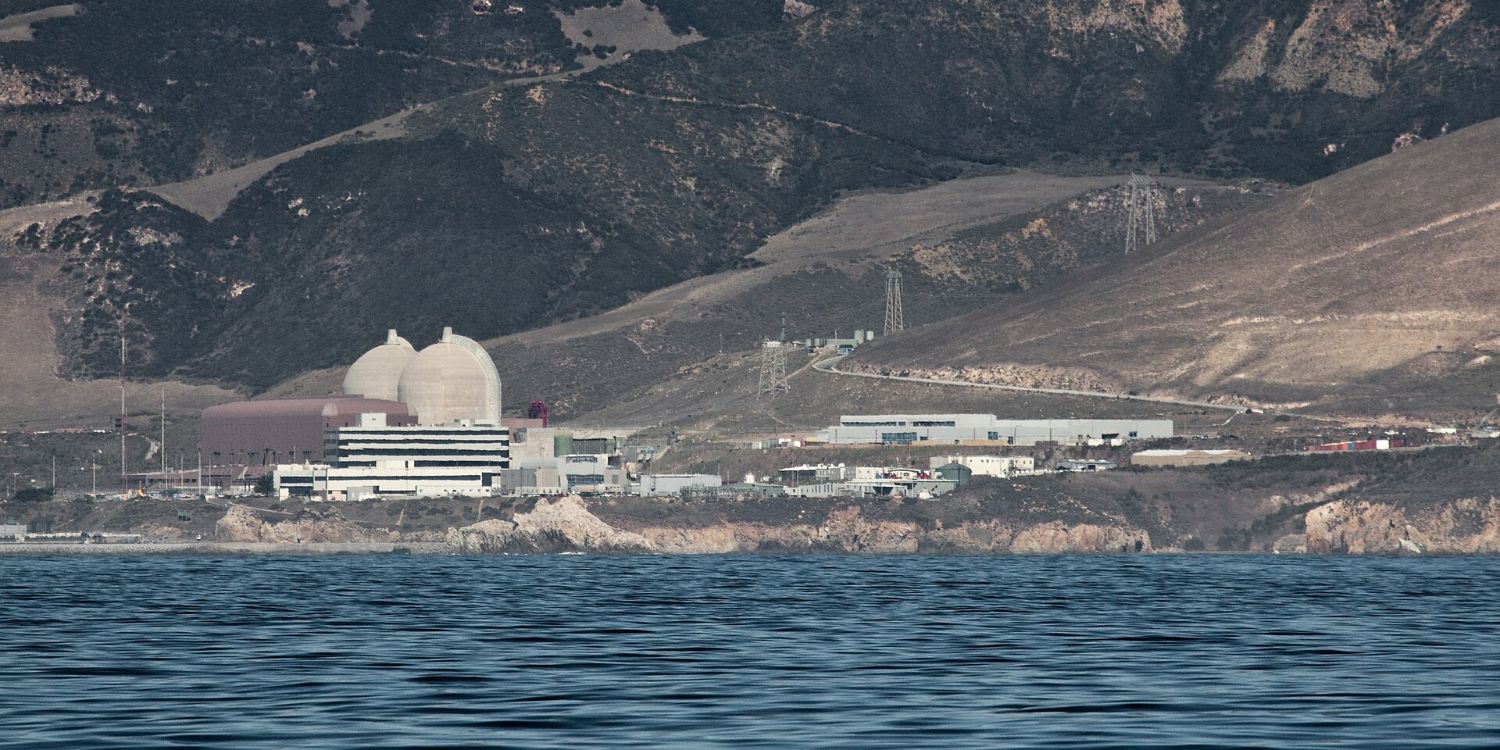
California’s Diablo Canyon, once scheduled to close around 2025, got a 20-year license renewal from the NRC in April 2026 and remains the state’s only operating nuclear plant, so every nuclear watt reaching a California home or business still comes from that one site. For how nuclear’s safety compares with other power sources, see how safe nuclear power is.
AI’s power demand is paying for the restarts
The restarts aren’t happening out of nostalgia. Microsoft signed a 20-year power purchase agreement worth roughly $16 billion, announced in September 2024, to buy electricity from the Crane Clean Energy Center once it’s running. The US Department of Energy backed the project with a $1 billion loan in November 2025.
Other companies are signing similar deals. By July 2026, tech companies had committed to roughly 9.8 gigawatts across 13 separate deals for nuclear power.
Meta’s agreements add up to as much as 5.2 gigawatts, including 4 gigawatts of TerraPower’s Natrium reactor for delivery between 2032 and 2035, plus 1.2 gigawatts from Oklo’s Aurora reactor.
Amazon has committed to up to 960 megawatts through a dozen X-energy Xe-100 reactors, backed by a $700 million investment. Google struck its own deal with Kairos Power for a 500-megawatt fleet of small reactors aimed at 2030.
None of this is free for everyone else on the grid. PJM, the grid operator that covers Washington DC and states from Illinois to New Jersey, expects data center demand to push some customers’ bills up by as much as 5% in the year starting June 2026.
China is building about half of the world’s new reactors
China’s fleet stands at 64 reactors totaling 63,985 megawatts, and the country isn’t slowing down. Another 38 reactors are under construction there, adding up to 39,694 megawatts, which is close to half of the roughly 80 reactors the World Nuclear Association counts under construction worldwide. In March 2026, China’s 15th Five-Year Plan set a target of 110 gigawatts of nuclear capacity by 2030.
Outside China, growth is thin. Of the 10 reactor construction starts worldwide in 2025, nine were in China and one was in Russia, according to the International Energy Agency. If you were hoping one of these projects would break ground near you and bring construction jobs with it, the odds outside those two countries were close to zero.
Small reactors are closer to real, years behind schedule
NuScale was supposed to prove small modular reactors could work in the US, and it didn’t. Its VOYGR design became the first SMR certified by the NRC in January 2023. Its flagship Utah project collapsed in November 2023, after costs rose from $5.3 billion to $9.2 billion. That overrun pushed the target price from $58 to $89 per megawatt-hour, the rate the towns and utilities that had signed on would have paid for every megawatt-hour NuScale delivered.
For more on how nuclear’s costs stack up against other power sources, see how solar and nuclear costs compare. NuScale’s lead project shifted to Romania, a 462-megawatt plant with six modules that reached a final investment decision, though construction hadn’t started there as of September 2026.
Back in the US, the Tennessee Valley Authority’s BWRX-300 reactor at Clinch River got an NRC staff recommendation for a construction permit in June 2026, with a mandatory hearing held August 13, 2026, and commissioners’ final decision still pending.
Kairos Power broke ground in April 2026 on its Hermes 2 demonstration reactor in Oak Ridge, Tennessee, its first design meant to generate power, separate from the non-power Hermes 1 test unit it’s been building since 2024. And TerraPower’s Natrium reactor in Kemmerer, Wyoming, became the first full-scale advanced reactor design to win an NRC construction permit in March 2026, a 345-megawatt design that stores heat in molten salt.
Nuclear’s slice of the world’s power keeps shrinking
Nuclear’s share of global electricity fell to 9% in 2025, down from a peak of 17.5% in 1996, according to the World Nuclear Industry Status Report, a group that’s generally critical of the nuclear industry but whose numbers get cited widely anyway. World electricity demand has grown faster than new reactors have, even as a decade of debate over climate goals argued nuclear needs to be part of the answer.
For anyone whose power already leans on nuclear, that slide doesn’t cut watts today. Grid planners will have to find the next decade’s clean-power growth from sources other than nuclear instead, and both the US restart wave and China’s buildout are still too small to close that gap by themselves.
The restart wave hasn’t reversed nuclear’s shrinking share yet
A handful of decisions still pending this decade will say whether that changes. The NRC’s commissioners still have to rule on the Tennessee Valley Authority’s Clinch River permit after the August 13, 2026 hearing, a ruling that will decide whether TVA’s BWRX-300 becomes the second advanced reactor design under construction in the US alongside TerraPower’s Natrium.
Palisades’ final restart timeline is on hold while regulators finish reviewing the fuel-assembly incident, and Duane Arnold is aiming for an early 2029 return. China, meanwhile, still has to close most of the distance to its 110-gigawatt target for 2030 from a base of roughly 64 gigawatts operating and 40 gigawatts under construction.
A federal regulator, a Michigan repair crew, an Iowa utility’s schedule and Chinese state planners each hold one piece of whether the 2030s look different from the 2020s for anyone counting on nuclear power to help run their grid.