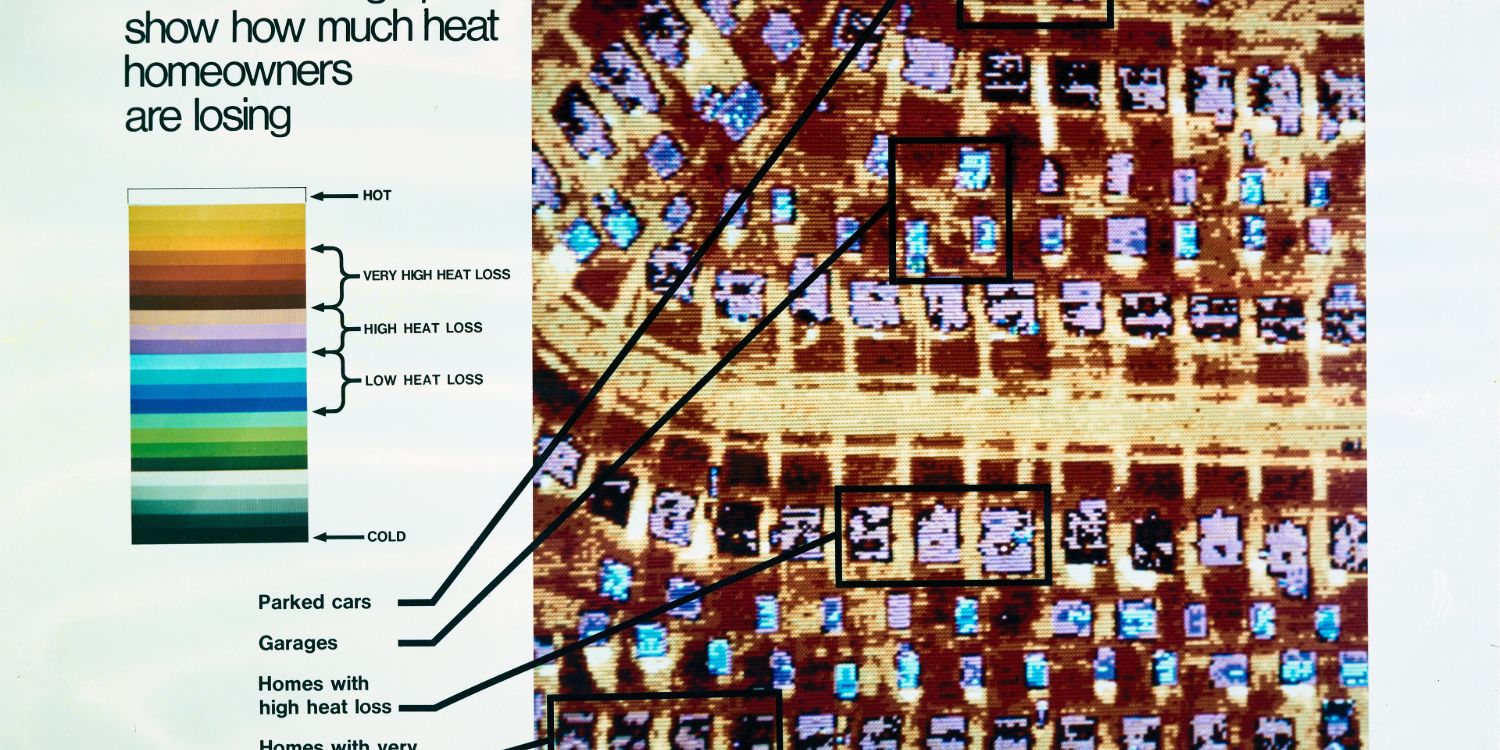
Air leaks, a thin attic, old windows, leaky ducts, and uninsulated floors are where a house loses heat, and together they waste an average of 30% of the energy homes and buildings use, the Department of Energy says. Homes and buildings also burn through 40% of the nation’s energy overall, mostly to duct and envelope leaks like these.
Heating and cooling make up 52% of a home’s total energy use, EIA found, so those leaks show up directly on your bill every month. Space heating alone is the largest single piece of that, 46% of total energy consumption in single-family homes in 2015. Every leak below cuts into that slice of your bill.

Air leaks let conditioned air escape
Warm air rises and pushes out through gaps at the top of a house, an attic hatch, a recessed can light, a gap around a flue. Cold air gets pulled in low down, around sill plates and rim joists. Building scientists call this the stack effect, and it pulls hardest on the coldest days, exactly when a house needs to hold on to its heat.
The EPA models the fix on a typical 1,700-square-foot house built between 1970 and 1989. Its target is a 25% cut in total air infiltration from sealing gaps around the attic and foundation, plus around windows and doors, on a modeled house that starts out with 23% of its duct system air already leaking.
Combined with adding insulation, sealing air leaks can cut 15% off your heating and cooling costs, or 11% off your whole bill. How much of that lands in your pocket depends on your climate zone, from 5% in the warmest zones up to 16% in the coldest.
The attic and walls lose heat without enough insulation
Walls and rim joists make up more than 40% of a house’s total exterior envelope area, the Department of Energy notes, so thin or gapped insulation there covers a lot of surface. The trade group representing insulation manufacturers estimates that 90% of US homes are under-insulated, though that figure comes from an industry source with a stake in insulation sales.
How much insulation a house needs depends on climate zone. Under the 2021 building energy code, ENERGY STAR’s retrofit guidance calls for R30 to R60 in the attic depending on the zone. Find your own zone in the table below and see whether your attic already clears it.
| Climate zone | Attic, currently uninsulated | Attic, already has 3 to 4 inches | Floor over unconditioned space |
|---|---|---|---|
| 1 | R30 | R25 | R13 |
| 2 | R49 | R38 | R13 |
| 3 | R49 | R38 | R19 |
| 4A and 4B | R60 | R49 | R19 |
| 4C, 5, and 6 | R60 | R49 | R30 |
| 7 and 8 | R60 | R49 | R38 |
Source: ENERGY STAR, “Insulation R-Values”, based on the 2021 International Energy Conservation Code.
Windows lose heat through the glass and the frame
A window loses heat straight through the glass by conduction, and around a loose sash or frame by air leakage. The glass side is rated by U-factor, which for windows on the market ranges from about 0.15 to 1.1. The lower the U-factor, the less heat moves through the glass, and a single pane of old glass sits at the leaky end of that scale.
Standing next to an old single-pane window in winter feels colder than the room’s thermostat setting would suggest. That’s radiant heat loss, the cold glass pulling warmth from a body nearby even before any air moves.
Swapping out a window like that for an ENERGY STAR certified one can cut your household energy bills by an average of up to 13% nationwide. A separate Department of Energy resource guide puts the range at 6% to 13% in utility bill savings for the same switch. More than 85% of windows sold in the US are ENERGY STAR certified, so a lot of the easy replacement gains are already banked into homes built in the last decade or so.
Ducts lose conditioned air before it reaches a room
In a typical house, 20% to 30% of duct system air leaks out before it heats or cools a room, through loose connections and gaps at the plenum. That leakage alone can cut a system’s efficiency by as much as 20%. Even a newly installed furnace or heat pump still loses 10% to 30% of its output to duct leakage, so the fix is in the ducts, not the equipment.
If your ducts run through an unconditioned attic or crawlspace, that lost air is heating or cooling a space you never use, on your dime. A 2.5-ton air conditioner moves 1,000 cubic feet of air a minute through the ducts, easy math for what leakage costs in cooling terms. With 20% duct leakage, it misplaces about 6,000 Btu an hour, roughly half a ton of cooling, before that air ever reaches a room.
Technicians test duct leakage against ANSI/RESNET/ICC Standard 380, and size a full duct replacement to the industry’s Manual D standard, which now has its own section on how leaks change a system’s performance.
Aerosol duct sealing, a technology Lawrence Berkeley National Lab licensed out for commercial use, seals 70% to 90% of duct leaks with a 10-year warranty without opening up walls or ceilings.
Floors and basement walls lose heat too
An uninsulated basement wall can be responsible for up to a third of an average home’s heat loss on its own, according to a Department of Energy-funded Building America study from 2003, revised in 2007. Basement walls sit behind the finished part of a house, so they’re an easy place to skip. A basement or crawlspace with bare concrete or block walls in your own house fits that same up-to-a-third estimate for heat leaking out.
A cold floor over an unheated crawlspace works the same way a cold window does, pulling heat out of the room above it long before anyone touches the thermostat. The floor above an unconditioned crawlspace or basement needs the same climate-zone range ENERGY STAR gives for attics, from R13 up to R38, shown in the table above.
What sealing and insulating are worth on a real bill
The federal Weatherization Assistance Program has run these fixes on real, low-income households since 1976, a useful check on the estimates above. Participating households save $372 or more a year on average, and the program now reaches about 32,000 homes annually. It has helped more than 7.2 million families since it started, real households whose bills back up the modeled numbers above. Skip the sealing and insulating in your own house, and you’re leaving something close to that $372 a year on the table.
A thermostat setback costs nothing and works before any sealing or insulation happens. Lowering the thermostat 7 to 10 degrees for eight hours a day can save up to 10% on annual heating and cooling costs. Sealing and insulating are the same fixes behind Energy Collective’s look at where household energy goes to waste. Once the easy leaks are sealed, a geothermal heat pump is the next lever worth pricing out for the equipment itself.