A heat pump is an electric machine that moves heat into your home from outdoors, and ENERGY STAR says it can deliver up to 3 times more heat energy than the electrical energy it uses. In 2025, US manufacturers shipped 3.64 million heat pumps and 3.25 million gas furnaces. The same outdoor system also cools your house in summer, which EPA says eliminates the need for separate systems.
Top heat pump statistics
- Heat pumps heated 48% of new single-family houses completed in 2025, up from 23% in 2000.
- AHRI members shipped 3,644,596 air-source heat pumps in 2025, 11.6% fewer than in 2024.
- EIA’s 2020 survey counted 16.13 million US homes with a heat pump as their main heating equipment.
- The average US residential electricity price was 17.30 cents per kWh in 2025, up from 16.48 cents in 2024.
- NREL’s analysis found that 62% to 95% of US households would see a drop in their energy bills with a heat pump, depending on its efficiency.
- Heat pump sales in 21 European countries rose 13% in 2025, to 2.9 million units.
- ENERGY STAR certified geothermal heat pumps use 61% less energy than a standard model.
- Heat pump water heaters made up 4% of US residential electric water heater sales in 2023, according to ENERGY STAR data that RMI cites.
What is a heat pump and how does it work?
Like a refrigerator, a heat pump uses electricity to carry heat from one place to another, and EPA says it typically uses about half the energy of other electric home-heating sources.
An air-source unit pulls heat from the outside air into your house in winter. A geothermal unit pulls it from the ground, where soil about 30 feet down stays between 50°F and 59°F all year. Across most of the US, that’s warmer than winter air and cooler than summer air.
The ratio of heat delivered to electricity used is called the coefficient of performance, or COP. A machine’s COP changes with the weather, and the cold-weather section below gives the measured numbers.
What does a heat pump look like?
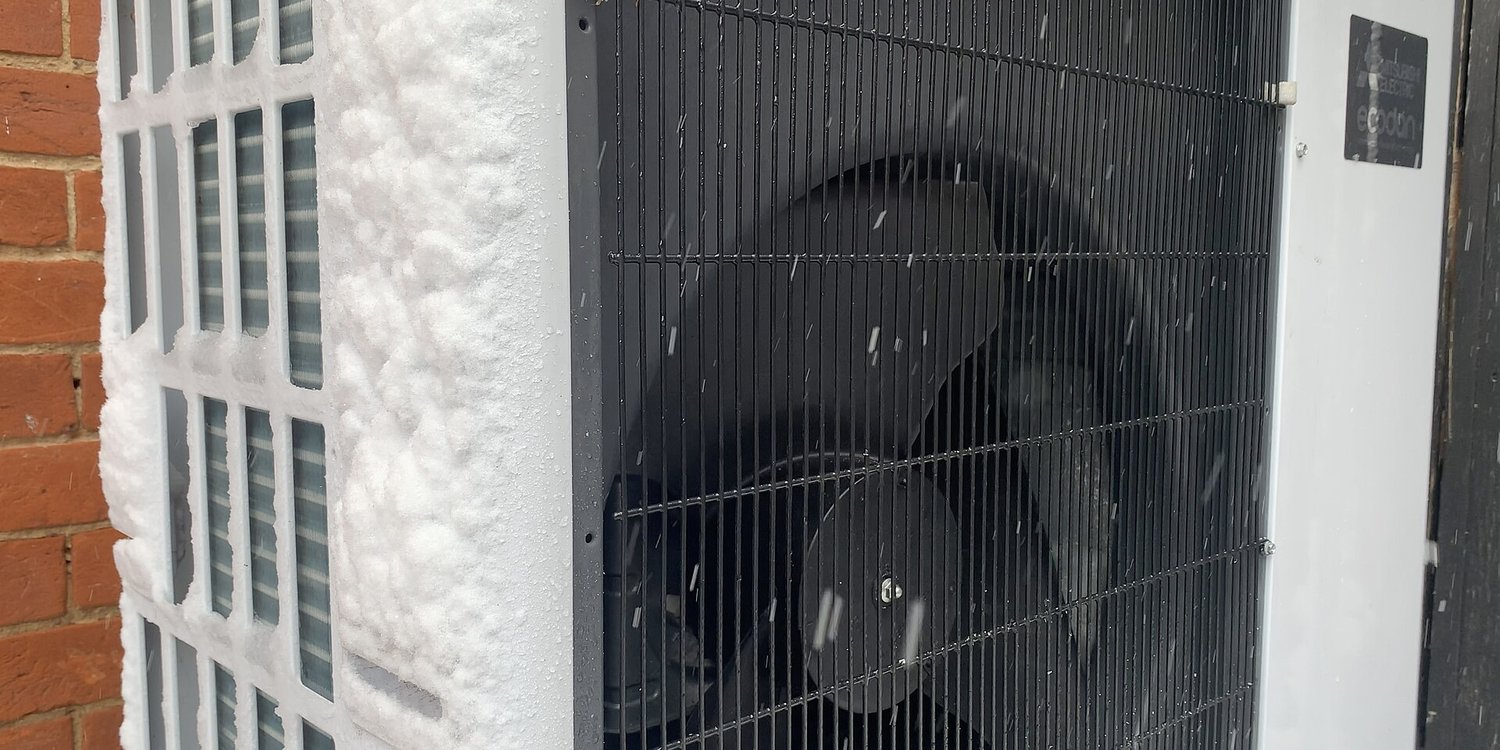
A mini-split heat pump is mounted directly onto an interior wall or ceiling with an accompanying outdoor unit, according to ENERGY STAR, and it needs no ductwork.
A geothermal system adds a loop of buried pipe, which DOE says can run vertically or horizontally underground.
What types of heat pump systems are there?
EPA calls air-source heat pumps the most common choice and the ductless mini-split the most affordable and adaptable type.
Geothermal heat pumps use the ground’s steady temperature instead. ENERGY STAR says certified models save nearly $830 a year and more than $9,500 over 15 years against a standard model, and the geothermal heat pump cost guide covers what one costs to install.
How efficient is a heat pump?
Heat pump labels carry two seasonal ratings, HSPF2 for heating and SEER2 for cooling, both counted in Btu per watt-hour. In the Federal Energy Management Program’s northern-states example, a heat pump rated HSPF2 7.5 uses 11,551 kWh a year for heating and cooling, and the best available model uses 7,394 kWh.
Because a kilowatt-hour holds 3,412 Btu, dividing an HSPF2 rating by 3.412 gives its seasonal COP.
Gas furnaces use a different yardstick, and the cost section below explains it. The energy waste explainer breaks down how much energy the US wastes and where it goes by sector.
How does a heat pump do in cold weather?
A conventional heat pump’s heating capacity drops below its rating once outdoor air falls under 40°F, and only a fraction of it remains in the teens.
DOE says cold climate heat pumps operate with greater capacity and efficiency at outdoor temperatures below 32°F. In DOE’s field tests of cold climate prototypes, the median COP was 1.9 at 0 to 5°F once defrost and backup-heat periods are set aside.
ENERGY STAR certifies cold climate models by testing them down to 5°F. Mitsubishi Electric markets an outdoor unit that offers year-round warmth even at -13°F, and that is the maker’s own claim.
How many US homes have a heat pump?
EIA’s 2020 survey found 16.13 million US homes using a heat pump as main heating equipment, plus 1.06 million using a ductless one, out of 123.53 million homes.
Natural gas central furnaces were the main equipment in 53.26 million homes in 2020, more than three times the heat pump count.
| Climate region | All homes (million) | Heat pump (million) | Ductless heat pump (million) | Heat pump plus ductless (% of homes) |
|---|---|---|---|---|
| Very cold/Cold | 42.50 | 1.36 | 0.20 | 3.7 |
| Mixed-humid | 36.79 | 6.98 | 0.35 | 19.9 |
| Mixed-dry/Hot-dry | 15.06 | 1.20 | 0.16 | 9.0 |
| Hot-humid | 22.31 | 6.14 | 0.19 | 28.4 |
| Marine | 6.87 | 0.46 | 0.16 | 9.0 |
| Total US | 123.53 | 16.13 | 1.06 | 13.9 |
Source: EIA, 2020 Residential Energy Consumption Survey, Table HC6.6. The share column is calculated from that table.
If you live in a hot-humid climate, 28.4% of homes heated mainly with a heat pump in 2020, against 3.7% in the coldest climate group.
Electricity was the main heating fuel for 42% of US households in 2024, and natural gas for 47%. That’s a broader measure than heat pumps, because it counts electric resistance heat too.
New houses tell a faster story. Heat pumps went into 483,000 of the 1,005,000 new single-family houses completed in 2025, against 490,000 that got forced-air furnaces.
| Year | Heat pump (% of new single-family houses completed) | Forced-air furnace (% of new single-family houses completed) |
|---|---|---|
| 2000 | 23 | 71 |
| 2005 | 29 | 67 |
| 2010 | 38 | 56 |
| 2015 | 41 | 56 |
| 2020 | 39 | 59 |
| 2021 | 38 | 60 |
| 2022 | 43 | 55 |
| 2023 | 45 | 53 |
| 2024 | 45 | 52 |
| 2025 | 48 | 49 |
Source: U.S. Census Bureau, Characteristics of New Housing, Type of Heating System Used in New Single-Family Houses Completed.
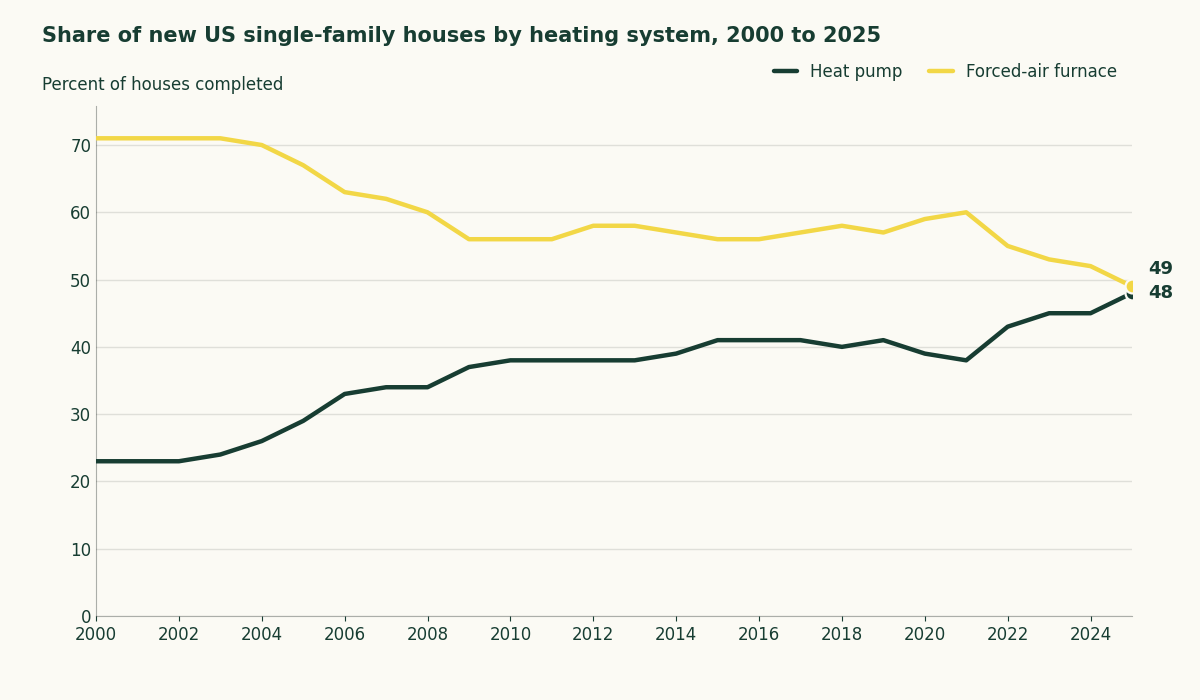
The split by region is wide. In 2024, the National Association of Home Builders found that 82% of new homes started in the South Atlantic had a heat pump as their primary heating system, against 7% in the East North Central. About 54% of all new homes started that year used electricity as the primary heating fuel, against 41% for natural gas.
Do heat pumps outsell gas furnaces?
Manufacturers shipped 12% more heat pumps than gas furnaces in 2025, RMI reports, 3.6 million units against 3.2 million.
| Year | Air-source heat pumps shipped (units) | Gas warm-air furnaces shipped (units) |
|---|---|---|
| 2019 | 3,109,840 | 3,441,872 |
| 2020 | 3,418,478 | 3,351,176 |
| 2021 | 3,916,766 | 4,008,894 |
| 2022 | 4,334,479 | 3,872,368 |
| 2023 | 3,616,632 | 2,989,516 |
| 2024 | 4,122,004 | 3,120,677 |
| 2025 | 3,644,596 | 3,247,426 |
Source: AHRI year-end shipment releases. The 2019 and 2020 rows come from the December 2020 release, 2021 from the December 2021 release, 2022 and 2023 from the December 2023 release, and 2024 and 2025 from the December 2025 release as reported by Contracting Business.
Furnaces led in 2021, when AHRI counted 4,008,894 gas furnaces against 3,916,766 heat pumps. Heat pumps led in 2020 and in every year from 2022 to 2025. AHRI’s counts cover US shipments from its member manufacturers, so they say nothing about installations.
RMI says a change to new refrigerants in 2025 may have contributed to higher 2024 heat pump shipments as manufacturers rushed to ship older-refrigerant systems. Through April 2026, heat pump shipments were up 1.2%, to over 1.3 million units, Utility Dive reported.
In Europe, France led 2025 with 528,000 heat pumps sold, and Germany’s sales grew 50%. The European Heat Pump Association counts 29.3 million in use across the 21 countries it tracks.
What does a heat pump cost to run?
At 2025 US average prices, a heat pump rated HSPF2 11 delivers heat for about $15.73 per million Btu. A gas furnace rated 95% AFUE delivers it for $15.59, and AFUE is the share of the fuel’s heat that ends up as space heat instead of being lost.
| Heating system | Efficiency assumed | Cost per million Btu delivered ($) |
|---|---|---|
| Electric resistance heat | COP 1.0 | 50.70 |
| Heat pump rated HSPF2 7.5 | Seasonal COP 2.20 | 23.07 |
| Heat pump rated HSPF2 7.8 | Seasonal COP 2.29 | 22.18 |
| Heat pump rated HSPF2 11 | Seasonal COP 3.22 | 15.73 |
| Gas furnace, 80% AFUE | AFUE 80% | 18.51 |
| Gas furnace, 95% AFUE | AFUE 95% | 15.59 |
| Gas furnace, 97% AFUE | AFUE 97% | 15.26 |
Source: Calculated from EIA electricity prices, EIA natural gas prices, EIA Btu conversion factors and the AFUE minimums in ENERGY STAR’s furnace criteria. The HSPF2 levels are the examples in the efficiency section above.
If you heat with gas, a heat pump needs a seasonal COP of about 3.25 to match a 95% furnace on fuel cost at the 2025 gas price. Resistance heat costs more than three times as much as a heat pump at that COP.
At the median cold-weather COP of 1.9 from DOE’s field tests, the same math puts a heat pump at about $26.69 per million Btu, above every furnace row.
Bill savings depend on what a home burns now. In a simulation by NREL and LBNL researchers, air-conditioned homes that heat with oil or propane, or with electric resistance, saw median savings of $300 to $650 a year, Canary Media reports. For gas-heated homes, median annual bills ranged from a $70 increase to a $380 decrease.
How we priced the heat
We started from EIA’s 2025 US residential averages of 17.30 cents per kWh for electricity and $15.34 per thousand cubic feet for natural gas. We converted with 3,412 Btu per kWh and 1,036 Btu per cubic foot, then divided the electricity cost by a COP for heat pump rows and the gas cost by AFUE for furnace rows. The 80% row is our assumption for an older furnace, since ENERGY STAR sets 95% and 97% minimums for certified gas models. Prices are US averages, so local rates move every row.
What does a heat pump cost to install?
Rewiring America prices a whole-home system at $17,000 to $23,000. That range is for houses of 1,500 to 2,500 square feet, and the median in the nonprofit’s own model is $19,500.
If your electrical panel is full, ask whether a quote includes an upgrade. An LBNL paper puts the cost of replacing electrical service equipment such as panels at $1,000 to $30,000 and finds that heat pumps generally add less than their rated electrical demand to a home’s peak. The finding draws on 957 sub-metered homes and 9,093 Vermont homes with cold climate heat pumps.
What is a heat pump water heater?
A heat pump water heater applies the same trick to a hot water tank, and DOE says it can be two to three times more efficient than a conventional electric water heater. PNNL’s Building America Solution Center gives the same range, and ENERGY STAR also calls the product a hybrid electric water heater.
The water heater is responsible for about 17% of the total energy use in the average home, DOE’s building science site says.
What to ask before you buy a heat pump
Ask the installer for the model’s COP in the coldest weather your winters reach, and compare it with the cold-weather numbers above.
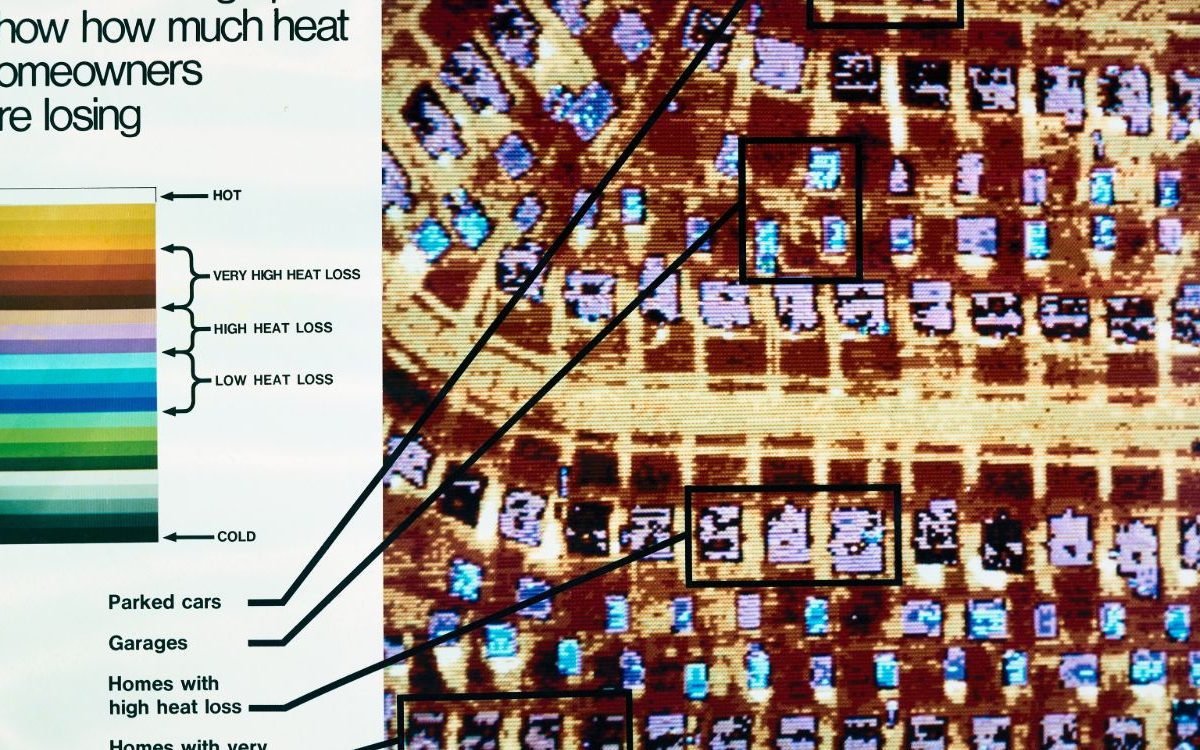
Where your house loses heat sets how much heat pump you need, and the guide to the sources of home heat loss lists where it escapes, from air leaks to leaky ducts.
Top photo: PeterEastern, CC BY-SA 4.0, via Wikimedia Commons, cropped.