Originally published June 17, 2013. Updated September 28, 2026.
A capacity market pays power plant owners to keep a generator ready to run, whether the grid calls on it that year or not, and in PJM, the grid operator with a 13-state footprint, that promise now costs $329.17 per megawatt-day. That’s more than 11 times the $28.92 it cost two years earlier, and it’s a separate charge from the electricity you use. PJM’s own market monitor calls data center growth the primary reason capacity prices are this high.
What a capacity market pays for
Your electric bill covers two different things, bought in two different markets. One is the electricity itself, priced by the megawatt-hour in a real-time energy market. The other is capacity, a promise that enough generators exist to cover the grid’s peak hour of demand, priced years ahead in an auction the average customer never hears about.
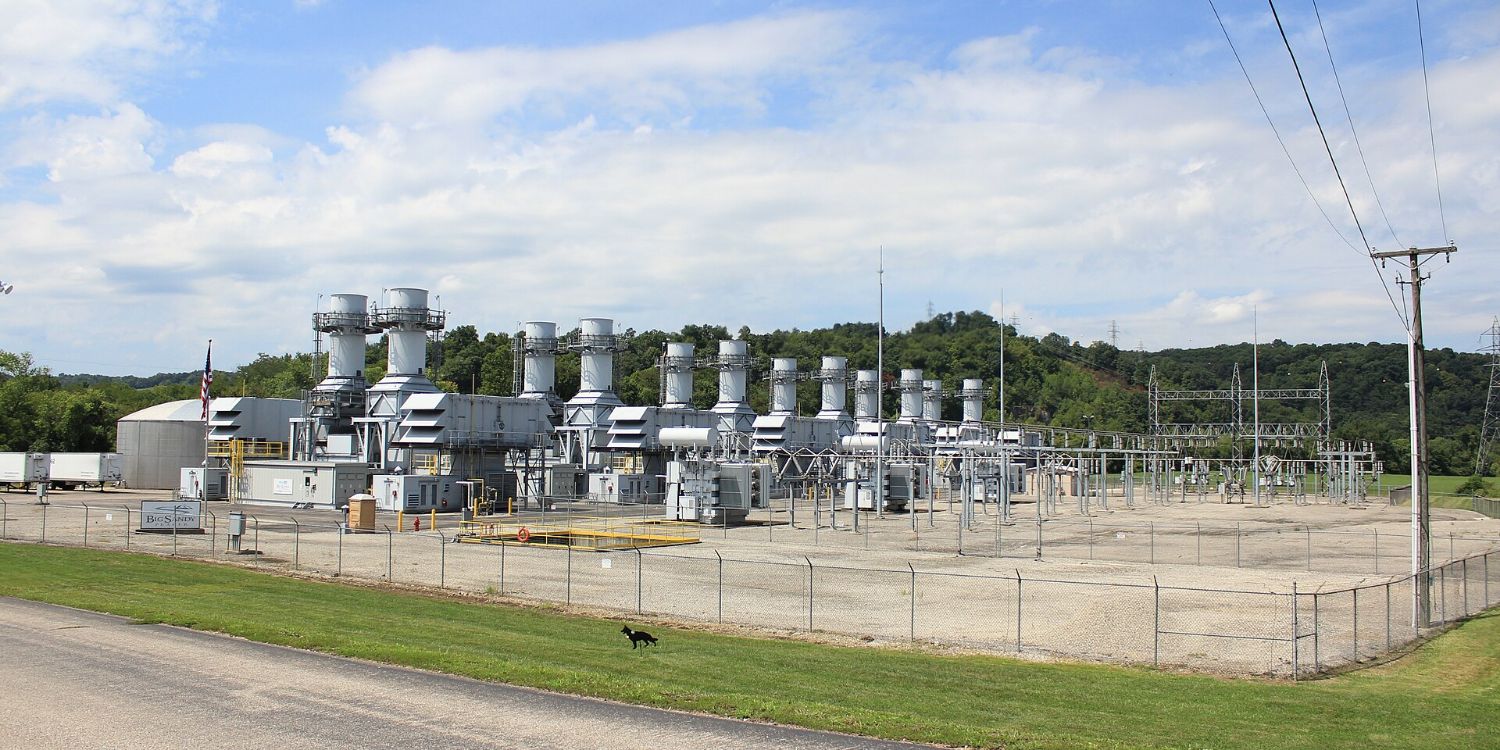
Think of a capacity payment like paying to keep a fire truck in the station. A gas plant collecting one can sit idle most of the year, its turbines cold, and still get paid for being ready when the grid finally needs it. A capacity market doesn’t change the power flowing through your wires today. It pays generators for the option to call on more of it later.
How PJM sets that price, and why it jumped
PJM runs a yearly Base Residual Auction that sets one clearing price for a future delivery year, and pays every plant that clears the same rate. The price is quoted in dollars per unforced capacity megawatt-day, PJM’s way of pricing how much of each plant’s capacity the grid can count on when demand peaks.
For the delivery year that started in mid-2025, PJM’s auction cleared at $269.92 per MW-day, a jump of roughly 800% from the $28.92 cleared the year before. PJM’s total capacity bill for that one year came to $14.7 billion, a cost that eventually shows up on your bill no matter which utility in PJM’s territory sends it to you. A year later, the 2026/27 auction hit the FERC-approved price cap of $329.17 per MW-day, 22% higher than the year before. The auction after that, covering 2027/28, cleared at $333.44 per MW-day, against a newly raised temporary cap.
The table below lines up all four years.
| Delivery year | Cleared price (per MW-day, UCAP) | Change from prior year |
|---|---|---|
| 2024/25 | $28.92 | baseline |
| 2025/26 | $269.92 | +~800% |
| 2026/27 | $329.17, hit the FERC-approved cap | +22% |
| 2027/28 | $333.44, hit a raised temporary cap | +1.3% |
Source: Pennsylvania Governor’s Office, citing PJM, PJM, RTO Insider, and PJM’s 2027/2028 Base Residual Auction report.
Data centers are driving the price up
PJM’s own forecast behind the 2026/27 auction added more than 5,400 megawatts of expected peak demand growth in a single year, which PJM said was driven largely by “data center expansion, electrification and economic growth.”
PJM’s independent market monitor traced most of that growth straight to data centers, adding an extra $7.3 billion to capacity revenue in the 2026/27 auction alone, an 82% jump. That brought their total to $16.1 billion for that year. Across the last two PJM auctions combined, data centers accounted for $16.6 billion of the $30.8 billion in total capacity revenue, about half. The monitor’s own analysis ties that growth almost entirely to data center load already on the grid or planned for it.
Data centers now account for more than half the money moving through PJM’s capacity market, the same market that sets a line on your bill. The wider strain that growth puts on the grid itself, beyond power plant supply, gets its own look in America’s grid in the crosshairs.
Pennsylvania forced a price cap, and a floor
In 2025, Pennsylvania Governor Josh Shapiro’s office negotiated a settlement with PJM covering the 2026/27 and 2027/28 auctions. It set a $325 per MW-day price cap and a $175 floor for both years.
The auctions still cleared above that $325 number. PJM’s FERC-approved cap for 2026/27 was $329.17, and the auction cleared right at it. For 2027/28, regulators raised the temporary cap again, and that auction cleared at $333.44, again right at the ceiling.
Pennsylvania’s office still estimated the settlement would save consumers about $21 billion over the two covered delivery years. Whether you’d see any of that in your own bill depends on which utility serves you and how it passes capacity costs through to retail rates, a question traced in more depth in Exelon’s fight over rising bills.
What this means for your bill
PJM has put its own number on what this means for your bill. It estimated the 2026/27 clearing price alone would add 1.5% to 5% to many customers’ bills year over year. Some zones, PJM noted, could even see a rate decrease, depending on how their utility structures its capacity purchases.
That’s a smaller jump than the roughly 800% the wholesale auction saw, but it isn’t nothing. A few percent, multiplied across every bill PJM’s utilities send, is how a $14.7 billion capacity bill for one delivery year turns into a real line on your own statement, whether your state’s regulators fought the increase or not.
How ISO-NE and ERCOT do this differently
Other regions run capacity markets differently, and the price shock isn’t universal. New England’s grid operator, ISO-NE, runs a Forward Capacity Market that procures roughly three years ahead of delivery and sets a single system-wide clearing price, with zonal pricing layered in since 2017 for areas where transmission constraints limit imports and exports. It’s the same pay-for-availability idea as PJM’s, on a different clock.
Texas runs something else. ERCOT, the grid covering most of Texas, has no mandatory capacity market at all. It’s an energy-only market, meaning generators get paid for the power they deliver and for scarcity pricing when supply gets tight, instead of a capacity commitment made years in advance. ERCOT targets a reserve margin around 13.75% through that pricing, and it’s also the only grid operator in the country entirely outside FERC’s jurisdiction.
If you live in ISO-NE’s or ERCOT’s territory instead of PJM’s, this exact bill line doesn’t exist. Your capacity costs are set by a different auction on a different clock, or folded into real-time energy prices instead. The basic argument for paying generators to exist at all predates any of PJM’s recent auctions. In 2013, an industry analysis argued that capacity markets put “an obvious price on the cost of adding new generation resources,” and utilities still lean on that logic today.
The price caps run out after the 2027/28 auction
PJM’s temporary price caps don’t run forever. The 2027/28 auction cleared 134,478.1 megawatts of capacity. That fell short of PJM’s 20% installed reserve margin target, reaching 14.4% in practice. PJM’s own modeling for that same auction found that without the cap in place, the price would have cleared around $529.80 per MW-day, well above the $333.44 the cap allowed.
Nothing in the Shapiro settlement covers what comes after these two delivery years. PJM and federal regulators still have to work out whatever comes next. Until they do, the next auction could clear anywhere between a negotiated ceiling and the $529.80 PJM’s own model says the market would set with no ceiling at all. Whichever number wins will land on your bill before you hear how it got decided.