Originally published December 8, 2014. Updated September 28, 2026.
OPEC is the group of oil-exporting countries, most of them in the Middle East, whose members now pump about 33% of the world’s crude oil, down from a peak near 50% as producers outside the group grew. That smaller share still moves the price at your pump, though nowhere near as much as it once did.
How much power OPEC has left
A wider group called OPEC+ adds Russia and several other oil-producing countries to OPEC’s own membership, and the two coordinate production changes together. OPEC’s members still hold about 72% of the world’s proved oil reserves, as of the start of 2021, a cushion big enough that a war or blockade near the Gulf still shows up at your gas station within days.
The United Arab Emirates gave the clearest sign of that shrinking grip when it left OPEC entirely, announced around April 29, 2026, after a dispute over how much oil it was allowed to pump. OPEC+ met without the UAE for the first time on May 3, 2026 and approved a modest output increase anyway.
That fit a pattern from the rest of the year. OPEC+ spent 2026 unwinding an earlier round of voluntary production cuts, and a further 188,000-barrel-a-day increase, approved for September, completed the group’s planned reversal of the roughly 3.5 million barrels a day in cuts it had announced back in 2023. Even so, many OPEC+ members still can’t pump up to their new, higher quotas because of technical and operating limits on their fields, World Oil reported.
What it means at the pump
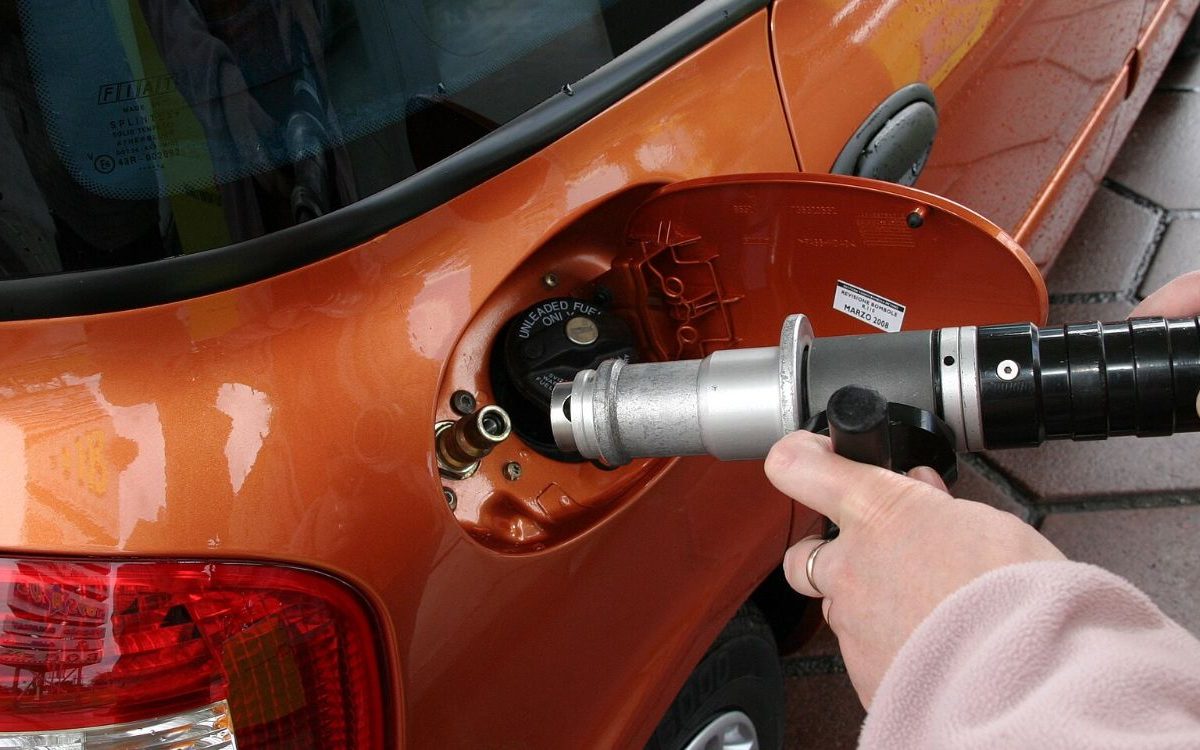
Gasoline tracks crude with a lag, and the 2026 Hormuz spike hit your tank fast. US retail gasoline reached $3.99 a gallon in late March 2026, and diesel reached $5.40 a gallon the same week, as Brent traded near its high for the quarter. By September 2026, gasoline had eased back to around $3.98 a gallon nationally, AAA reported.
The math behind that connection is simple. A barrel holds 42 US gallons, so a $118 barrel puts about $2.81 of crude in every gallon that fills your tank, before refining and taxes add the rest.
Where oil prices stood in September 2026
Line up the annual averages and the swings look calmer, even if they aren’t. Brent averaged $81 a barrel in 2024 and $69 in 2025, before the 2026 shock pushed the full-year average back up toward a projected $91. EIA’s own forecast has that easing again, to $74 to $77 a barrel by the second quarter of 2027. Brent was still trading around $107 a barrel on September 28, 2026, above where EIA expects it to settle.
The Hormuz disruption also pulled Brent and WTI apart. Brent is the international oil benchmark and WTI is the US benchmark, and the two normally trade within a few dollars of each other. The spread between them widened to $25 a barrel at its peak on March 31, 2026, and US refiners running mostly on WTI-priced crude felt that gap before it ever reached your tank.
Why oil prices swing this hard
Oil hit a record $145.31 a barrel on July 3, 2008, still the highest a barrel of oil has ever fetched. Oil sold for around $105 a barrel in mid-2014. It fell to under $30 by February 2016, a decline of roughly 70% to 75%.
A “swing producer” is a country with enough spare capacity to cut output when prices sag and pump more when they run hot, holding the price somewhere in the middle, and for decades that role belonged to Saudi Arabia. It broke from that habit during the 2014 to 2016 crash, defending its market share instead of the price as US shale output rose, a shift energy lawyer Elias Hinckley wrote about on this site in 2014.
Prices cratered again in 2020, further than before, as the pandemic shut down travel and industry and OPEC+ answered with a deep production cut. Eleven days later, on April 20, 2020, the WTI spot price fell to negative $36.98 a barrel, the first time in history a barrel of oil cost less than nothing.
Prices spiked again in 2022, after Russia invaded Ukraine and the EU moved to sanction Russian oil, with Brent crude trading over $120 a barrel. The latest spike came in early 2026, when a Middle East war closed most shipping through the Strait of Hormuz starting February 28, 2026, and Brent crude moved from $61 a barrel to $118 within the quarter, crossing $100 a barrel on March 12 on its way there.
How the US shale boom changed the balance of power
Non-OPEC supply is the other half of this story. The United States pumped a record 13.6 million barrels of crude oil a day in 2025, up from the prior record of 13.2 million barrels a day set in 2024 and about 40% more than Russia or Saudi Arabia individually pumped that same year. Saudi Arabia, OPEC’s largest producer, pumped 9.6 million barrels a day in 2025, up from 9.2 million the year before.
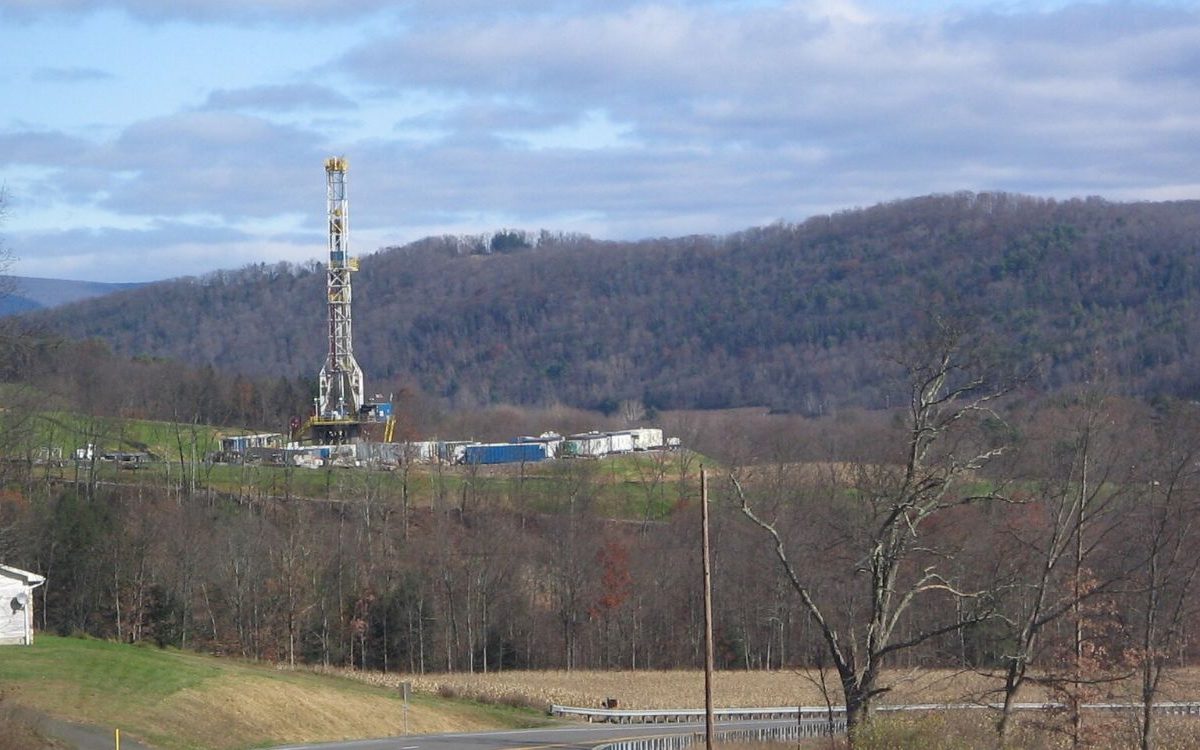
Horizontal drilling turns the well sideways once it hits the shale layer, and pressurized water and sand crack that rock open so the oil trapped inside can flow into the pipe. Oil pulled up that way is part of why gassing up in Ohio or Texas doesn’t depend on OPEC’s members the way it did before the shale era.
Fracking and horizontal drilling are the techniques behind the shale boom that pushed US output past 13 million barrels a day, explained in full on that page. Canada’s oil sands grew alongside it, a separate non-OPEC story covered in what happened to Keystone XL and Canada’s oil sands.
Why the peak oil debate moved from supply to demand
Twenty years ago, the peak oil fear was that the world would run out of crude to pump. The growth in US shale production described above helped end that argument. The live debate now is about how long demand keeps growing.
The International Energy Agency dropped its “peak oil demand by 2030” call from the base case in its 2025 World Energy Outlook, Forbes reported. Forecasters no longer debate when demand stops climbing. The disagreement now is how high it climbs before that happens.
| Forecaster | Projected oil demand by 2050 |
|---|---|
| ExxonMobil | ~105 million barrels a day |
| IEA (2025 base case) | ~113 million barrels a day |
| OPEC | ~123 million barrels a day |
Source: Forbes (David Blackmon), citing the IEA’s 2025 World Energy Outlook, OPEC’s World Oil Outlook and ExxonMobil, read 2026-09-25.
OPEC’s own number sits about 10 million barrels a day above IEA’s new base case, and both sit well above ExxonMobil’s. You’d feel that gap at your corner gas station too, whichever forecast turns out right. If OPEC’s forecast holds, stations keep selling growing volumes of gasoline through 2050. If IEA is closer to right, demand starts fading well before then.
OPEC is holding output steady while forecasters split on demand
OPEC+ delegates told Bloomberg they expect to hold production quotas steady for the rest of 2026 now that the September increase is done, though the group said that could change with market conditions. That’s the easy half of the decision.
The harder half is picking a demand forecast to plan around, and OPEC has already picked its own. The group’s 123 million barrels a day by 2050 outlook comes from an organization that needs the world still buying its oil decades from now.