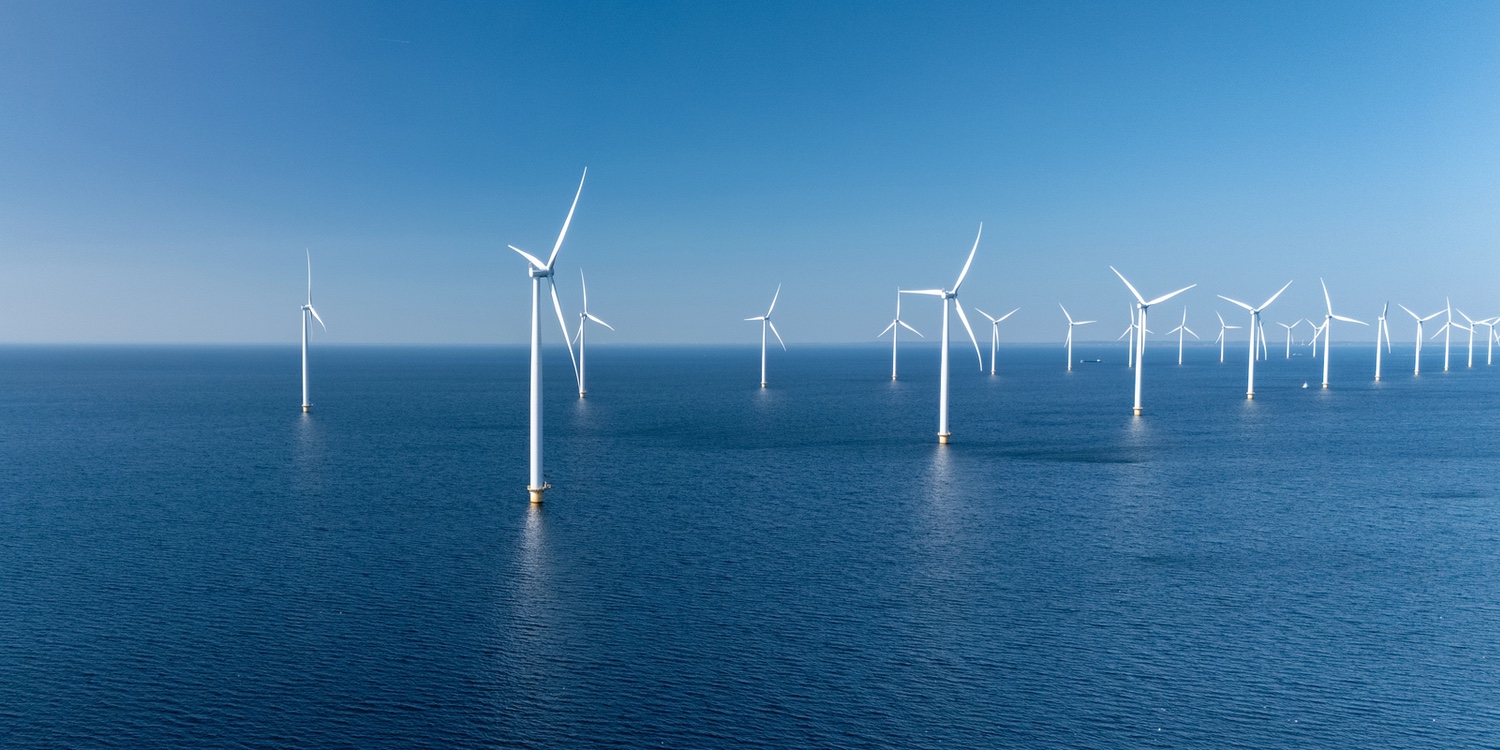
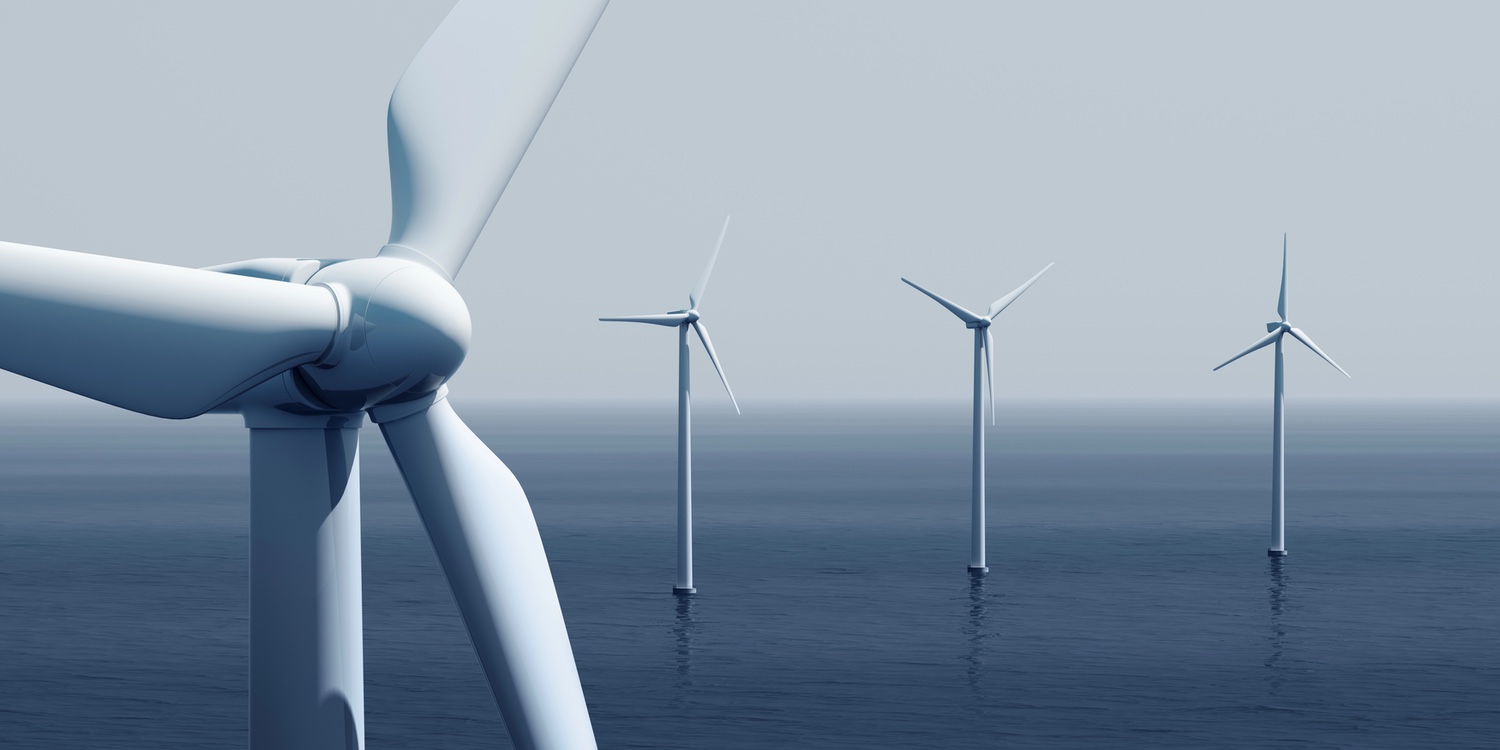
With the end of the year approaching, the annual Congressional debate over extending a variety of expiring federal tax credits and other benefits is gearing up again. Few of these measures are as high-profile as the payroll tax cut, but each has a vocal constituency, including renewable energy. The American Wind Energy Association (AWEA) has launched a major effort seeking inclusion of the Production Tax Credit (PTC) for wind power in this year's "tax extenders" package. That might seem premature, since the PTC won't expire until the end of 2012, until you realize that eligibility for the stimulus-funded Treasury renewable energy grants for which many wind project developers have opted over the PTC ends in a few weeks with little chance of a further extension. However, before simply tacking another year (or four!) onto a tax credit that began nearly 20 years ago, Congress should answer two basic questions: Is this still the most effective way to promote renewables like wind, and does wind power now require subsidies at all?
I don't blame AWEA for tackling this issue early, since the US wind industry has experienced significant volatility when previous PTC expirations went down to the wire, and in several cases lapsed for up to a year. At the same time, taxpayers deserve a more compelling rationale for continuing to subsidize wind power than the one now being offered. The "green jobs" argument is wearing thin, post-Solyndra, and it has become increasingly evident that helping to create a market for renewable energy technologies is a necessary but not sufficient condition to establishing a sustainable, globally competitive renewable energy manufacturing industry. Although more of the wind power value chain is now produced in the US than previously, too much of each wind subsidy dollar still goes offshore for this to be deemed an efficient way to boost to US jobs and manufacturing without reform.
In order to address the first question I posed, concerning the continued suitability of the PTC, it's important to understand how it works and how it compares to other renewable energy incentives. The current PTC provides wind project owners (or the parties to whom the tax benefit has been sold via a "tax equity swap") with an income tax credit of 2.2 cents per kilowatt-hour (kWh) of electricity actually generated and sold from the completed facility. Based on recent estimates of the levelized cost of electricity from unsubsidized wind power, that's over 20% of a typical wind farm's production cost. It's also equivalent to more than half of this year's average wellhead price of natural gas--a far larger subsidy per BTU than the controversial tax benefits currently provided to oil & gas firms.
The best thing about the PTC is that it is entirely outcome-based. You only receive the benefit when your project is completed, brought online, and as power is sold to customers. Mess up any of those steps and you get zilch. Put your project in a location with poor wind resource or limited access to transmission, and you won't get nearly as much tax benefit. So from that standpoint--ignoring the green jobs angle that arose mainly from expediency when the financial crisis and recession hit--we are getting what we pay for: actual low-emission energy. The structure of the PTC has cash-flow implications that are viewed as a problem by many wind developers but might be regarded as a useful feature by taxpayers. Smaller developers, in particular, have greater difficulty financing projects when the incentive must be deferred until after start-up, or they may lack sufficient taxable income to take full advantage of the credit. They complain about the need to transact swaps with bankers and other investors to realize the subsidy sooner, at a cost. But perhaps it's not such a bad thing for companies that small to have to convince an experienced third party that their project is really viable.
There are many alternatives to the PTC, including the 30% Investment Tax Credit (ITC), the same one received by solar and other technologies. The stimulus bill extended the ITC as an option for wind and allowed the Treasury Department to pay it as a cash grant, rather than waiting for subsequent tax filings. This certainly put money in the hands of wind developers much quicker--$7.6 billion since 2009 including $3.3 billion so far this year--and it has the added benefit of automatically scaling down as the cost of the technology falls. The solar feed-in tariffs favored in Europe didn't have such a feature, with the result that countries have had to cut them numerous times, but only after the fat tariffs gave birth to a huge export-oriented solar manufacturing industry in Asia. Similar competition is now emerging in the wind industry.
The main problem with the ITC is that when viewed from an outcomes perspective, which really gets to the question of effectiveness, the outcome being promoted is construction, rather than energy production. You would get the same tax credit for a project with the best wind resource as for one with the worst. (This has also led to a lot of solar installations in places that would never otherwise have been considered.) So of the two main policy tools the federal government has used to subsidize renewable electricity, the PTC is probably more cost-effective in delivering the result we should really want, which is more renewable energy. As it is, even with rapid growth over the last decade, wind accounted for just 2.8% of our power generation this year through August.
That brings us to the bigger question of whether wind should be subsidized at all after the current PTC term expires. I get emails practically every day from folks who have serious concerns about the health and environmental impacts of power, as well as its cost- and emissions-reduction effectiveness. Even if we ascribed all of these concerns to NIMBYism, it doesn't change the fact that the wind PTC, complete with annual inflation adjustment, is providing the same level of incentive as it did when the technology was much less mature and cost many times what it does today; AWEA cites wind costs having fallen by 90% since 1980. Other factors have also changed in the last twenty years. A majority of US states--and most of those with attractive wind resources--now have in place Renewable Portfolio Standards requiring utilities to include increasing proportions of renewable power in their supply. These mandates create a similar redundancy as the one between the ethanol blenders credit, which is also due to expire 12/31/11, and the biofuel mandates of the federal Renewable Fuels Standard. In the absence of the PTC, the state RPS system should provide a safety net--and more--for the industry.
There are two other key factors missing from AWEA's arguments for extending the PTC. The first is the economy, which is the main reason that US electricity demand has not been growing at a rate that would support large generating capacity expansions of any kind. New wind installations have been anemic for the last two years, in spite of last year's extension of the Treasury grants. Moreover, wind must now compete with the explosion of domestic natural gas production from shale, which when used in combined cycle gas turbines produces cheaper electricity than wind, with low emissions of the air pollutants that are of the greatest concern to most Americans, while still beating coal-fired power hands down on greenhouse gases.
Where all this leaves us depends on your priorities. If your main focus is on reducing greenhouse gas emissions and you see renewable power as a key strategy, then in the absence of a price on carbon you might support extending the PTC for at least a little longer. If you are concerned about climate change but more worried in the short term about the deficit, then letting the PTC lapse next year and relying on state RPS quotas to put a floor under wind looks reasonable. If boosting US cleantech manufacturing is your aim, you should prefer a more direct incentive than the PTC. And if your main worry is oil imports, then the PTC is irrelevant, since the US gets less than 1% of its electricity from burning oil, and most of that in remote and back-up power roles that wind can't easily fill. On balance, if after considering all the alternatives the Congress decides to extend the Production Tax Credit, it should be for an explicitly final period, at no more than the 1.1 cent/kWh rate that technologies like marine, hydropower and waste-to-energy now receive, and without the annual inflation adjustment that undermines the incentive to continue reducing costs.
The Battle to Extend Wind Incentives
Other Posts by Geoffrey Styles
E15's Problems Are Symptomatic of A Failing Biofuels Policy - May 22, 2012
Are Chesapeake's Problems A Red Flag For Shale Gas? - May 17, 2012
Where Gas is Already $10 per Gallon - May 9, 2012
Resources from Space? - May 4, 2012
US Natural Gas Price Nears $10 per Barrel Equivalence - April 30, 2012
» Already a member? Login now to comment!
» Not a member? Register to comment!
JSorter-AWEA said:
The PTC is actually a great deal for taxpayers. With just four years of stability and keeping the tax rate low on new development of wind, we can establish brand new manufacturing facilities and set the stage for continued job growth for the next few decades, but we first need to make the upfront investment in establishing a brand new manufacturing base in this country.
The Navigant study found that although a four-year extension of the PTC would cost $13.6 billion, a four-year extension would result in $25.6 billion in investment and tax revenue from the wind sector alone.
Geoffrey Styles said:
Jason,
There's another aspect of this that AWEA should be concerned about. I didn't see it in the referenced slide deck, but it would be interesting to know what Navigant assumed would follow the 4 additional years of PTC you're asking for. That's because a new manufacturing facility is normally not paid out within a couple of years--if it is it shouldn't need any subsidies at all. Would investors be quite so keen to invest in new plant & equipment if they thought this 4-year bump were the very last reprieve for the PTC? Particularly when there's already surplus capacity in the global wind turbine industry? (We know how that kind of story ends, because we're seeing it right now in the US solar industry.)
Instead of using all its chips to try to get the current PTC extended, perhaps AWEA should take the year remaining on the current PTC and work with Congress to devise a new incentive structure that could actually be sustained in a period of tight budgets, and that would phase itself out as the industry grows. You might take a look at what Growth Energy has done to prepare for the end of the ethanol blenders credit.
willem Post said:
JSorter-AWEA
Financial advisors think the PTC is a key element of the package of wind energy subsidies they need to sell wind energy tax shelters to high-income people and profitable corporations.
Financial advisors would love to have another tool to sell their wares called National Renewable Energy Standard. It would require utilities to purchase renewable energy no matter what the cost/kWh. The NRES would be the ultimate kick in the teeth for rate payers.
Financial advisors have prepared spreadsheets to demonstrate to their potential clients the estimated yearly cashflows of the tax shelter and tax savings. Such spreadsheets are useful to potential clients seeking a second opinion from their tax advisors before taking the nearly risk-free plunge. Some of these clients have to put up 5 to 10 million dollars, or more, to finance $100 million dollar wind turbine projects. The financial advisor makes a good commission.
Without the PTC and other subsidies, the spreadsheets do not look so attractive to potential clients and the job of the financial advisor becomes more challenging.
After the required number of clients have been gathered for a wind turbine project, an LLC is set up, and a 20-year contract is signed with a utility, and the partners of the LLC are all set for the next 20 years. That electric rates will rise faster than they would have without expensive, variable and intermittent wind energy is not their concern.
The losers are the federal and state governments because they collect less taxes, the ratepayer who pays more for electricity, the environment, and the people and animals living near the wind turbines.
The winners are the financial advisors (GE, BP, Shell, Goldman-Sachs, etc.), the vendors (GE, Vestas, Iberdrola, etc.), the project developers and the LLC partners. They make campaign contributions to legislators, governors, etc., to get them to support subsidies, or maybe invisibly tie their family and friends into some of the LLCs at a discount.
We the People, i.e., the rate paying losers, are finding it frustrating to overcome this circle of power.
Electricity from wind is very high in true cost and very low in true value.
The below four studies show wind energy does not anywhere near reduce the CO2 claimed by promotors.
http://theenergycollective.com/willem-post/64492/wind-energy-reduces-co2-emissions-few-percent
http://www.clepair.net/IerlandUdo.html
http://docs.wind-watch.org/BENTEK-How-Less-Became-More.pdf
http://www.clepair.net/windSchiphol.html
Geoffrey Styles said:
Jason,
I see that the $13.6 billion subsidy cost figure came from the Joint Committee on Taxation. However, it doesn't quite square with the MWh that one would expect the forecast MW of additions for the extra four years of PTC to generate at a capacity factor of 30%. Either the average capacity factor is much lower, suggesting that many of the best wind sites have already been "creamed" off by earlier projects, or the cumulative subsidy cost (over the first 10 years of each project, undiscounted) could be as high as $19 billion. Even with the lower figure, the implied cost of the incremental 170 million tons of CO2 projected to be saved works out to $80, or around 6x the forecast cap & trade clearing price projected by Waxman-Markey. (I realize this is just one benefit, but I don't find the green jobs angle very compelling, as noted in the posting and my earlier comment.)
If the goal of policy is to support manufacturing, then why not do that directly, instead of with an indirect subsidy that provides nearly as much benefit for offshore manufacturers as those in the US? When the US must borrow the money for this subsidy--that's the current reality--we ought to invest it as wisely as possible to get what we really intend.
BillWoods said:
The PTC is actually a great deal for taxpayers. ... a four-year extension of the PTC would cost $13.6 billion, a four-year extension would result in $25.6 billion in investment and tax revenue from the wind sector alone.
On p. 31 of the report, it says that the increased tax revenue is $1.7B (of $28.2B spent), including state taxes. That doesn't seem like a "great" return for the federal taxpayers' $13.6B.
Jason Sorter said:
With the support of a stable Production Tax Credit (PTC), wind energy is powering one of America’s fastest growing manufacturing sectors. Over the last six years, U.S. domestic production of wind turbine components has grown 12-fold to more than 400 facilities in 43 states, shifting manufacturing jobs from overseas back to the U.S.
But, with a job-killing tax increase on the horizon and the PTC's future uncertain, businesses are hesitant to plan future US wind projects, American manufacturers have seen a drop in orders, and layoffs have already started. For the purposes of the American wind industry manufacturing sector, which needs lead time to make its products, the PTC effectively expires at the end of this year.
A new study released today finds that with stable tax policy the wind industry can create and save 54,000 American jobs in the next four years, including growing the wind manufacturing sector by one third to 46,000 American manufacturing jobs. This will keep the wind sector on track toward supporting the 500,000 jobs by 2030 projected in a report by the U.S. Department of Energy during the George W. Bush administration.
The report completed by Navigant finds that if Congress allows the PTC for wind to expire, jobs in the wind industry will be cut in half, meaning a loss of 37,000 American jobs and a one third cut to American wind manufacturing jobs, while private investment in the industry would drop by nearly two thirds. Meanwhile, extending the PTC will create 17,000 American jobs, Navigant finds.
The Navigant study finds that wind energy’s geographically diverse manufacturing base would spread job gains around the country. States that would see significant job and private investment gains from a PTC extension include Colorado, Texas, Iowa, Illinois, Pennsylvania, California, Oregon, North Dakota and Ohio.
Geoffrey Styles said:
Jason,
Apologies for the typos in my comment below. The site's "edit" feature seems to be on the fritz at the moment.
Geoffrey Styles said:
James,
Let's assume that figure of 17,000 jobs depending on the PTC extension is right. At an annual rate of 6,000 MW of news installations, that equates to around $3.5 billion in cumulative PTC payouts (over 10 years for next year's projects). $200,000 per US job "created or saved" isn't as bad as some programs, but should we really be going deeper into debt for results like that? As I indicated in the posting, the PTC is a very indirect manufacturing subsidy, if that's the goal.
willem Post said:
Geoffrey,
It gets a lot worse.
Variability and Intermittency: Because utilities must take renewable energy BEFORE all other energy, temporary oversupply occurs, spot prices become negative, and production of existing coal and gas plants is lowered causing them to be less profitable. However, no conventional plants can be decommissioned, because:
- about 10 -15% of the time, there is insufficient wind speed (less than 7.5 mph) over large areas of Europe to turn the rotors of the wind turbines, meaning no or little wind energy is produced.
- German wind power output peaked at about 12,000 MW on July 24, 2011, four days later the peak was 315 MW.
- solar energy production is minimal in the morning, minimal in the evening, minimal on snowy days, minimal on cloudy days, and zero at night.
- on cloudy days and when snow covers the panels, solar power is as little as 2% of rated capacity, or 340 MW.
That means, absent economically-viable energy storage, such as pumped and impounded hydro plants, almost ALL of the existing generators, plus about 25,000 of NEW CCGTs to replace the nuclear plants, would need to be staffed 24/7/365 and kept in proper operating condition to provide energy during periods of low renewables energy production; the plants would have low capacity factors and would need to be subsidized because they would not have enough revenues from energy sales to cover costs.
As these periods would be mostly unpredictable, a significant percentage of the existing generators would be in spinning mode 24/7/365 to immediately supply energy in case of steep-ramping wind energy ebbs. Any NEW conventional generators would likely be gas-fired CCGTs, thus CONTINUING Germany’s dependence on Russian gas. Russia would insist on a minimum gas purchase per year under a long term contract to recover its investment in the pipeline. Increased imports of nuclear energy from France and the Czech Republic would be required. Germany instead of an electrical energy exporter, would become an energy importer.
Utilities will be loathe to build these new CCGT plants without significant subsidies, as these plants would have low capacity factors. This new CCGT capacity might be lessened somewhat by more efficiently operating the existing plants nearer their rated outputs.
Frequency and Voltage Regulation and Energy Storage: The Laurel Mountain wind turbine facility, Elkins, W. Va., with 61 ridge line turbines, totaling 98 MW, capital cost about $210 million, is using 32 MW of lithium-ion batteries in sixteen 53-ft trailers on an acre of land, capital cost about $25 million, supplied by A123 Systems. It acts as a frequency and voltage regulating “damper” of the variable wind energy SUPPLY by quickly charging with smaller wind energy surges and quickly discharging with smaller wind energy ebbs on a minute-to-minute basis; quicker than smaller capacity OCGTs can do it.
Those smaller SUPPLY surges and ebbs (typical duration less than 15 minutes, in the order of about a hundred times per day) are often larger than the DEMAND surges and ebbs utilities normally deal with for frequency and voltage regulation.
Larger capacity OCGTs and CCGTs, operating in part-load-ramping mode, will continue to be needed to ramp up with larger wind energy ebbs and ramp down with larger wind energy surges which have longer time periods. Coal plants often assist the OCGTs and CCGTs by slowly varying their outputs; rapidly varying their outputs would destabilize combustion and air pollution systems.
http://www.thestreet.com/story/11291352/1/aes-wind-generation-and-aes-energy-storage-announce-commercial-operation-of-laurel-mountain-wind-facility-combining-energy-storage-and-wind-generation.html
http://www.forbes.com/sites/uciliawang/2011/10/27/worlds-largest-lithium-ion-battery-farm/
The battery system can deal with only with smaller wind energy variations lasting up to 15 minutes, i.e., up to 8 MWhs. It is not storing a significant quantity of energy, i.e., hundreds of MWhs, when there is an excess on the grid and discharging it later when there is a shortage. The technology of that type storage has not been sufficiently developed and is not economically viable.
Example: VEC, a utility in Vermont, studied a battery energy storage system (50% subsidized by the DOE) in 2009 and determined the cost adder due to storage was 23c per kWh.
For evaluation, the levelized owning+O&M costs of the battery system would be compared with the levelized owning+O&M costs of the CO2-emitting OCGT. Disposal costs of the batteries would be a part of the evaluation.
The only energy storage that is economically viable is impounded hydro and pumped hydro, however, they are available in only a few areas of the world.
Dependence on Gas: Wind and solar energy is often sold to the public as making a nation energy independent, but Germany will be buying gas mostly from Russia supplied via Nord Stream, the newly constructed pipeline under the Baltic Sea that connects Vyborg, a Russian port, with Lubin, a coastal northeast German village.
Wind energy is unpredictably variable and intermittent, i.e., chaotic. It is very much dependent on gas. It is the cube power of wind speed. When it surges, other generators on the grid have to quickly ramp down their outputs, and when it ebbs, they have to quickly ramp up their outputs, to maintain supply/demand balance on the grid. Such ramping happens in the order of a hundred times per day AND at part load. Such operation is very inefficient for the quick-ramping gas turbines used for balancing, i.e., more Btu/kWh, more CO2 emissions/kWh.
There are four recent (last 2 years) studies of the Colorado, Texas, Irish and Dutch grids, based on published, real-time grid operating data sets, that show almost no CO2 emissions reductions due to wind energy. The reason there are not more such studies is very few grid operators post the 1/4-hour, or 1/2-hour data that are necessary for analysis.
All other studies are based on modeling, statistics, grid operations scenarios, weather/wind histories and forecasts, etc. Invariably they are performed by well-educated, experienced people (but often not energy systems analysts) who are paid by renewables proponents. Independent studies, i.e., not paid by renewables proponents, follow similar methodologies and, no surprise, have similar outcomes.
Wind energy associations agree that the above described ramping of gas turbines to accommodate wind energy to grids causes less reduction CO2 emissions/kWh than they originally claimed, but, they say, it is only a few percent less, and then present studies to back up their claims.
The dispute is about how much less. The four recent studies show it is almost 100% less than is claimed by proponents, i.e., almost no reduction of CO2 emissions due to wind energy.
http://theenergycollective.com/willem-post/64492/wind-energy-reduces-co2-emissions-few-percent
http://www.clepair.net/IerlandUdo.html
http://docs.wind-watch.org/BENTEK-How-Less-Became-More.pdf
http://www.clepair.net/windSchiphol.html
Example of Cost of Accommodating Wind Energy: Xcel Energy, Denver, Colorado, serves eight states from North Dakota to Texas, and is the largest US retailer of wind energy. Frank P. Prager, managing director of environmental policy at Xcel, said the higher the wind energy penetration, the more a grid needs to keep conventional generators on standby — generally low-efficiency, gas-fired OCGTs that can be quickly started and stopped.
He said in Colorado, if wind energy is 20 percent of total generation, the cost of standby generators reaches $8/MWh of wind energy, for a total generating cost of $80 to $90 per MWh; this cost is reduced by the $22/MWh federal production credit. Energy from a new coal plant is about $33 to $41 per MWh.
http://www.nytimes.com/2006/12/28/business/28wind.html?pagewanted=all
willem Post said:
Jason,
The same subsidies going to energy efficiency would create 3 times as many jobs and reduce Btus and CO2 3 to 5 times.
Almost all the materials and labor would be domestic, instead of foreign.
It would be a more rational approach.
http://theenergycollective.com/willem-post/71771/energy-efficiency-first-renewables-later
willem Post said:
Geoffrey,
It is a folly to argue for any subsidies for wind and solar energy, when energy efficiency is THE low hanging fruit.
Are people blind? If one goes to this site one immediately sees the large number of LLCs that are in the energy business likely because of the subsidies which go on year after year but produce just a little of variable, intermittent, expensive energy. Wind and solar facilities have to report their quarterly output to the FERC.
http://www.ferc.gov/docs-filing/eqr/data/spreadsheet.asp
A much more economically-viable and environmentally-beneficial measure to reduce CO2 would be increased energy efficiency. A 60% reduction in Btu/$ of GDP is entirely possible with existing technologies. Such a reduction would merely place the US on par with most European nations.
It would be much wiser, and more economical, to shift subsidies away from expensive renewables, that produce just a little of expensive, variable, intermittent energy, towards increased EE. Those renewables would not be needed, if we use those funds for increased EE.
EE is the low-hanging fruit, has not scratched the surface, is by far the best approach, because it provides the quickest and biggest “bang for the buck”, AND it is invisible, AND it does not make noise, AND it does not destroy pristine ridge lines/upset mountain water runoffs, AND it would reduce CO2, NOx, SOx and particulates more effectively than renewables, AND it would slow electric rate increases, AND it would slow fuel cost increases, AND it would slow depletion of fuel resources, AND it would create 3 times the jobs and reduce 3-5 times the Btus and CO2 per invested dollar than renewables, AND all the technologies are fully developed, AND it would end the subsidizing of renewables tax-shelters at the expense of rate payers, AND it would be more democratic/equitable, AND it would do all this without public resistance and controversy.
http://theenergycollective.com/willem-post/46652/reducing-energy-use-houses
http://theenergycollective.com/willem-post/61774/wind-energy-expensive
http://theenergycollective.com/willem-post/64492/wind-energy-reduces-co2-emissions-few-percent
Geoffrey Styles said:
Willem,
I agree with you on the benefits of energy efficiency, even if it also seems likely that something less than 100% of the expected benefits are actually realized on a net basis, after rebound. Yet while I am convinced that the current incentives for wind power are overly generous, as described above, I don't see renewables and efficiency as mutually exclusive. In emissions terms, they make up separate and distinct "Socolow wedges", and we could use both.
willem Post said:
Geoffrey,
I agree the two are not mutually exclusive. I want to do EE first for the very simple reason that it is the most effective from almost all aspects. Please see my new article
http://theenergycollective.com/willem-post/71771/energy-efficiency-first...
Do you think there might ever be a "battle" to extend EE subsidies? The opportunities for EE are nearly limitless.
Ed Reid said:
Geoff,
You didn't mention the EPA effort to offset slow growth in power demand by forcing a reduction in coal-fueled power supply, thus expanding the requirement for new replacement generating capacity.
-
Baby You Can Drive My (Electric) Car
Posted May 11, 2012 by Scott Edward Anderson
-
Siemens develops ABS plastic alternative
Posted May 9, 2012 by Doris de Guzman
-
Reduce CO2 and Slow Global Warming?
Posted April 30, 2012 by Willem Post
-
WGC 2012 - 25th World Gas Conference
June 4, 2012, Kuala Lumpur, Malaysia
-
Ecwatech 2012
June 4, 2012, Moscow, Russia
-
Intersolar Europe
June 11, 2012, Munich, Germany
Scott Edward Anderson is a consultant, blogger, and media commentator who blogs at The Green Skeptic. More »
Marc Gunther is a writer, speaker and consultant, who focuses on business and the environment. More »
Christine Hertzog is a consultant, author, and a professional explainer focused on Smart Grid. More »
Jesse Jenkins is the director of energy and climate policy at the Breakthrough Institute. More »
Robert Rapier works in the energy industry and writes and speaks about energy and the environment. More »
Geoffrey Styles is Managing Director of GSW Strategy Group, LLC and an award-winning blogger. More »
Dan Yurman is a nuclear energy blogger and writes regularly for Fuel Cycle Week. More »
The Energy Collective
- YOU
- Rod Adams
- Scott Edward Anderson
- Charles Barton
- Barry Brook
- Dick DeBlasio
- Simon Donner
- Big Gav
- Michael Giberson
- James Greenberger
- Lou Grinzo
- Marc Gunther
- Tyler Hamilton
- Christine Hertzog
- David Hone
- Jesse Jenkins
- Lynne Kiesling
- Sonita Lontoh
- Jesse Parent
- Vicky Portwain
- Tom Raftery
- Robert Rapier
- Joseph Romm
- Robert Stavins
- Robert Stowe
- Geoffrey Styles
- Alex Trembath
- Gernot Wagner
- John Whitehead
- Dan Yurman
Hidroenergia 2012
When: Wed, 2012-05-23 09:00
NERC CIP Compliance Training
When: Thu, 2012-05-24 08:00
Webinar on Transported Asset Protection Association’s (TAPA) Freight Security Requirements and Trucking Security Requirements
When: Thu, 2012-05-24 14:00
Global JOJOBAWORLD 2012
When: Fri, 2012-05-25 09:00
NESCO Town Hall: Security Risk Management Practices for Electric Utilities
When: Wed, 2012-05-30 13:00
Ecwatech 2012
When: Mon, 2012-06-04 09:00

About Social Media Today