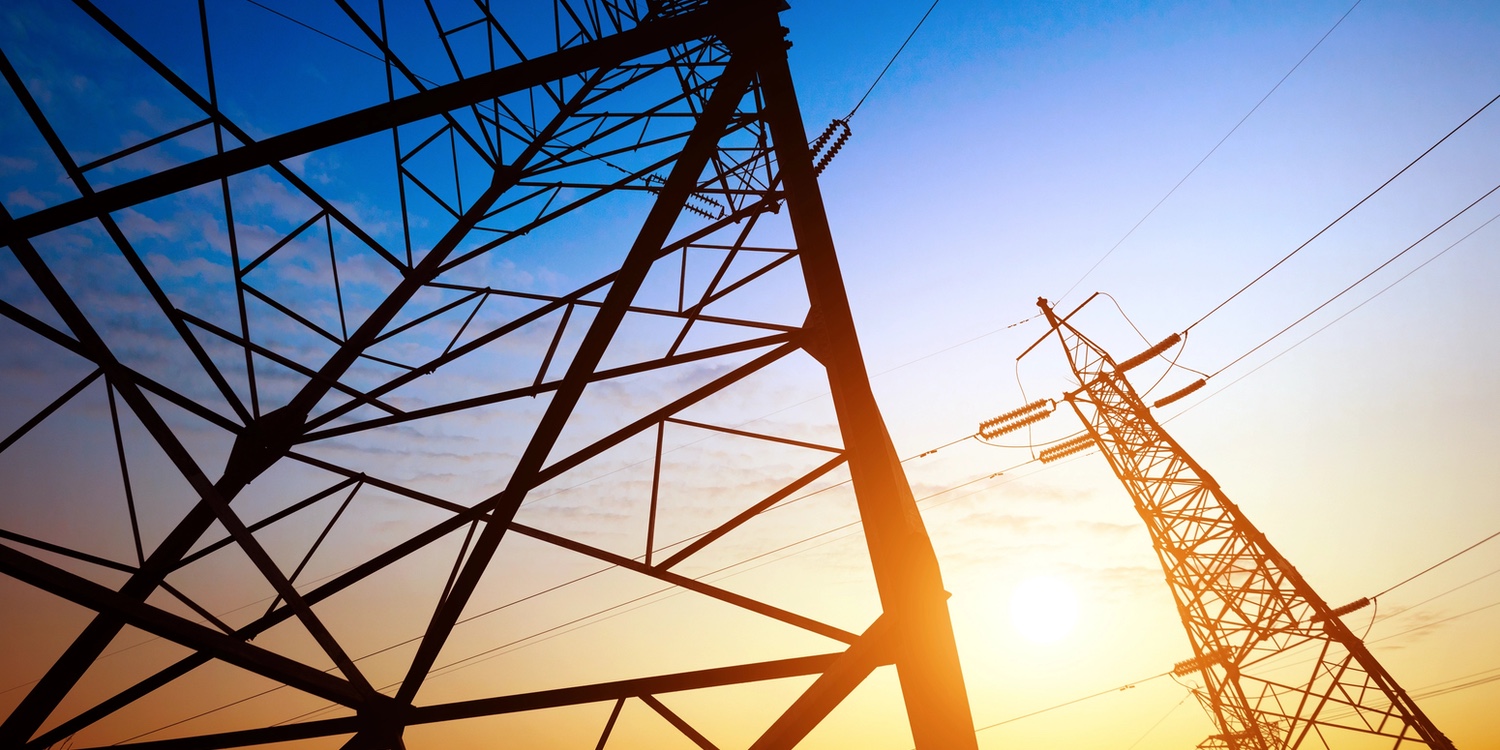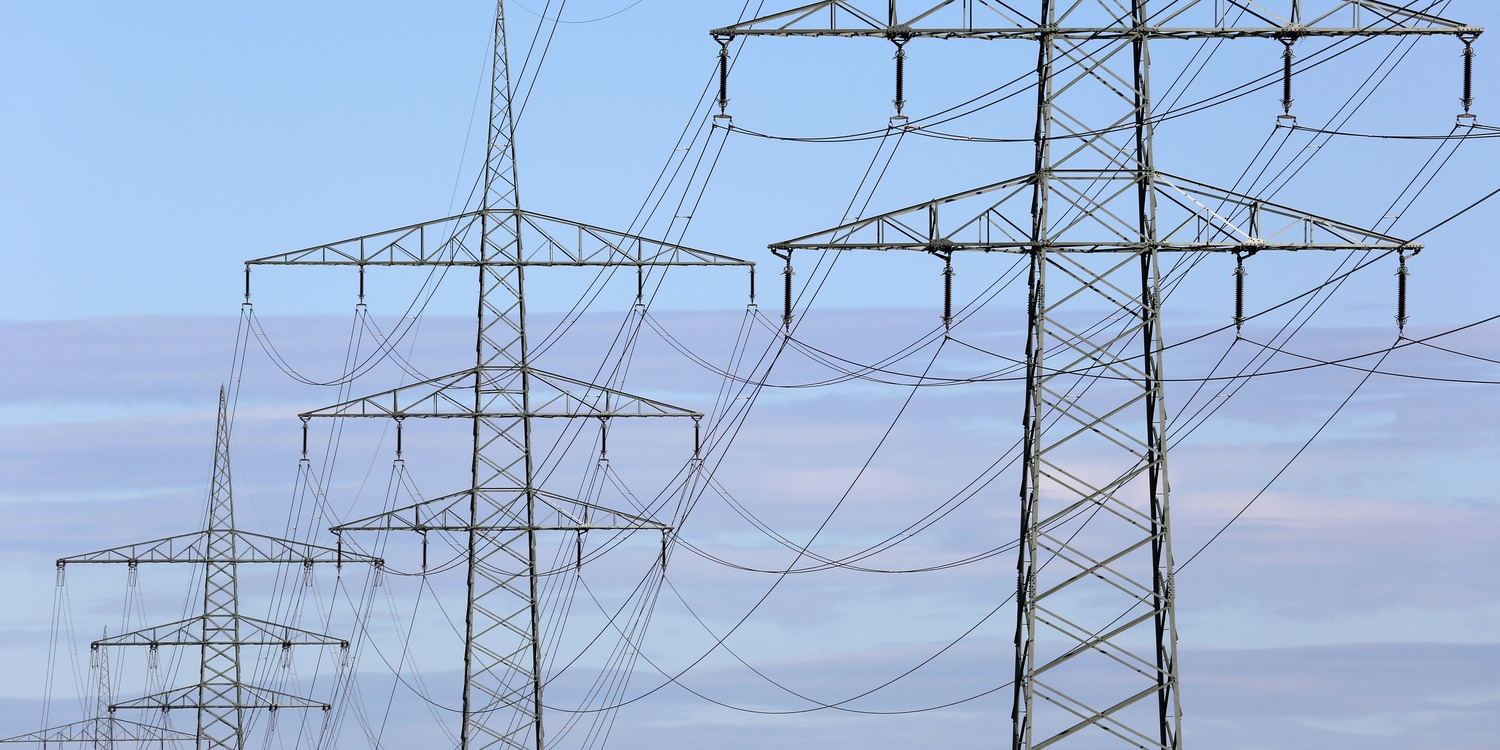
NERC, the nonprofit that oversees North American grid reliability, now expects summer peak demand to climb by more than 224 gigawatts over the next 10 years, which it says is 69% higher than the growth it projected a year earlier. New data centers built for artificial intelligence account for most of that increase. You’ll likely feel that gap as summer conservation appeals and higher delivery charges on your electric bill.
That growth is landing on a grid the Department of Energy already says faces aging infrastructure and insufficient transmission capacity. Utilities and grid operators are racing to add capacity fast enough to keep up, on both the power plants themselves and the wires that carry what they produce.
Data centers are driving most of the new demand
US electricity consumption stayed nearly flat for two decades, then started climbing again. The Energy Information Administration now forecasts average growth of 1.7% a year from 2020 through 2026, enough that 2025 and 2026 are both projected to top the prior high set in 2024. The commercial sector, which includes data centers, is growing faster than that average, at 2.6% a year over the same stretch, alongside industrial growth from manufacturing, all drawing on the same grid you plug into every day.
A data center is a warehouse of server racks running around the clock, plus the chillers and fans needed to keep them from overheating. The building might sit somewhere you’ll never see, but the electricity to run it comes out of the same grid that powers your house, drawn from the same power plants and the same substations that serve everyone else nearby.
How much power data centers actually use
US data centers used 176 terawatt-hours of electricity in 2023, about 4.4% of total US consumption that year, according to Lawrence Berkeley National Laboratory, on the same grid that reaches your own house. The lab’s 2028 projection spans a wide range. It runs from 325 to 580 terawatt-hours. That range equals 6.7% to 12.0% of the country’s forecast electricity use that year, because so much depends on how many GPUs ship and how efficient the cooling gets.
Globally, data centers used about 415 terawatt-hours in 2024, 1.5% of the world’s electricity, with the United States accounting for 45% of that global total, according to the International Energy Agency. The IEA expects global data center electricity use to more than double to around 945 terawatt-hours by 2030.
Grid operators are already flagging the strain
NERC’s 2025 summer reliability assessment flagged MISO as being at risk of running short on reserves during high demand, and named ERCOT for evening hours when solar output fades. New England drew a warning about supply shortfalls under extreme conditions, and the Southwest Power Pool region about energy shortfalls when demand is high and wind is low. In the Southeast, utilities told NERC that peak demand rose about 2% that summer, citing economic growth and data mining loads as drivers alongside other industry.
When NERC flags this kind of risk in your region, it can mean a request to ease up on air conditioning during a hot evening, or in a serious shortfall, a rolling outage, the kind of gap a home battery backup is meant to cover. The pressure is concentrated in specific places. NERC’s longer-range assessment has MISO projecting 18 gigawatts of data center load by 2035, while ERCOT expects 23 of its 45 gigawatts of large loads asking to connect by 2030 to be data centers.
Demand forecasts keep climbing, unevenly
Utilities themselves keep raising their own numbers. Grid Strategies, which compiles utility forecasts every year, found the national load forecast reached 166 gigawatts of growth by 2030, a six-fold jump from the flat growth utilities had forecast back in 2022. The EIA’s September 2026 outlook projects US electricity consumption of 4,135 billion kilowatt-hours in 2026 and 4,211 billion in 2027, attributing the growth to data center development and manufacturing.
Not every regional forecast has moved in the same direction, though. The EIA cut its 2026 US generation growth forecast to 1.7%, down from an earlier estimate of 3%, after large loads came online slower than expected. ERCOT’s own 2026 growth forecast dropped from 15.7% to 9.6%, because of a pause in connecting new data center projects to the Texas grid. If you get your power through ERCOT, that pause is part of why your own region’s growth forecast got cut nearly in half.
Old transmission lines are the bottleneck
The Department of Energy’s National Transmission Needs Study puts a number on what catching up requires. Under its high load growth scenario, within-region transmission capacity needs to grow 128% by 2035 compared with 2020, and capacity to move power between regions needs to grow 412%, more than fivefold. Picture the high-voltage towers and transformers strung across the country decades ago, now asked to carry loads their designers never planned for.
The need isn’t spread evenly. The same DOE study breaks this out by region. Texas would need 140% more transmission capacity by 2035, the Plains 119%, and the Midwest 112%.
Texas and the Midwest, covered above through ERCOT and MISO, are two of the same regions already citing heavy data center growth. If your state is one of those three, this is the specific bottleneck grid planners are racing hardest to fix.
Solar and battery projects are exposed here too. Transmission bottlenecks are one reason a grid can only absorb so much wind and solar before reliability questions come up, regardless of how cheap the panels get.
The strain already shows up in your electricity bill
PJM, which runs the grid for a large stretch of the mid-Atlantic and Midwest, holds an annual auction that pays power plants to be available for future years. Its 2028/2029 auction cleared at $325 per megawatt-day, a bit below the prior year’s price cap of $333.44 per megawatt-day but still the third straight auction to hit the FERC-approved ceiling.
If you live in PJM’s territory, those capacity payments flow into the delivery charges on your electric bill, years before the power itself gets delivered. The high, capped price is itself a signal that the region doesn’t have enough spare generation bidding into the auction to push the price down on its own.
Reconductoring old towers is the fastest fix on the table
The Department of Energy launched its Speed to Power initiative on September 18, 2025, aiming to shorten the years it typically takes to permit and build large transmission and generation projects. One piece of it, called SPARK, put up about $1.9 billion for reconductoring and other upgrades to existing transmission lines, with a concept paper deadline of April 2, 2026 for the first round of applicants.
Reconductoring existing towers with higher-capacity cable adds capacity without waiting years for new rights of way, using the same towers already standing over highways and backyards across the country. On the supply side, the EIA expects solar generation to grow 92% in ERCOT and 63% in PJM between 2024 and 2026, adding supply on a timeline utilities control directly.
One option skips the wait entirely. Smart meters and demand response programs already pay you to cut usage during the same peak hours that strain the grid, whether or not your region’s transmission upgrades get picked for DOE funding.