Originally published December 28, 2010. Updated September 28, 2026.
Hydrogen fuel cells only help the climate if the hydrogen feeding them is clean, and under 1% of the world’s hydrogen supply counted as low-emissions in 2024. The world used roughly 100 million tonnes of hydrogen that year, and almost all of it still comes from fossil fuels. In the US, roughly 40 public stations sell hydrogen, and almost all of them sit in California. A 2025 tax law also moved up hydrogen’s biggest tax credit deadline by five years, tightening the window for new projects to qualify.
How much hydrogen the world makes
Global hydrogen demand reached roughly 100 million tonnes in 2024. Under 1% of that supply counted as low-emissions, the kind made without adding fossil carbon to the total. The rest still comes from the natural gas and coal that dominate hydrogen production today.
The clean share is growing, slowly. Low-emissions hydrogen production climbed about 10% from 2023 to 2024, putting 2025 on track for close to 1 million tonnes. That’s still a rounding error against total demand.
At hydrogen’s standard heating value of 33.3 kilowatt-hours per kilogram, that 100 million tonnes holds roughly 3,330 terawatt-hours of energy. You fill a tank or run a plant on hydrogen today, and the odds are it started as natural gas or coal, not the clean electricity behind that under 1% share.
Where most of the world’s hydrogen comes from
Producing hydrogen the standard way used 290 billion cubic meters of natural gas and 90 million tonnes of coal on a coal-equivalent basis in 2024. That’s gray hydrogen, split out of fossil fuels with heat and steam. At a plant using steam-methane reforming, high-temperature steam separates the hydrogen atoms in natural gas from the carbon atoms next to them. Carbon dioxide is left behind.
Green hydrogen works differently. Machines called electrolyzers split water into hydrogen and oxygen using an electric current instead of fossil fuel. Global electrolyzer capacity reached about 2 gigawatts in 2024, with more than 1 more gigawatt added by July 2025.
China holds 65% of the world’s installed electrolyzer capacity and roughly 60% of global manufacturing capacity for the machines. Try to build electrolyzers in the US instead of importing them, and you’re starting behind on both counts. Fossil-based production still supplies most of the world’s new hydrogen.
The hydrogen project pipeline shrank in 2025
The pipeline of announced hydrogen projects shrank for the first time instead of growing. Companies had floated projects that could produce up to 37 million tonnes of hydrogen a year by 2030, down from a 49 million tonne estimate the year before. Most of that total is still on paper.
| Pipeline stage | Hydrogen output by 2030 |
|---|---|
| Announced projects | 37 million tonnes a year |
| Share that reached a final investment decision | 9% |
| Realistic estimate from projects running or funded | 4.2 million tonnes a year |
Source: IEA, Global Hydrogen Review 2025
A final investment decision is the point where a company commits the money to build. Only 9% of the announced pipeline had reached that point as of the 2025 count, which is why the realistic 2030 total comes in at 4.2 million tonnes a year. If a hydrogen plant got announced for your town, the pipeline numbers say construction probably won’t start soon.
The industry’s own trade group, the Hydrogen Council, counted more than $110 billion in committed hydrogen investment worldwide across over 500 projects in its 2026 Global Hydrogen Compass report. Committed investment isn’t the same as breaking ground, so some of that total still won’t get built.
Fuel-cell cars and hydrogen stations never caught on in the US
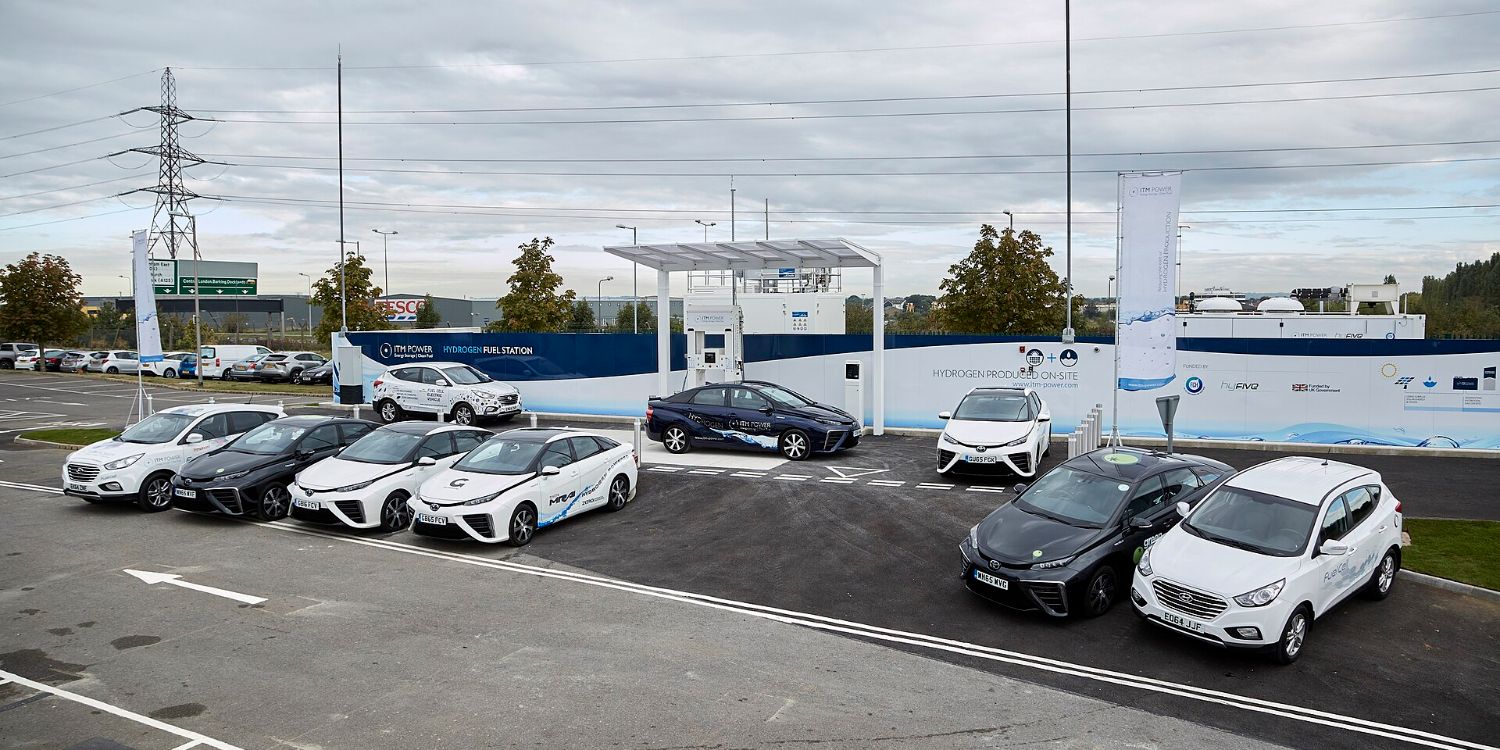
If you don’t live in California, finding a hydrogen station means a long drive. Roughly 40 public hydrogen stations operate in the US, and California holds nearly all of them. Only a couple stations serve the rest of the country. California’s own energy agency tracks that network directly, since nearly the whole network sits inside the state.
Inside a fuel-cell car, hydrogen and oxygen combine across a membrane to generate electricity, and water is what comes out of the tailpipe. Ownership hasn’t been trouble-free. Hyundai recalled Nexo fuel-cell vehicles from the 2019 through 2024 model years in an October 2024 filing, after finding a part that could leak hydrogen and catch fire while parked. If you or someone you know owns one of those Nexos, that recall means a trip to the dealer, since the leak risk applies while the car sits parked in a driveway or garage.
For the fuller picture on the vehicle that’s outselling it, see how electric car sales have grown. The page on natural gas as a vehicle fuel covers the other alternative fuel that stalled out in the US.
What happened to the US hydrogen hubs program
The Bipartisan Infrastructure Law created a hydrogen hubs program worth roughly $8 billion. The law called for 6 to 10 regional hubs. It set aside up to $7 billion of that for the hubs themselves. Live in the Heartland or Mid-Atlantic, and your region got one of the last two hubs the government approved, on Jan. 17, 2025, before the cuts began.
Then the cuts began. The Department of Energy terminated 24 awards worth about $3 billion on May 30, 2025. It cut 223 more projects across 321 awards on Oct. 1. Those terminations totaled about $7.5 billion more.
Both announcements describe the cuts as targeting carbon capture and other decarbonization awards broadly. Neither names a specific hydrogen hub as terminated, so the public record doesn’t show which hubs, if any, came through intact. Federal hydrogen money hasn’t disappeared, but it’s now flowing alongside a broader round of clean-energy cuts.
The 45V tax credit’s deadline moved up five years
The federal credit that subsidizes low-emissions hydrogen production is called 45V. Under the One Big Beautiful Bill Act, signed July 4, 2025, a hydrogen project now has to start construction before Jan. 1, 2028 to qualify, down from a Jan. 1, 2033 deadline in the original law.
That’s five fewer years for a project to reach the financing stage that construction depends on. Financing a hydrogen fuel-cell project of your own, a car fleet or an industrial plant, means working against that shorter runway. Developers now have to line up money years earlier than the original law required.
Closing hydrogen’s financing gap now falls to projects already underway
The federal hydrogen hubs program was built to help close the gap between announced projects and built ones. That job now falls mostly to projects that already have their money lined up, working against a shorter construction timeline than developers planned for. Construction has to start before Jan. 1, 2028 to keep the credit.
Neither of the Department of Energy’s 2025 termination announcements named a specific hub, so the public record doesn’t show which of the original hubs survived the cuts intact. If your town has one of them, finding out means asking the developer directly, since no public scoreboard tracks who made it through. The 2028 deadline is the same one for all of them.